

16 days ago
Build a flexible online betting platform with Betfair Clone Software, featuring multiple betting markets, real-time odds, secure payments, and user management. CoinsQueens provides customizable solutions with useful admin and reporting tools for smooth platform management. The software can be adapted to different business requirements, with development options starting around $999.
Explore more:
google.com/url?sa=j&url=https%3A%2F%2Fwww.coinsqueens.com%2Fblog...
Connect with our expert for more info:
Phone: +91 8778174637
WhatsApp: https://wa.me/+91877817463...
Email: salescoinsqueens.com
Telegram: https://telegram.me/Coinsq...
#betfairclonescript #BettingPlatform #OnlineBetting #BettingSoftware #sportsbetting #BettingPlatformDevelopment #CasinoBetting #coinsqueens #BettingSolution #onlinegaming #usa #uk #uae #india #singapore #canada #australia #germany #japan #saudiarabia .
Explore more:
google.com/url?sa=j&url=https%3A%2F%2Fwww.coinsqueens.com%2Fblog...
Connect with our expert for more info:
Phone: +91 8778174637
WhatsApp: https://wa.me/+91877817463...
Email: salescoinsqueens.com
Telegram: https://telegram.me/Coinsq...
#betfairclonescript #BettingPlatform #OnlineBetting #BettingSoftware #sportsbetting #BettingPlatformDevelopment #CasinoBetting #coinsqueens #BettingSolution #onlinegaming #usa #uk #uae #india #singapore #canada #australia #germany #japan #saudiarabia .

16 days ago
Businesses can accept crypto payments with secure processing, multi-currency support, and wallet integration. It also enables smooth transaction tracking and convenient digital payment management. Crypto Payment Gateway Development offers flexible solutions tailored to different business needs. Customized gateway solutions are available from $999, based on the required features.
Explore more:
https://www.coinsqueens.co...
Connect with our expert for more info:
Phone: +91 8778174637
WhatsApp: https://wa.me/+91877817463...
Email: salescoinsqueens.com
Telegram: https://telegram.me/Coinsq...
#cryptopaymentgateway #CryptoPayments #paymentgatewaydevelopment #BlockchainDevelopment #cryptodevelopment #web3development #digitalpayments #cryptocurrency #usa #uk #uae #india #singapore #canada #australia #germany #japan #saudiarabia .
Explore more:
https://www.coinsqueens.co...
Connect with our expert for more info:
Phone: +91 8778174637
WhatsApp: https://wa.me/+91877817463...
Email: salescoinsqueens.com
Telegram: https://telegram.me/Coinsq...
#cryptopaymentgateway #CryptoPayments #paymentgatewaydevelopment #BlockchainDevelopment #cryptodevelopment #web3development #digitalpayments #cryptocurrency #usa #uk #uae #india #singapore #canada #australia #germany #japan #saudiarabia .

16 days ago
An On Demand App Development Company helps businesses build mobile platforms for services, bookings, payments, and user management. These apps can be customized with essential features to suit different business requirements. CoinsQueens offers on-demand app development solutions starting from $999, with flexible features designed around business goal.
Explore More: https://www.coinsqueens.co...
Connect with our expert for more info:
Phone: +91 8778174637
WhatsApp: https://wa.me/+91877817463...
Email: salescoinsqueens.com
Telegram: https://telegram.me/Coinsq...
#ondemandappdevelopment #ondemandapp #mobileappdevelopment #OnDemandServices #appdevelopmentcompany #customappdevelopment #ondemandbusiness #serviceappdevelopment #MobileApp #appdevelopment #coinsqueens #usa #uk #uae #india #singapore #canada #australia #germany #japan #saudiarabia
Explore More: https://www.coinsqueens.co...
Connect with our expert for more info:
Phone: +91 8778174637
WhatsApp: https://wa.me/+91877817463...
Email: salescoinsqueens.com
Telegram: https://telegram.me/Coinsq...
#ondemandappdevelopment #ondemandapp #mobileappdevelopment #OnDemandServices #appdevelopmentcompany #customappdevelopment #ondemandbusiness #serviceappdevelopment #MobileApp #appdevelopment #coinsqueens #usa #uk #uae #india #singapore #canada #australia #germany #japan #saudiarabia


1 month ago
Want to build a feature-rich trading platform? Our MT5 Clone Script provides the foundation to launch a professional trading solution with customizable dashboards, real-time pricing, multiple **** et classes, smooth order execution, and responsive interfaces.
CoinsQueens delivers customizable trading software that can be customized to your business model, branding, and functional requirements. Special Offer Available, Grab It Now >> https://www.coinsqueens.co...
For any Queries? Talk to Our Experts:
Phone: +91 8778174637
WhatsApp:https://wa.me/+91877817463...
Email: salescoinsqueens.com
Telegram: https://telegram.me/Coinsq...
#MT5CloneScript #mt5platformdevelopment #mt5clone #metatrader5development #coinsqueens #CryptoBusiness #usa #uk #uae #india #singapore #canada #australia #germany #japan #saudiarabia
CoinsQueens delivers customizable trading software that can be customized to your business model, branding, and functional requirements. Special Offer Available, Grab It Now >> https://www.coinsqueens.co...
For any Queries? Talk to Our Experts:
Phone: +91 8778174637
WhatsApp:https://wa.me/+91877817463...
Email: salescoinsqueens.com
Telegram: https://telegram.me/Coinsq...
#MT5CloneScript #mt5platformdevelopment #mt5clone #metatrader5development #coinsqueens #CryptoBusiness #usa #uk #uae #india #singapore #canada #australia #germany #japan #saudiarabia


1 month ago
Build engaging blockchain-powered gaming platforms with Web3 Game Development Services, featuring NFT integration, token-based economies, smart contracts, digital ****** et ownership, multiplayer gameplay, and player-focused gaming experiences.
More info>> https://breedcoins.com/blo...
#web3gamedevelopmentservices #web3gaming #blockchaingamedevelopment #nftgamedevelopment #p2egaming #smartcontractdevelopment #gamedevelopmentcompany #usa #uk #canada #australia #india #uae #singapore #germany #france #japan
More info>> https://breedcoins.com/blo...
#web3gamedevelopmentservices #web3gaming #blockchaingamedevelopment #nftgamedevelopment #p2egaming #smartcontractdevelopment #gamedevelopmentcompany #usa #uk #canada #australia #india #uae #singapore #germany #france #japan

1 month ago
Launch a peer-to-peer crypto trading platform with a Paxful Clone Script, featuring user-to-user trading, multiple payment options, escrow-based transactions, wallet integration, trade management, and customizable exchange functionality.
More info>> https://breedcoins.com/pax...
#paxfulclonescript #p2pcryptoexchange #cryptoexchangedevelopment #cryptotradingplatform #cryptocurrencyexchange #BlockchainDevelopment #web3development #usa #uk #canada #australia #india #uae #singapore #germany #france #japan
More info>> https://breedcoins.com/pax...
#paxfulclonescript #p2pcryptoexchange #cryptoexchangedevelopment #cryptotradingplatform #cryptocurrencyexchange #BlockchainDevelopment #web3development #usa #uk #canada #australia #india #uae #singapore #germany #france #japan

2 months ago
Develop engaging blockchain gaming platforms with a P2E Game Development Company, featuring NFT ******* ets, token-based rewards, smart contracts, player ownership, multiplayer gameplay, and interactive game economies for modern businesses.
Visit Us>> https://breedcoins.com/pla...
#p2egamedevelopmentcompany #p2egamedevelopment #playtoearngaming #blockchaingamedevelopment #nftgaming #web3gaming #gamedevelopmentcompany #usa #uk #canada #australia #india #uae #singapore #germany #france #japan
Visit Us>> https://breedcoins.com/pla...
#p2egamedevelopmentcompany #p2egamedevelopment #playtoearngaming #blockchaingamedevelopment #nftgaming #web3gaming #gamedevelopmentcompany #usa #uk #canada #australia #india #uae #singapore #germany #france #japan


1 yr. ago
SAP Customer Checkout on Android: Unlocking Flexibility with Checkout-Peak
The modern world is such a busy place that customers in Germany are requesting smooth and efficient payment processes, be it in a Berlin restaurant or a Munich shopping mall. Convenience meets mighty POS integration with Android and you enter SAP Customer Checkout, an app by Checkout Peak.
Read More: https://medium.com/checko...
The modern world is such a busy place that customers in Germany are requesting smooth and efficient payment processes, be it in a Berlin restaurant or a Munich shopping mall. Convenience meets mighty POS integration with Android and you enter SAP Customer Checkout, an app by Checkout Peak.
Read More: https://medium.com/checko...

SAP Customer Checkout on Android: Unlocking Flexibility with Checkout-Peak | Medium
SAP Customer Checkout on Android: Unlocking Flexibility with Checkout-Peak The modern world is such a busy place that customers in Germany are requesting smooth and efficient payment processes, be it …
https://medium.com/@checkoutpeak19/sap-customer-checkout-on-android-unlocking-flexibility-with-checkout-peak-469bbb537cbf
1 yr. ago
GrowithAmazon offers expert Amazon Product Listing Services, designed to help sellers optimize their product listings for maximum visibility and sales. Serving clients globally, including in the USA, UAE, Canada, Germany, and beyond, GrowthAmazon ensures that your Amazon listings are fully optimized to attract the right customers and rank higher in Amazon’s search results.
For more info:https://growithamazon.com/...
For more info:https://growithamazon.com/...

Professional Amazon Product Listing Services | GrowithAmazon
Looking for Amazon product listing services? GrowithAmazon provides expert optimisation of product listing services and listing creations.
https://growithamazon.com/services/amazon-product-listing/

3 yr. ago
Reuters
In first, Kyiv says it shoots down volley of Russian hypersonic missiles
Story by By Gleb Garanich and Sergiy Karazy • 9:14 pm - 16-5-2023
By Gleb Garanich and Sergiy Karazy
Moscow mounted its full-scale invasion of Ukraine in February last year and now claims to have annexed around a sixth of its neighbour's territory. Ukraine turned back Russian troops from the outskirts of Kyiv early in the war and recaptured territory in two counteroffensives in the second half of 2022, but has kept its forces on the defensive since November.
Russia says its invasion was necessary to counter a threat to its security posed by Kyiv's close ties to the West. Ukraine and its allies call it an unprovoked and unlawful war of conquest, and Kyiv says it will not stop fighting until all Russian troops leave its land.
European leaders meanwhile were meeting in Iceland on Tuesday for a two-day Council of Europe summit meant to show their support for Ukraine.
According to a draft of the final declaration seen by Reuters, the leaders will approve a new Register of Damages, a mechanism to record and document evidence and claims of damage, loss or injury incurred as a result of the Russian invasion.
European leaders such as Germany's Olaf Scholz, Britain's Rishi Sunak and French President Emmanuel Macron are attending the summit, which Ukraine's President Volodymyr Zelenskiy will address via videolink.
(Additional reporting by Aleksandar Vasovic, Dan Peleschuk, Maria Starkova, Lidia Kelly; Writing by Peter Graff and Angus MacSwan; editing by Frank Jack Daniel)
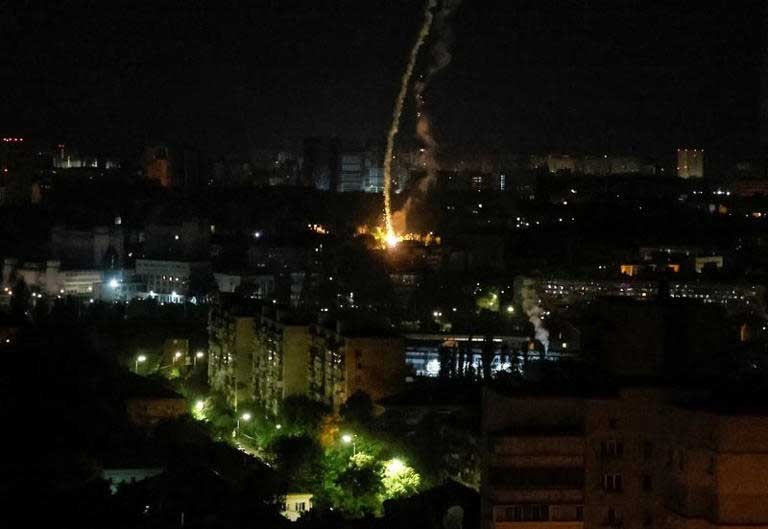
A missile strike in Kyiv
© Thomson Reuters
In first, Kyiv says it shoots down volley of Russian hypersonic missiles
Story by By Gleb Garanich and Sergiy Karazy • 9:14 pm - 16-5-2023
By Gleb Garanich and Sergiy Karazy
Moscow mounted its full-scale invasion of Ukraine in February last year and now claims to have annexed around a sixth of its neighbour's territory. Ukraine turned back Russian troops from the outskirts of Kyiv early in the war and recaptured territory in two counteroffensives in the second half of 2022, but has kept its forces on the defensive since November.
Russia says its invasion was necessary to counter a threat to its security posed by Kyiv's close ties to the West. Ukraine and its allies call it an unprovoked and unlawful war of conquest, and Kyiv says it will not stop fighting until all Russian troops leave its land.
European leaders meanwhile were meeting in Iceland on Tuesday for a two-day Council of Europe summit meant to show their support for Ukraine.
According to a draft of the final declaration seen by Reuters, the leaders will approve a new Register of Damages, a mechanism to record and document evidence and claims of damage, loss or injury incurred as a result of the Russian invasion.
European leaders such as Germany's Olaf Scholz, Britain's Rishi Sunak and French President Emmanuel Macron are attending the summit, which Ukraine's President Volodymyr Zelenskiy will address via videolink.
(Additional reporting by Aleksandar Vasovic, Dan Peleschuk, Maria Starkova, Lidia Kelly; Writing by Peter Graff and Angus MacSwan; editing by Frank Jack Daniel)
A missile strike in Kyiv
© Thomson Reuters

3 yr. ago
The Guardian
China’s war chest: Beijing’s ‘great wall of steel’ faces obstacles to military supremacy
Story by Amy Hawkins senior China correspondent • 15-5-2023
Taiwan’s foreign minister says he is preparing for conflict with China. In an interview this month, Joseph Wu said that “we are taking the Chinese military threat very seriously” and named 2027 as the year to be concerned about.
As relations between China and the US spiral ever lower, many analysts are increasingly worried that a conflict could be on the horizon and that the relationship between Taiwan and the US will be an important factor in influencing if and when China attempts to annex the self-governing island.
The CIA believes that China’s leader, Xi Jinping, has told the military to be ready to invade Taiwan by 2027. At China’s annual parliamentary meetings in March, Xi said he would build China’s military into a “great wall of steel”, but stressed the need for a “peaceful development of cross-strait relations”.
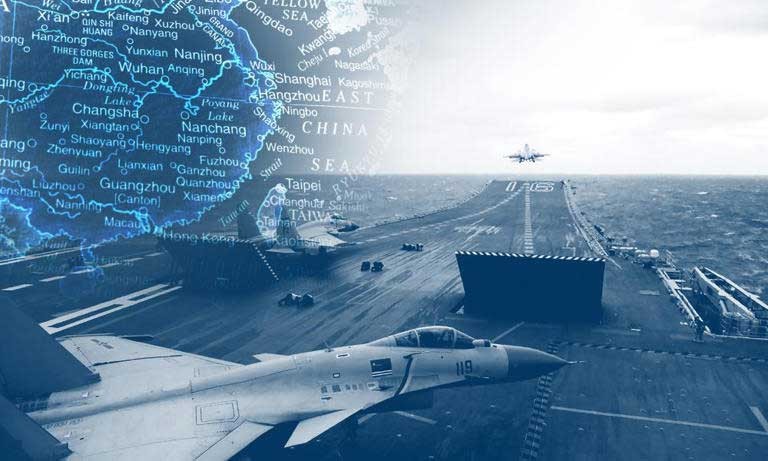
China already has the world’s largest armed forces, with about 2 million active personnel. Its navy is also the world’s biggest, with an estimated 355 active vessels compared with the US’s 296. In 2021, Vice Adm Kay-Achim Schonbach, then the commander of Germany’s navy, said China was expanding its navy by the equivalent of France’s entire navy every four years.
An invasion of Taiwan would probably rely on a naval encirclement of the island, so China’s maritime capabilities will be of particular importance to those trying to glean how capable the People’s Liberation Army (PLA) is of achieving its aim.
On 7 April the Pentagon announced a $1.7bn deal with Boeing for 400 anti-ship Harpoon missiles. The buyer is reportedly Taiwan, although this has not been officially confirmed.
Part of China’s push to modernise its armed forces has been a strategy of pursuing “military-civil fusion”, with the aim of developing the PLA into a “world-class military”. The government encourages private businesses to support the development of military technology, in everything from AI to nuclear technology to drones.
This strategy is evident in China’s shipbuilding industry. The China Shipbuilding Group Corporation accounts for a fifth of global ship production and also produces vessels for China’s navy. Such a high level of integration is “relatively uncommon”, according to the Centre for Strategic and International Studies (CSIS), a thinktank.
It also hampers the ability of outside countries to understand or limit China’s military development.
“With little transparency and differentiation between military and civilian operations, it is impossible to determine the extent to which foreign ship orders may be helping to lower the costs” of the PLA’s naval modernisation, CSIS notes.
The PLA navy has also used civilian ferries to conduct military exercises. This hampers the ability of US and Taiwanese intelligence to detect abnormal activity.
Another trend of the past decade has been China’s efforts to become self-sufficient in advanced technology, particularly arms manufacturing. After concerted efforts over a number of years to advance its technological capabilities, China now produces more than 90% of its weaponry domestically, according to the Stockholm International Peace Research Institute, a thinktank.
China’s war chest: Beijing’s ‘great wall of steel’ faces obstacles to military supremacy
Story by Amy Hawkins senior China correspondent • 15-5-2023
Taiwan’s foreign minister says he is preparing for conflict with China. In an interview this month, Joseph Wu said that “we are taking the Chinese military threat very seriously” and named 2027 as the year to be concerned about.
As relations between China and the US spiral ever lower, many analysts are increasingly worried that a conflict could be on the horizon and that the relationship between Taiwan and the US will be an important factor in influencing if and when China attempts to annex the self-governing island.
The CIA believes that China’s leader, Xi Jinping, has told the military to be ready to invade Taiwan by 2027. At China’s annual parliamentary meetings in March, Xi said he would build China’s military into a “great wall of steel”, but stressed the need for a “peaceful development of cross-strait relations”.
China already has the world’s largest armed forces, with about 2 million active personnel. Its navy is also the world’s biggest, with an estimated 355 active vessels compared with the US’s 296. In 2021, Vice Adm Kay-Achim Schonbach, then the commander of Germany’s navy, said China was expanding its navy by the equivalent of France’s entire navy every four years.
An invasion of Taiwan would probably rely on a naval encirclement of the island, so China’s maritime capabilities will be of particular importance to those trying to glean how capable the People’s Liberation Army (PLA) is of achieving its aim.
On 7 April the Pentagon announced a $1.7bn deal with Boeing for 400 anti-ship Harpoon missiles. The buyer is reportedly Taiwan, although this has not been officially confirmed.
Part of China’s push to modernise its armed forces has been a strategy of pursuing “military-civil fusion”, with the aim of developing the PLA into a “world-class military”. The government encourages private businesses to support the development of military technology, in everything from AI to nuclear technology to drones.
This strategy is evident in China’s shipbuilding industry. The China Shipbuilding Group Corporation accounts for a fifth of global ship production and also produces vessels for China’s navy. Such a high level of integration is “relatively uncommon”, according to the Centre for Strategic and International Studies (CSIS), a thinktank.
It also hampers the ability of outside countries to understand or limit China’s military development.
“With little transparency and differentiation between military and civilian operations, it is impossible to determine the extent to which foreign ship orders may be helping to lower the costs” of the PLA’s naval modernisation, CSIS notes.
The PLA navy has also used civilian ferries to conduct military exercises. This hampers the ability of US and Taiwanese intelligence to detect abnormal activity.
Another trend of the past decade has been China’s efforts to become self-sufficient in advanced technology, particularly arms manufacturing. After concerted efforts over a number of years to advance its technological capabilities, China now produces more than 90% of its weaponry domestically, according to the Stockholm International Peace Research Institute, a thinktank.

3 yr. ago
Reuters
Russia accuses Ukraine of attempt to kill Putin with drones
Story by Reuters • Yesterday 11:34 pm - 3-5-2023
FIRE OF 'HIGHEST RANK'
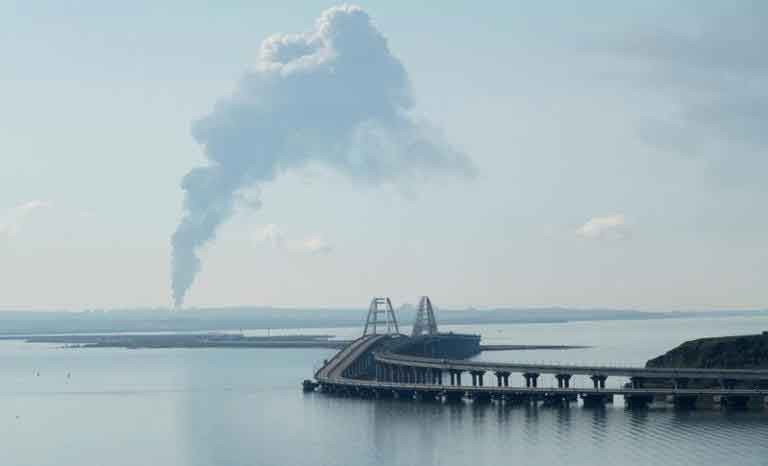
In videos posted on Russian social media of the burning fuel depot near the Crimea bridge, flames and black smoke billowed over large tanks emblazoned with red warnings of "Flammable".
"The fire has been classified as the highest rank of difficulty," said Veniamin Kondratyev, governor of the Krasnodar region, adding that there were no casualties. People should remain calm, there was no need to evacuate the surrounding village and 188 firefighters were battling the blaze with foam.
In Ukraine, the governor of the central Kirovohrad region said three Russian drones had tried to hit an oil facility in the region's main city Kropyvnytskyi. Prosecutors said a huge fire had broken out there.
Zelenskiy's visit to Finland was just his fourth known trip abroad since Russia's full-scale invasion. Leaders of Denmark, Iceland, Norway and Sweden were also invited.
"The theme of the summit is Russia's war of aggression against Ukraine, the Nordic countries' continued support for Ukraine, Ukraine's relationship with the EU and NATO, and Ukraine's initiative for a just peace," Finland's President Sauli Niinisto's office said.
The Nordic countries have been among the strongest supporters of Ukraine since the invasion, with Finland and Sweden both applying to join NATO in response to a war Moscow claimed was aimed in part at blocking the alliance's expansion.
Zelenskiy, who has also visited the United States, Britain, France, Poland and the EU's headquarters in Belgium, is due in Germany on May 13.
Russia says it launched its "special military operation" to counter a threat from Kyiv's relations with the West. Ukraine and its allies call it an unprovoked war of conquest by Moscow, derailed by a failed assault on the capital Kyiv early last year and Ukrainian advances in the second half of 2022.
Over the past five months, Ukrainian ground forces have kept mostly to the defensive, while Russia launched a huge, largely unsuccessful winter assault, capturing little new ground despite the bloodiest infantry combat in Europe since World War Two.
For its planned counterattack, Kyiv has been building up a force with thousands of fresh troops trained at Western bases and armed with hundreds of new Western-supplied tanks and armoured vehicles. Russia has dug in heavy fortifications along the length of the front line.
(Writing by Peter GraffEditing by Philippa Fletcher and Andrew Cawthorne)
Fuel depot ablaze near key Crimea bridge in Russia
© Thomson Reuters
Russia accuses Ukraine of attempt to kill Putin with drones
Story by Reuters • Yesterday 11:34 pm - 3-5-2023
FIRE OF 'HIGHEST RANK'
In videos posted on Russian social media of the burning fuel depot near the Crimea bridge, flames and black smoke billowed over large tanks emblazoned with red warnings of "Flammable".
"The fire has been classified as the highest rank of difficulty," said Veniamin Kondratyev, governor of the Krasnodar region, adding that there were no casualties. People should remain calm, there was no need to evacuate the surrounding village and 188 firefighters were battling the blaze with foam.
In Ukraine, the governor of the central Kirovohrad region said three Russian drones had tried to hit an oil facility in the region's main city Kropyvnytskyi. Prosecutors said a huge fire had broken out there.
Zelenskiy's visit to Finland was just his fourth known trip abroad since Russia's full-scale invasion. Leaders of Denmark, Iceland, Norway and Sweden were also invited.
"The theme of the summit is Russia's war of aggression against Ukraine, the Nordic countries' continued support for Ukraine, Ukraine's relationship with the EU and NATO, and Ukraine's initiative for a just peace," Finland's President Sauli Niinisto's office said.
The Nordic countries have been among the strongest supporters of Ukraine since the invasion, with Finland and Sweden both applying to join NATO in response to a war Moscow claimed was aimed in part at blocking the alliance's expansion.
Zelenskiy, who has also visited the United States, Britain, France, Poland and the EU's headquarters in Belgium, is due in Germany on May 13.
Russia says it launched its "special military operation" to counter a threat from Kyiv's relations with the West. Ukraine and its allies call it an unprovoked war of conquest by Moscow, derailed by a failed assault on the capital Kyiv early last year and Ukrainian advances in the second half of 2022.
Over the past five months, Ukrainian ground forces have kept mostly to the defensive, while Russia launched a huge, largely unsuccessful winter assault, capturing little new ground despite the bloodiest infantry combat in Europe since World War Two.
For its planned counterattack, Kyiv has been building up a force with thousands of fresh troops trained at Western bases and armed with hundreds of new Western-supplied tanks and armoured vehicles. Russia has dug in heavy fortifications along the length of the front line.
(Writing by Peter GraffEditing by Philippa Fletcher and Andrew Cawthorne)
Fuel depot ablaze near key Crimea bridge in Russia
© Thomson Reuters
3 yr. ago
Reuters
Factbox-Countries rush to evacuate foreign citizens from Sudan
Story by Reuters • 1h ago - 28-4-2023
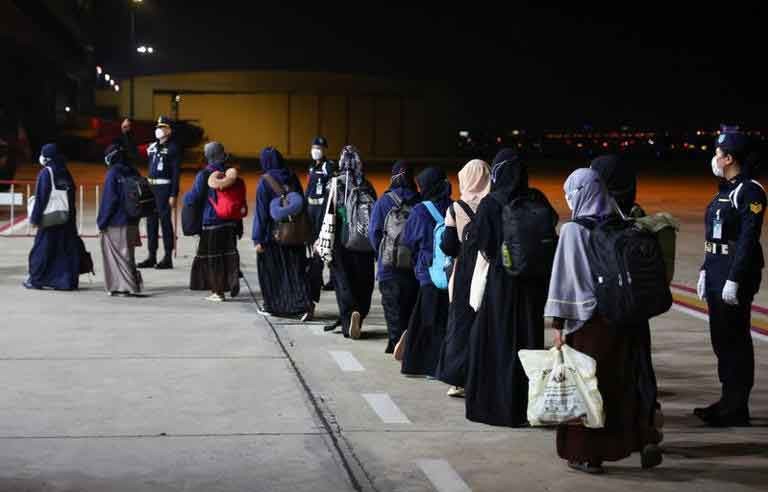
KHARTOUM (Reuters) - The conflict between Sudan's army and a paramilitary group called the Rapid Support Forces (RSF) has triggered a rush to extract foreign diplomats and citizens.
Several countries have evacuated nationals by air, while some have gone via Port Sudan on the Red Sea, about 800 km (500 miles) by road from Khartoum.
This is the status of some countries' efforts:
EGYPT
Egypt has evacuated a total of 5327 Egyptians, 2648 of which were evacuated on Thursday. In a separate statement on Thursday, the Egyptian Foreign Ministry said some 16,000 people have crossed from Sudan to Egypt, including 14,000 Sudanese citizens.
GERMANY
As of Tuesday morning, a German evacuation mission had brought a total of 500 people from more than 30 countries to safety, including Belgian, British, Dutch, Jordanian and U.S. citizens as well as Germans. Berlin said its flights would end on Tuesday.
FRANCE
The French government said on Thursday that it had so far evacuated a total of 936 people from Sudan. The foreign ministry said those evacuated included not only French nationals but also Britons, Americans, Canadians, Ethiopians, Dutch, Italians and Swedes.
The United Nations Secretary-General thanked France for its "vital assistance in transporting 400 UN personnel and their dependents out of Sudan. The French Navy carried 350 from Port Sudan to Jeddah, in Saudi Arabia on Tuesday night, while more than 70 were flown aboard a French Air Force transport plane to N'Djamena in Chad from El Fasher in Sudan on Thursday.
ITALY
Italian military planes flying from Djibouti evacuated 83 Italians and 13 others overnight, including children and the Italian ambassador.
Foreign Minister Antonio Tajani said some Italian NGO workers and missionaries had decided to stay in Sudan, while 19 others had been taken to Egypt two days ago.
BRITAIN
Britain said it had begun a "large-scale" evacuation of its nationals on Tuesday, with priority given to families with children, the elderly and the infirm. Its first evacuation flight left and two more were expected overnight.
It had evacuated 897 people on eight UK flights as of 1500 GMT on Thursday with more flights to come.
The government estimates there are about 4,000 Britons in Sudan. It evacuated its diplomats and their families on Saturday.
Cyprus said it had activated a humanitarian rescue mechanism at Britain's request to let third countries use it for reception and repatriation of foreign citizens evacuated from Sudan. Cyprus is home to two large British military bases.
NETHERLANDS
About 100 Dutch nationals have been evacuated from Sudan since Sunday, Foreign Minister Wopke Hoekstra said.
Half left on four Dutch evacuation flights to Jordan, which also carried about 70 people from 14 other countries.
The Netherlands aims to evacuate a total of around 150 Dutch nationals, and has supplied two military planes to the international effort, which are also available for other nationalities.
UNITED STATES
U.S. forces evacuated American and some foreign diplomats on Saturday.
Washington said on Monday that several dozen Americans were travelling overland in a U.N.-led convoy to Port Sudan, and that dozens more had expressed an interest in leaving. It said it was positioning naval assets to assist evacuations if necessary.
Factbox-Countries rush to evacuate foreign citizens from Sudan
Story by Reuters • 1h ago - 28-4-2023
KHARTOUM (Reuters) - The conflict between Sudan's army and a paramilitary group called the Rapid Support Forces (RSF) has triggered a rush to extract foreign diplomats and citizens.
Several countries have evacuated nationals by air, while some have gone via Port Sudan on the Red Sea, about 800 km (500 miles) by road from Khartoum.
This is the status of some countries' efforts:
EGYPT
Egypt has evacuated a total of 5327 Egyptians, 2648 of which were evacuated on Thursday. In a separate statement on Thursday, the Egyptian Foreign Ministry said some 16,000 people have crossed from Sudan to Egypt, including 14,000 Sudanese citizens.
GERMANY
As of Tuesday morning, a German evacuation mission had brought a total of 500 people from more than 30 countries to safety, including Belgian, British, Dutch, Jordanian and U.S. citizens as well as Germans. Berlin said its flights would end on Tuesday.
FRANCE
The French government said on Thursday that it had so far evacuated a total of 936 people from Sudan. The foreign ministry said those evacuated included not only French nationals but also Britons, Americans, Canadians, Ethiopians, Dutch, Italians and Swedes.
The United Nations Secretary-General thanked France for its "vital assistance in transporting 400 UN personnel and their dependents out of Sudan. The French Navy carried 350 from Port Sudan to Jeddah, in Saudi Arabia on Tuesday night, while more than 70 were flown aboard a French Air Force transport plane to N'Djamena in Chad from El Fasher in Sudan on Thursday.
ITALY
Italian military planes flying from Djibouti evacuated 83 Italians and 13 others overnight, including children and the Italian ambassador.
Foreign Minister Antonio Tajani said some Italian NGO workers and missionaries had decided to stay in Sudan, while 19 others had been taken to Egypt two days ago.
BRITAIN
Britain said it had begun a "large-scale" evacuation of its nationals on Tuesday, with priority given to families with children, the elderly and the infirm. Its first evacuation flight left and two more were expected overnight.
It had evacuated 897 people on eight UK flights as of 1500 GMT on Thursday with more flights to come.
The government estimates there are about 4,000 Britons in Sudan. It evacuated its diplomats and their families on Saturday.
Cyprus said it had activated a humanitarian rescue mechanism at Britain's request to let third countries use it for reception and repatriation of foreign citizens evacuated from Sudan. Cyprus is home to two large British military bases.
NETHERLANDS
About 100 Dutch nationals have been evacuated from Sudan since Sunday, Foreign Minister Wopke Hoekstra said.
Half left on four Dutch evacuation flights to Jordan, which also carried about 70 people from 14 other countries.
The Netherlands aims to evacuate a total of around 150 Dutch nationals, and has supplied two military planes to the international effort, which are also available for other nationalities.
UNITED STATES
U.S. forces evacuated American and some foreign diplomats on Saturday.
Washington said on Monday that several dozen Americans were travelling overland in a U.N.-led convoy to Port Sudan, and that dozens more had expressed an interest in leaving. It said it was positioning naval assets to assist evacuations if necessary.
3 yr. ago
Reuters
UK and Germany to work together on developing advanced tank ammunition
Story by Reuters • Yesterday 8:31 pm - 27-4-2023
ONDON (Reuters) - Britain and Germany will work together on the next phase of development for advanced armour-piercing tank ammunition, Britain's Ministry of Defence said, adding that they were also open to other countries joining the cooperation.
"The standardised ammunition will not only benefit battlefield collaboration with many of our NATO allies, but has important export potential for UK and German defence industry partners," Britain's Defence Secretary Ben Wallace said in the statement on Thursday.
(Reporting by Muvija M, Editing by Kylie MacLellan)
Defence and foreign ministers of UK and Italy meet in Rome
© Thomson Reuters
UK and Germany to work together on developing advanced tank ammunition
Story by Reuters • Yesterday 8:31 pm - 27-4-2023
ONDON (Reuters) - Britain and Germany will work together on the next phase of development for advanced armour-piercing tank ammunition, Britain's Ministry of Defence said, adding that they were also open to other countries joining the cooperation.
"The standardised ammunition will not only benefit battlefield collaboration with many of our NATO allies, but has important export potential for UK and German defence industry partners," Britain's Defence Secretary Ben Wallace said in the statement on Thursday.
(Reporting by Muvija M, Editing by Kylie MacLellan)
Defence and foreign ministers of UK and Italy meet in Rome
© Thomson Reuters

4 yr. ago
All NATO allies have AGREED Ukraine will become a member
Story by Rachael Bunyan and Afp • Yesterday 9:34 pm - 21-4-2023
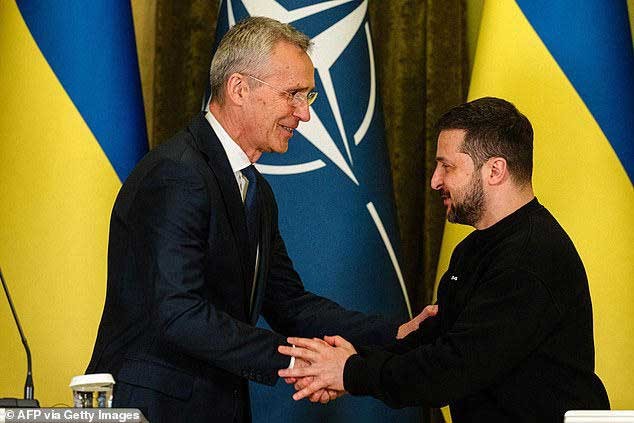
NATO Secretary-General Jens Stoltenberg today said all members have agreed that Ukraine will join the military alliance in a major boost for Volodymyr Zelensky.
The chief said that Ukraine must have 'the deterrence to prevent new attacks' from Russia once the war ends – and joining would give Kyiv protection.
Mr Stoltenberg said the NATO allies had agreed that Ukraine would eventually become a member of the alliance and that Mr Zelensky had been invited to attend the next summit in July.
But Mr Stoltenberg, who met Ukraine's president in Kyiv yesterday, added that the main focus now is to ensure that the country prevails against Russia.
He acknowledged the need to discuss 'new platforms' of support with the battle now in its second year. He also underlined the necessity of ensuring that already supplied weapons continued to work.
'I think sometimes we underestimate all the logistics that have to be in place just to have operational battle tank capabilities so maybe it's also a bit more boring but the logistics is extremely important,' said the NATO chief.
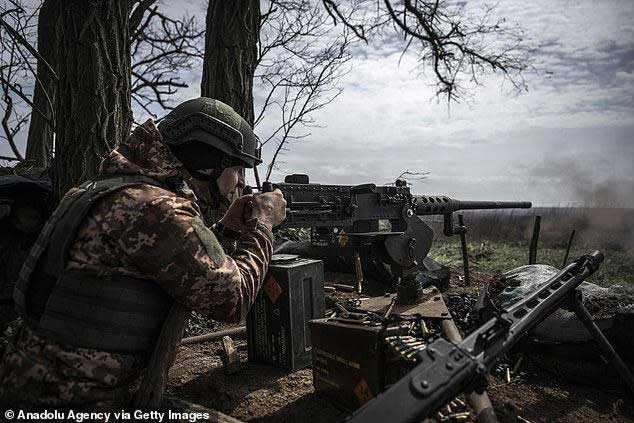
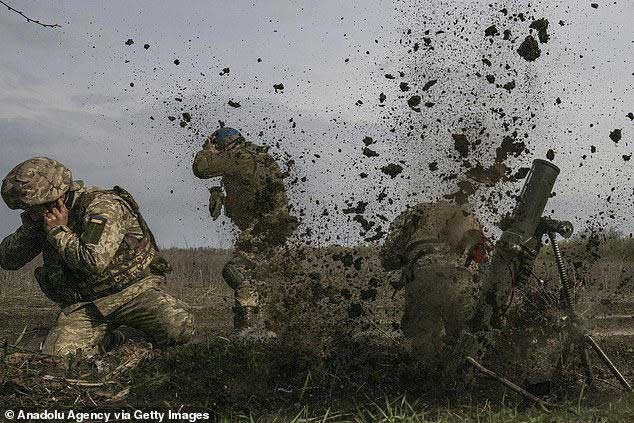
He added: 'This is now a battle of attrition and a battle of attrition becomes a war of logistics.'
US Defence Secretary Lloyd Austin said today that international backing for Ukraine holds 'strong and true', as he opened a meeting in Germany with allies to discuss further support for Kyiv.
On the eve of the talks gathering representatives from 50 countries, Mr Zelensky urged Western allies to send more fighter jets and long-range missiles to help repel Russian troops.
He had put his requests directly to Mr Stoltenberg, who visited Kyiv before heading to the Ramstein air base for the meeting.
'Our support for the forces of freedom in Ukraine holds strong and true,' Mr Austin said, as he began the discussions, a year on after the format gathering defence leaders was started to coordinate aid for Ukraine.
'At today's contact group meeting, we'll focus on three key issues – air defence, ammunition and enablers,' said Mr Austin, referring to logistics and other support.
Mr Zelensky had asked for NATO's help to 'overcome the reluctance' of some member states in providing long-range rockets, modern fighter jets and armoured vehicles.
NATO members have sent some Soviet-era fighter jets to Ukraine, but no modern planes such as the US-designed F-16 have been pledged despite Ukraine's requests.
Ukraine's Western supporters have also been reluctant to send long-range rockets because of concerns that Ukraine could use them to hit targets within Russia.
Mr Stoltenberg acknowledged the need to discuss 'new platforms' of support with the battle now in its second year. He also underlined the necessity of ensuring that already supplied weapons continued to work.
Earlier in the week, Ukraine said it had received from allies the first shipment of Patriots, seen as one of the most advanced US air defence systems.
Germany also delivered a promised Iris-T anti-air missile system.
Story by Rachael Bunyan and Afp • Yesterday 9:34 pm - 21-4-2023
NATO Secretary-General Jens Stoltenberg today said all members have agreed that Ukraine will join the military alliance in a major boost for Volodymyr Zelensky.
The chief said that Ukraine must have 'the deterrence to prevent new attacks' from Russia once the war ends – and joining would give Kyiv protection.
Mr Stoltenberg said the NATO allies had agreed that Ukraine would eventually become a member of the alliance and that Mr Zelensky had been invited to attend the next summit in July.
But Mr Stoltenberg, who met Ukraine's president in Kyiv yesterday, added that the main focus now is to ensure that the country prevails against Russia.
He acknowledged the need to discuss 'new platforms' of support with the battle now in its second year. He also underlined the necessity of ensuring that already supplied weapons continued to work.
'I think sometimes we underestimate all the logistics that have to be in place just to have operational battle tank capabilities so maybe it's also a bit more boring but the logistics is extremely important,' said the NATO chief.
He added: 'This is now a battle of attrition and a battle of attrition becomes a war of logistics.'
US Defence Secretary Lloyd Austin said today that international backing for Ukraine holds 'strong and true', as he opened a meeting in Germany with allies to discuss further support for Kyiv.
On the eve of the talks gathering representatives from 50 countries, Mr Zelensky urged Western allies to send more fighter jets and long-range missiles to help repel Russian troops.
He had put his requests directly to Mr Stoltenberg, who visited Kyiv before heading to the Ramstein air base for the meeting.
'Our support for the forces of freedom in Ukraine holds strong and true,' Mr Austin said, as he began the discussions, a year on after the format gathering defence leaders was started to coordinate aid for Ukraine.
'At today's contact group meeting, we'll focus on three key issues – air defence, ammunition and enablers,' said Mr Austin, referring to logistics and other support.
Mr Zelensky had asked for NATO's help to 'overcome the reluctance' of some member states in providing long-range rockets, modern fighter jets and armoured vehicles.
NATO members have sent some Soviet-era fighter jets to Ukraine, but no modern planes such as the US-designed F-16 have been pledged despite Ukraine's requests.
Ukraine's Western supporters have also been reluctant to send long-range rockets because of concerns that Ukraine could use them to hit targets within Russia.
Mr Stoltenberg acknowledged the need to discuss 'new platforms' of support with the battle now in its second year. He also underlined the necessity of ensuring that already supplied weapons continued to work.
Earlier in the week, Ukraine said it had received from allies the first shipment of Patriots, seen as one of the most advanced US air defence systems.
Germany also delivered a promised Iris-T anti-air missile system.
4 yr. ago
Reuters
U.S. military prepares options for possible Sudan evacuation
Story by By Phil Stewart and Daphne Psaledakis • 3h ago - 22-4-2023
By Phil Stewart and Daphne Psaledakis
WASHINGTON/RAMSTEIN AIR BASE, Germany (Reuters) - The U.S. military is preparing options to evacuate the U.S. embassy in Sudan, the U.S. Defense Secretary said on Friday as the Biden Administration weighed whether to pull personnel out of the country's increasingly unstable capital.
"We've deployed some forces into theater to ensure that we provide as many options as possible if we are called on to do something. And we haven't been called on to do anything yet," U.S. Defense Secretary Lloyd Austin told a news conference at Ramstein Air Base in Germany. "No decision on anything has been made."
Forces commanded by two previously allied leaders of Sudan's ruling council began a violent power struggle last weekend. Hundreds have died so far and a nation reliant on food aid has been tipped into what the United Nations calls a humanitarian catastrophe.
John Kirby, the White House national security spokesperson, said President Joe Biden approved a plan this week to move U.S. forces nearby in case they are needed to help evacuate American diplomats.
"We are simply pre-positioning some additional capabilities nearby in case that they're needed," Kirby told reporters.
With the airport in Khartoum caught in the fighting and the skies unsafe, nations including the United States, Japan, South Korea, Germany and Spain have been unable to evacuate embassy staff.
Cameron Hudson, a U.S. Africa policy expert at the Center for Strategic and International Studies and former director for African affairs at the National Security Council, said the level of violence in Khartoum makes the situation for an evacuation unpredictable.
"The major challenge is there's a war going on across all corners of the city and the international airport in the middle of the city is not functional right now, so the challenge is moving people to a safe space to evacuate them," Hudson said.
Washington has said that private American citizens in Sudan should have no expectation of a U.S. government-coordinated evacuation from the country. State Department deputy spokesperson Vedant Patel said the United States was in touch with several hundred American citizens understood to be in Sudan.
Earlier on Friday, the State Department confirmed the death of one U.S. citizen in the country.
UN WORKS TO EXTRACT STAFF
Other countries and the United Nations are also looking at how they can evacuate citizens and employees.
The U.N. has been trying to extract staff from "very dangerous" zones in Sudan to move them to safer locations, the top U.N. aid official in Sudan, Abdou Dieng, said on Thursday. Dieng said he had been moved to a safer area on Wednesday.
The U.N. has about 4,000 staff in Sudan, of which 800 are international staff. A U.N. source, speaking on condition of anonymity, said there were a further 6,000 U.N. staff family members and associated personnel in Sudan.
Switzerland said on Friday it was examining ways to evacuate nationals from Sudan, and Sweden said it will evacuate embassy staff and families as soon as possible.
Spanish military aircraft are on standby and ready to evacuate some 60 Spanish nationals and others from Khartoum, and South Korea sent a military aircraft to stand by at a U.S. military base in Djibouti to evacuate its nationals when pos
U.S. military prepares options for possible Sudan evacuation
Story by By Phil Stewart and Daphne Psaledakis • 3h ago - 22-4-2023
By Phil Stewart and Daphne Psaledakis
WASHINGTON/RAMSTEIN AIR BASE, Germany (Reuters) - The U.S. military is preparing options to evacuate the U.S. embassy in Sudan, the U.S. Defense Secretary said on Friday as the Biden Administration weighed whether to pull personnel out of the country's increasingly unstable capital.
"We've deployed some forces into theater to ensure that we provide as many options as possible if we are called on to do something. And we haven't been called on to do anything yet," U.S. Defense Secretary Lloyd Austin told a news conference at Ramstein Air Base in Germany. "No decision on anything has been made."
Forces commanded by two previously allied leaders of Sudan's ruling council began a violent power struggle last weekend. Hundreds have died so far and a nation reliant on food aid has been tipped into what the United Nations calls a humanitarian catastrophe.
John Kirby, the White House national security spokesperson, said President Joe Biden approved a plan this week to move U.S. forces nearby in case they are needed to help evacuate American diplomats.
"We are simply pre-positioning some additional capabilities nearby in case that they're needed," Kirby told reporters.
With the airport in Khartoum caught in the fighting and the skies unsafe, nations including the United States, Japan, South Korea, Germany and Spain have been unable to evacuate embassy staff.
Cameron Hudson, a U.S. Africa policy expert at the Center for Strategic and International Studies and former director for African affairs at the National Security Council, said the level of violence in Khartoum makes the situation for an evacuation unpredictable.
"The major challenge is there's a war going on across all corners of the city and the international airport in the middle of the city is not functional right now, so the challenge is moving people to a safe space to evacuate them," Hudson said.
Washington has said that private American citizens in Sudan should have no expectation of a U.S. government-coordinated evacuation from the country. State Department deputy spokesperson Vedant Patel said the United States was in touch with several hundred American citizens understood to be in Sudan.
Earlier on Friday, the State Department confirmed the death of one U.S. citizen in the country.
UN WORKS TO EXTRACT STAFF
Other countries and the United Nations are also looking at how they can evacuate citizens and employees.
The U.N. has been trying to extract staff from "very dangerous" zones in Sudan to move them to safer locations, the top U.N. aid official in Sudan, Abdou Dieng, said on Thursday. Dieng said he had been moved to a safer area on Wednesday.
The U.N. has about 4,000 staff in Sudan, of which 800 are international staff. A U.N. source, speaking on condition of anonymity, said there were a further 6,000 U.N. staff family members and associated personnel in Sudan.
Switzerland said on Friday it was examining ways to evacuate nationals from Sudan, and Sweden said it will evacuate embassy staff and families as soon as possible.
Spanish military aircraft are on standby and ready to evacuate some 60 Spanish nationals and others from Khartoum, and South Korea sent a military aircraft to stand by at a U.S. military base in Djibouti to evacuate its nationals when pos

4 yr. ago
AFP
Biden, Macron talk to ease tensions after French leader's China trip
Story by AFP • 2h ago - 21-4-2023
US President Joe Biden and President Emmanuel Macron signaled efforts Thursday to ease tensions in the wake of the French leader's recent remarks on Taiwan and the European security relationship with Washington.
The White House and Elysee said in separate statements after the phone call that the leaders discussed Macron's state visit in the first week of April to Beijing, where he spent several hours with President Xi Jinping.
As he ended the trip, Macron caused a stir by telling reporters that European countries should not be drawn into a fight between China and the United States over democratic, Western-backed Taiwan.
Macron said Europe should avoid "crises that aren't ours." He also repeated previous comments calling for the EU's "strategic autonomy" from the United States, which has been instrumental in defending Europe since helping to defeat Nazi Germany in World War II.
The White House statement emphasized their shared positions.
They "discussed President Macron's recent travel to the People's Republic of China and their ongoing efforts to advance prosperity, security, shared values, and the rules-based international order in the Indo-Pacific region," the statement said. "They reaffirmed the importance of maintaining peace and stability across the Taiwan Strait."
Biden and Macron also discussed the Russian invasion of pro-Western Ukraine and "reiterated their steadfast support for Ukraine in the face of Russia's brutal aggression," the statement said.
In Paris, Macron's office characterized the call as Biden being briefed on "the results obtained" during the China trip.
Referring to Macron's push for China to play a role in forging a peace deal to end the war in Ukraine, the statement said "China had a role to play in contributing, in the medium term, in ending the conflict in accordance with the principles and aims of the United Nations charter."
"The two heads of state agreed on the importance of continuing to engage Chinese authorities on this basis," the statement said.
Washington looks with some skepticism on Macron's initiative, given communist China's strong alliance with Russia.
On the transatlantic security relationship, the French statement underlined "the importance of European countries continuing to re-arm themselves in order to take on their responsibilities in sharing the burden of transatlantic security."
It echoed US language on Taiwan, saying "the two presidents share the same desire to reinforce cooperation underway and to support international law, including the freedom of navigation, in the whole of the Indo-Pacific region."
Biden held a separate call Thursday with EU Commission President Ursula von der Leyen, who accompanied Macron to Beijing.
A White House statement said they too "reaffirmed the importance of maintaining peace and stability across the Taiwan Strait."
"The two leaders discussed President von der Leyen's recent trip to Beijing and their shared commitment to upholding the rules-based international order, human rights, and fair trade practices," the statement said.
Biden likewise discussed the Western effort to halt Russia's onslaught on Ukraine, as well as the transition to clean energy economies, the statement said.
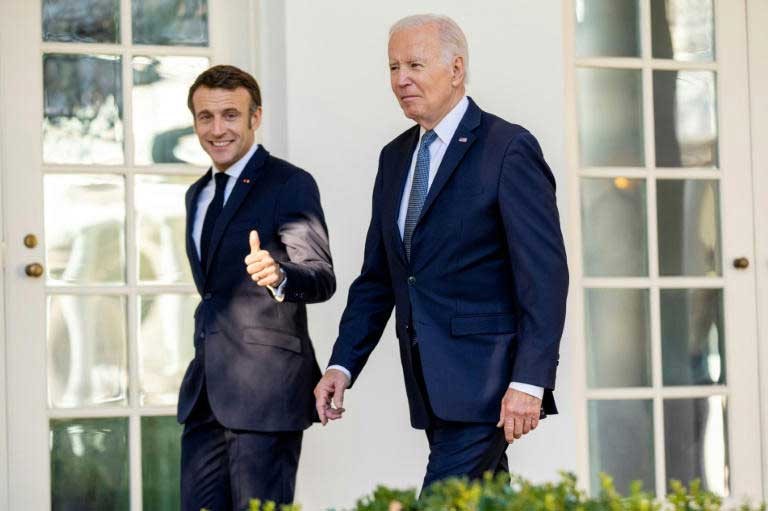
US President Joe Biden (R) and French President Emmanuel Macron walk down the Colonnade at the White House in Washi
Biden, Macron talk to ease tensions after French leader's China trip
Story by AFP • 2h ago - 21-4-2023
US President Joe Biden and President Emmanuel Macron signaled efforts Thursday to ease tensions in the wake of the French leader's recent remarks on Taiwan and the European security relationship with Washington.
The White House and Elysee said in separate statements after the phone call that the leaders discussed Macron's state visit in the first week of April to Beijing, where he spent several hours with President Xi Jinping.
As he ended the trip, Macron caused a stir by telling reporters that European countries should not be drawn into a fight between China and the United States over democratic, Western-backed Taiwan.
Macron said Europe should avoid "crises that aren't ours." He also repeated previous comments calling for the EU's "strategic autonomy" from the United States, which has been instrumental in defending Europe since helping to defeat Nazi Germany in World War II.
The White House statement emphasized their shared positions.
They "discussed President Macron's recent travel to the People's Republic of China and their ongoing efforts to advance prosperity, security, shared values, and the rules-based international order in the Indo-Pacific region," the statement said. "They reaffirmed the importance of maintaining peace and stability across the Taiwan Strait."
Biden and Macron also discussed the Russian invasion of pro-Western Ukraine and "reiterated their steadfast support for Ukraine in the face of Russia's brutal aggression," the statement said.
In Paris, Macron's office characterized the call as Biden being briefed on "the results obtained" during the China trip.
Referring to Macron's push for China to play a role in forging a peace deal to end the war in Ukraine, the statement said "China had a role to play in contributing, in the medium term, in ending the conflict in accordance with the principles and aims of the United Nations charter."
"The two heads of state agreed on the importance of continuing to engage Chinese authorities on this basis," the statement said.
Washington looks with some skepticism on Macron's initiative, given communist China's strong alliance with Russia.
On the transatlantic security relationship, the French statement underlined "the importance of European countries continuing to re-arm themselves in order to take on their responsibilities in sharing the burden of transatlantic security."
It echoed US language on Taiwan, saying "the two presidents share the same desire to reinforce cooperation underway and to support international law, including the freedom of navigation, in the whole of the Indo-Pacific region."
Biden held a separate call Thursday with EU Commission President Ursula von der Leyen, who accompanied Macron to Beijing.
A White House statement said they too "reaffirmed the importance of maintaining peace and stability across the Taiwan Strait."
"The two leaders discussed President von der Leyen's recent trip to Beijing and their shared commitment to upholding the rules-based international order, human rights, and fair trade practices," the statement said.
Biden likewise discussed the Western effort to halt Russia's onslaught on Ukraine, as well as the transition to clean energy economies, the statement said.
US President Joe Biden (R) and French President Emmanuel Macron walk down the Colonnade at the White House in Washi
4 yr. ago
Reuters
G7 will stand up to 'any coercion' from China - senior US official
Story by By Humeyra Pamuk and Sakura Murakami • Yesterday 10:24 pm - 17-4-2023
By Humeyra Pamuk and Sakura Murakami
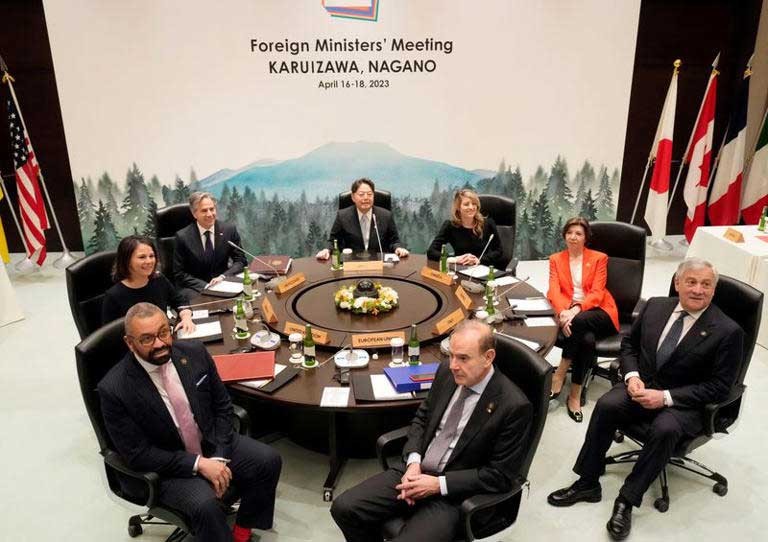
KARUIZAWA, Japan (Reuters) - The Group of Seven nations see eye to eye on the need to stand up to any Chinese "coercion" or efforts to exert control in the Taiwan Strait, a senior U.S. State Department official said on Monday, amid increased tensions around Taiwan.
Concerns about what the G7 wealthy nations see as China's increasingly aggressive stance on Taiwan and more broadly in the Indo-Pacific region have been in sharp focus during talks among G7 foreign ministers in the Japanese resort town of Karuizawa.
"The message is the same across the G7: that we want to work with China in those areas where China is prepared to work with us," a senior U.S. State Department official told reporters on a call.
"We are certainly going to stand up against any coercion, any market manipulation, any efforts to change the status quo in the Taiwan Strait," the official added.
The G7 ministers are keen to demonstrate a unified front, especially after recent comments by French President Emmanuel Macron which were perceived in some Western capitals as too weak towards China and sparked a backlash.
After visiting China this month, Macron cautioned against being drawn into a crisis over Taiwan driven by an "American rhythm and a Chinese overreaction".
As the only Asian member of the G7, Japan has been deeply concerned about any possible action by Beijing against nearby Taiwan.
Beijing views Taiwan as Chinese territory and has not renounced the use of force to take the democratically governed island. Taiwan President Tsai Ing-wen says only the island's people can decide their future.
"The impact the peace and stability of the Taiwan Strait has on our country is a given, but it is a crucial factor in the wider safety and security of the international community as well," Japanese Foreign Minister Yoshimasa Hayashi said after a bilateral meeting with U.S. Secretary of State Antony Blinken.
Hayashi also told reporters that French Foreign Minister Catherine Colonna said France has "deep feelings" about respecting the status quo and maintaining peace and stability in the Taiwan Strait.
'OWN RULES'
Japan said the Chinese aircraft carrier Shandong had conducted air operations with jet fighters and helicopters between April 10-16. China's state media has said its navy carried out combat training around Taiwan last week.
Russia too has also been keen to show force in the Pacific, and recently launched naval exercises by its Pacific Fleet, drawing criticism from Tokyo.
China is increasingly trying to replace international rules with "its own rules", German Foreign Minister Annalena Baerbock said on Monday on the sidelines of the G7 meeting.
"Many of our partners in the region feel more and more that China increasingly wants to exchange the existing common binding international rules with its own rules," said Baerbock, who last week met her Chinese counterpart in Beijing last week.
The G7 comprises the United States, Japan, Germany, Britain, France, Italy and Canada.
(Reporting by Humeyra Pamuk and Sakura Murakami; Additional reporting by Friederike Heine in Berlin; Writing by David Dolan; Editing by Gareth Jones and Philippa Fletcher)
G7 will stand up to 'any coercion' from China - senior US official
Story by By Humeyra Pamuk and Sakura Murakami • Yesterday 10:24 pm - 17-4-2023
By Humeyra Pamuk and Sakura Murakami
KARUIZAWA, Japan (Reuters) - The Group of Seven nations see eye to eye on the need to stand up to any Chinese "coercion" or efforts to exert control in the Taiwan Strait, a senior U.S. State Department official said on Monday, amid increased tensions around Taiwan.
Concerns about what the G7 wealthy nations see as China's increasingly aggressive stance on Taiwan and more broadly in the Indo-Pacific region have been in sharp focus during talks among G7 foreign ministers in the Japanese resort town of Karuizawa.
"The message is the same across the G7: that we want to work with China in those areas where China is prepared to work with us," a senior U.S. State Department official told reporters on a call.
"We are certainly going to stand up against any coercion, any market manipulation, any efforts to change the status quo in the Taiwan Strait," the official added.
The G7 ministers are keen to demonstrate a unified front, especially after recent comments by French President Emmanuel Macron which were perceived in some Western capitals as too weak towards China and sparked a backlash.
After visiting China this month, Macron cautioned against being drawn into a crisis over Taiwan driven by an "American rhythm and a Chinese overreaction".
As the only Asian member of the G7, Japan has been deeply concerned about any possible action by Beijing against nearby Taiwan.
Beijing views Taiwan as Chinese territory and has not renounced the use of force to take the democratically governed island. Taiwan President Tsai Ing-wen says only the island's people can decide their future.
"The impact the peace and stability of the Taiwan Strait has on our country is a given, but it is a crucial factor in the wider safety and security of the international community as well," Japanese Foreign Minister Yoshimasa Hayashi said after a bilateral meeting with U.S. Secretary of State Antony Blinken.
Hayashi also told reporters that French Foreign Minister Catherine Colonna said France has "deep feelings" about respecting the status quo and maintaining peace and stability in the Taiwan Strait.
'OWN RULES'
Japan said the Chinese aircraft carrier Shandong had conducted air operations with jet fighters and helicopters between April 10-16. China's state media has said its navy carried out combat training around Taiwan last week.
Russia too has also been keen to show force in the Pacific, and recently launched naval exercises by its Pacific Fleet, drawing criticism from Tokyo.
China is increasingly trying to replace international rules with "its own rules", German Foreign Minister Annalena Baerbock said on Monday on the sidelines of the G7 meeting.
"Many of our partners in the region feel more and more that China increasingly wants to exchange the existing common binding international rules with its own rules," said Baerbock, who last week met her Chinese counterpart in Beijing last week.
The G7 comprises the United States, Japan, Germany, Britain, France, Italy and Canada.
(Reporting by Humeyra Pamuk and Sakura Murakami; Additional reporting by Friederike Heine in Berlin; Writing by David Dolan; Editing by Gareth Jones and Philippa Fletcher)
4 yr. ago
Reuters
Germany to support critical minerals-rich countries build processing capacity
Story by Reuters • 5h ago - 17-4-2023
BERLIN (Reuters) - Germany wants to help countries that are rich in critical minerals such as Chile, Indonesia and Namibia to build their own processing infrastructure to cut dependency on China, Chancellor Olaf Scholz said on Sunday.
Berlin is trying to rebalance its relationship with China and reduce reliance on Asia's powerhouse for key inputs, such as nickel and other critical minerals.
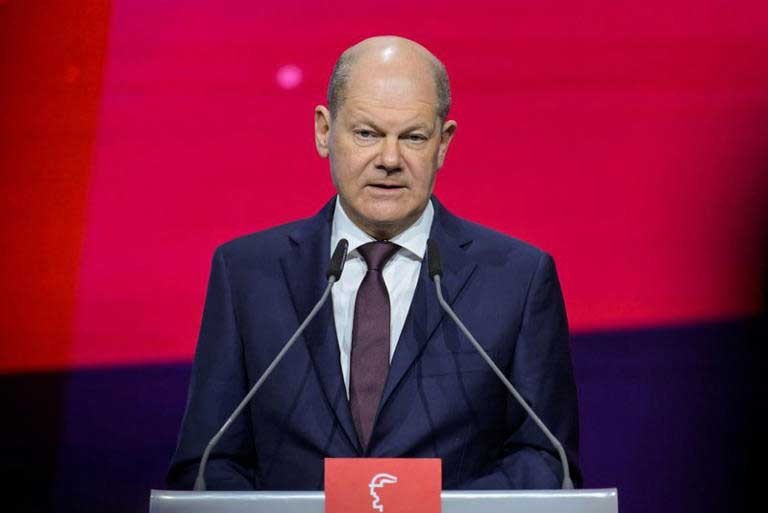
"If we succeed in locating more processing steps where the raw materials are in the ground, then that will not only create greater local prosperity ... we will ensure that we have more than just one supplier in the future," Scholz said in a speech at Germany's industrial trade fair Hannover Messe.
Scholz said he supported a free trade agreement between the European Union and Indonesia, which the two parties have been negotiating since 2016.
"I am committed to ensuring that we finally get this agreement across the finish line now," he said, adding that geopolitical developments in Europe and in Asia argued for similar deals with other countries such as Mexico and Australia, Kenya and India.
(Reporting by Riham Alkousaa and Andreas Rinke; Editing by Emelia Sithole-Matarise)
Annual industry trade fair Hannover Messe, in Hanover
© Thomson Reuters
Germany to support critical minerals-rich countries build processing capacity
Story by Reuters • 5h ago - 17-4-2023
BERLIN (Reuters) - Germany wants to help countries that are rich in critical minerals such as Chile, Indonesia and Namibia to build their own processing infrastructure to cut dependency on China, Chancellor Olaf Scholz said on Sunday.
Berlin is trying to rebalance its relationship with China and reduce reliance on Asia's powerhouse for key inputs, such as nickel and other critical minerals.
"If we succeed in locating more processing steps where the raw materials are in the ground, then that will not only create greater local prosperity ... we will ensure that we have more than just one supplier in the future," Scholz said in a speech at Germany's industrial trade fair Hannover Messe.
Scholz said he supported a free trade agreement between the European Union and Indonesia, which the two parties have been negotiating since 2016.
"I am committed to ensuring that we finally get this agreement across the finish line now," he said, adding that geopolitical developments in Europe and in Asia argued for similar deals with other countries such as Mexico and Australia, Kenya and India.
(Reporting by Riham Alkousaa and Andreas Rinke; Editing by Emelia Sithole-Matarise)
Annual industry trade fair Hannover Messe, in Hanover
© Thomson Reuters
4 yr. ago
Sydney Morning Herald
Australia’s no longer a small player in global politics, so we must be ready for hard choices
Story by George Brandis • 3h ago - 17-4-2023
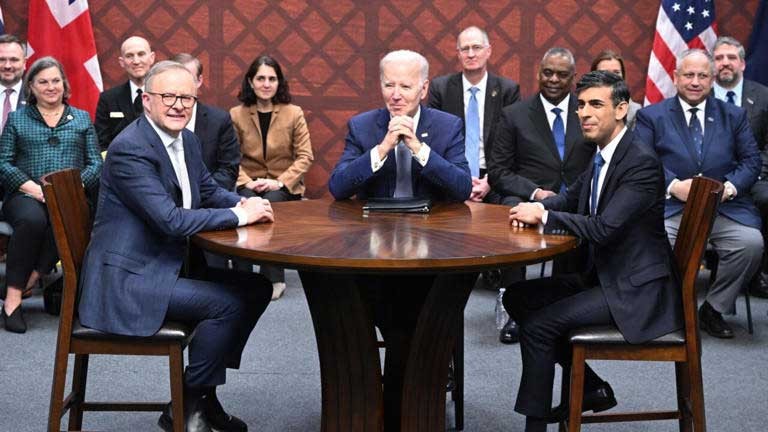
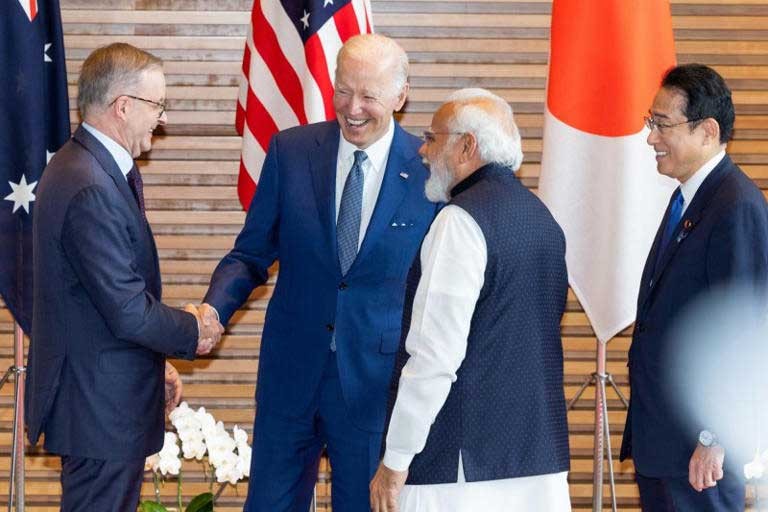
Next month, Anthony Albanese welcomes the President of the United States Joe Biden, Indian Prime Minister Narendra Modi and Japanese PM Fumio Kishida for the first leaders-level meeting of the Quad hosted by Australia.
He will also attend the G7 meeting in Hiroshima to which Australia has been invited – along with fellow ad hoc members India and South Korea. Albanese has also been invited to the critical NATO summit on Ukraine in July; it would be a serious mistake not to attend.
Those international engagements, together with last month’s announcement on the AUKUS acquisition program and the coming release of the Defence Strategic Review, all focus attention on the challenging strategic position which Australia now faces as the democracies come to terms with the belligerence of the world’s two great authoritarian states, Russia and China.
Some Western politicians and commentators refer to the current strategic situation as a “new Cold War”. Yet the comparison is too glib, and in many important ways inaccurate.
The Soviet Union, unlike contemporary China, was not an economic superpower. After the Sino-Soviet split of 1960, the two communist powers were mutually hostile. The heart of Cold War competition was Europe, fractured by what Churchill famously called the Iron Curtain. The conflict was cast in explicitly ideological rather than territorial terms – as a struggle between systems and ideas.
The better 20th-century comparison (although there are important differences) is with the 1930s, when authoritarian states, often asserting baseless historical claims, acted in defiance of the emergent system of collective security represented by the League of Nations: Japan in Manchuria, Italy in Abyssinia, Germany across Europe.
The war that followed was the only time that Australia has felt existentially threatened. While we now know from archival research that Japanese policy was not to invade Australia but to isolate it, that was not how it seemed at the time – particularly to those who lived in northern Australia.
There are few still alive who remember the Pacific War; every generation since, from the Baby Boomers onward, has grown up in a sense of relative security. Even Vietnam, the most serious war in our region which many Australians remember, was not accompanied by widespread fear of communist invasion if South Vietnam fell.
Australians’ sense of security has been buttressed, in particular, by two assumptions. First is our belief that we live in a peaceful corner of the world, sequestered from great power conflict historically centred on the Euro-Atlantic. Memories of the Pacific War passed into history with earlier generations. Vietnam divided us but didn’t threaten us. The south-west Pacific, as its name suggests, was a peaceful ocean, about as far away from the world’s trouble spots as it is possible to get.
Allied to our sense that we live in a peaceful part of the world, deep in the national psyche has been the belief that we are a small nation; if not irrelevant to global affairs, then at least of marginal significance to them: a kind of subtropical Scandinavia.
Australia’s no longer a small player in global politics, so we must be ready for hard choices
Story by George Brandis • 3h ago - 17-4-2023
Next month, Anthony Albanese welcomes the President of the United States Joe Biden, Indian Prime Minister Narendra Modi and Japanese PM Fumio Kishida for the first leaders-level meeting of the Quad hosted by Australia.
He will also attend the G7 meeting in Hiroshima to which Australia has been invited – along with fellow ad hoc members India and South Korea. Albanese has also been invited to the critical NATO summit on Ukraine in July; it would be a serious mistake not to attend.
Those international engagements, together with last month’s announcement on the AUKUS acquisition program and the coming release of the Defence Strategic Review, all focus attention on the challenging strategic position which Australia now faces as the democracies come to terms with the belligerence of the world’s two great authoritarian states, Russia and China.
Some Western politicians and commentators refer to the current strategic situation as a “new Cold War”. Yet the comparison is too glib, and in many important ways inaccurate.
The Soviet Union, unlike contemporary China, was not an economic superpower. After the Sino-Soviet split of 1960, the two communist powers were mutually hostile. The heart of Cold War competition was Europe, fractured by what Churchill famously called the Iron Curtain. The conflict was cast in explicitly ideological rather than territorial terms – as a struggle between systems and ideas.
The better 20th-century comparison (although there are important differences) is with the 1930s, when authoritarian states, often asserting baseless historical claims, acted in defiance of the emergent system of collective security represented by the League of Nations: Japan in Manchuria, Italy in Abyssinia, Germany across Europe.
The war that followed was the only time that Australia has felt existentially threatened. While we now know from archival research that Japanese policy was not to invade Australia but to isolate it, that was not how it seemed at the time – particularly to those who lived in northern Australia.
There are few still alive who remember the Pacific War; every generation since, from the Baby Boomers onward, has grown up in a sense of relative security. Even Vietnam, the most serious war in our region which many Australians remember, was not accompanied by widespread fear of communist invasion if South Vietnam fell.
Australians’ sense of security has been buttressed, in particular, by two assumptions. First is our belief that we live in a peaceful corner of the world, sequestered from great power conflict historically centred on the Euro-Atlantic. Memories of the Pacific War passed into history with earlier generations. Vietnam divided us but didn’t threaten us. The south-west Pacific, as its name suggests, was a peaceful ocean, about as far away from the world’s trouble spots as it is possible to get.
Allied to our sense that we live in a peaceful part of the world, deep in the national psyche has been the belief that we are a small nation; if not irrelevant to global affairs, then at least of marginal significance to them: a kind of subtropical Scandinavia.
4 yr. ago
Daily Mail
Donald Trump warns Tucker Carlson that China might take over world
Story by Alex Hammer For Dailymail.Com • Yesterday 4:26 pm - 13-4-2023
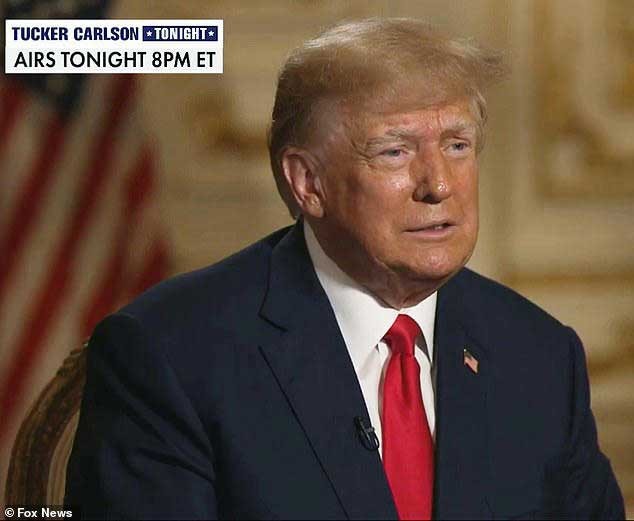
Former President Donald Trump has warned of the rising potential of China replacing the US as the world's foremost superpower - while hinting Joe Biden's administration may have been behind last year's sabotage of a prominent Russian gas pipeline.
Sitting down with Tucker Carlson for more than an hour, Trump, 76, made the series of sensational claims - while also bashing Manhattan Attorney General Alvin Bragg and other Big Apple prosecutors for his ongoing indictment.
The lengthy TV spot - proudly promoted by showrunners as 'Trump's first interview since his arraignment' - saw the ex-president attack a range of subjects including the withdrawal from Afghanistan, as well as his successor's questionable leadership.
Perhaps most notable, though, was the embattled politician's take on the country's rising rival overseas, whom he claimed could be plotting to push a large portion of the world off the US dollar standard.
Toward the end of the interview, Trump went on to allude that he believed it was the US, not Russia, that blew up the Nord Stream pipeline connecting the Putin-led country to Germany - perhaps in a bid to gain support from GOP voters come 2024.
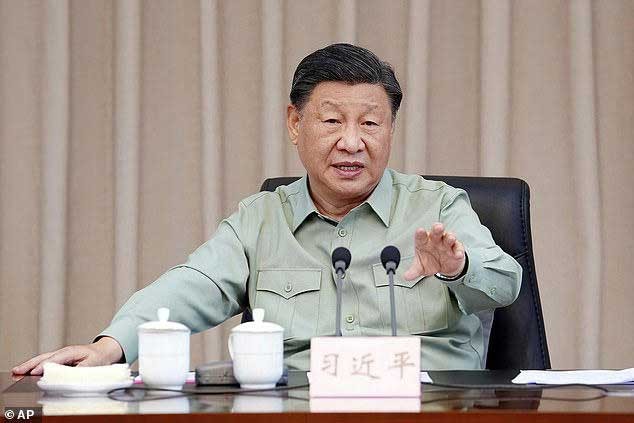
'Iran gets together with Saudi Arabia through China,' Trump told Carlson of the alleged conspiracy being carried out by Beijing and President Xi Jinping.
'And China is taking over,' he said, alleging the countries could now be moving to the Yuan. 'We will be a second-tier country if this happens.'
For decades - and arguably more than a century - the U.S. dollar has been the world's dominant currency.
In recent months - as China has come under fire following the discovery of several unconfirmed aircraft in US airspace and ramping tensions over the Taiwan Strait - the dollar has begun to diminish, while the yuan has started to gain more prominence.
Several experts have since observed that as the American currency declines, it leaves the door open for America's rivals to usher in an alternative, which if adopted by the oil-rich Saudis or another affluent group, could render the US's and other countries' treasuries a shadow of their former selves.
'I heard a couple of people say, "Well, we'll never lose a dollar standard,"' Trump told Carlson, speaking from his mansion in Mar-a-Lago before boarding a plane to New York City for a deposition in a business fraud case Thursday.
'Are they kidding?' he asked aloud. 'China wants to change the standard, the currency standard. And if that happens, that's like losing a world war.
'We'll be a second-tier country.'
The freshly fingerprinted Republican went to lay out the lay of the land in regards to the current state of the alleged legal tender warfare, saying that the US and its allies had already lost Brazil to the Chinese, and is now in the process of losing Columbia.
Iran and Russia, he claimed, are already backing Beijing, with both countries well known for their disapproval of the US and its ideals, as well as the West in general.
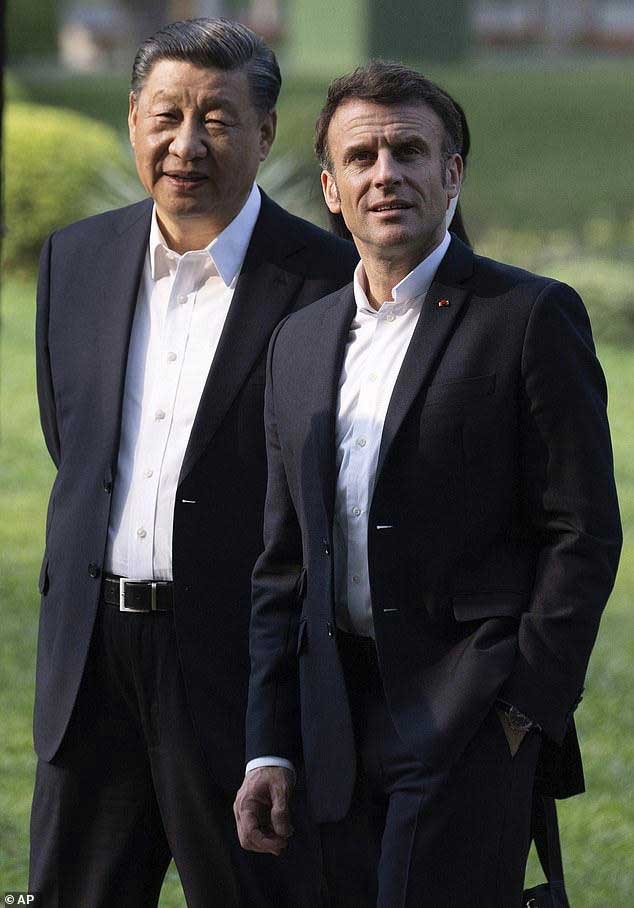
He also cited a recent meeting between French President Emmanuel Macron and President Jinping last week as a cause for alarm - suggesting the Chinese politician was headhunting other powerful leaders to join his emerging coalition.
Donald Trump warns Tucker Carlson that China might take over world
Story by Alex Hammer For Dailymail.Com • Yesterday 4:26 pm - 13-4-2023
Former President Donald Trump has warned of the rising potential of China replacing the US as the world's foremost superpower - while hinting Joe Biden's administration may have been behind last year's sabotage of a prominent Russian gas pipeline.
Sitting down with Tucker Carlson for more than an hour, Trump, 76, made the series of sensational claims - while also bashing Manhattan Attorney General Alvin Bragg and other Big Apple prosecutors for his ongoing indictment.
The lengthy TV spot - proudly promoted by showrunners as 'Trump's first interview since his arraignment' - saw the ex-president attack a range of subjects including the withdrawal from Afghanistan, as well as his successor's questionable leadership.
Perhaps most notable, though, was the embattled politician's take on the country's rising rival overseas, whom he claimed could be plotting to push a large portion of the world off the US dollar standard.
Toward the end of the interview, Trump went on to allude that he believed it was the US, not Russia, that blew up the Nord Stream pipeline connecting the Putin-led country to Germany - perhaps in a bid to gain support from GOP voters come 2024.
'Iran gets together with Saudi Arabia through China,' Trump told Carlson of the alleged conspiracy being carried out by Beijing and President Xi Jinping.
'And China is taking over,' he said, alleging the countries could now be moving to the Yuan. 'We will be a second-tier country if this happens.'
For decades - and arguably more than a century - the U.S. dollar has been the world's dominant currency.
In recent months - as China has come under fire following the discovery of several unconfirmed aircraft in US airspace and ramping tensions over the Taiwan Strait - the dollar has begun to diminish, while the yuan has started to gain more prominence.
Several experts have since observed that as the American currency declines, it leaves the door open for America's rivals to usher in an alternative, which if adopted by the oil-rich Saudis or another affluent group, could render the US's and other countries' treasuries a shadow of their former selves.
'I heard a couple of people say, "Well, we'll never lose a dollar standard,"' Trump told Carlson, speaking from his mansion in Mar-a-Lago before boarding a plane to New York City for a deposition in a business fraud case Thursday.
'Are they kidding?' he asked aloud. 'China wants to change the standard, the currency standard. And if that happens, that's like losing a world war.
'We'll be a second-tier country.'
The freshly fingerprinted Republican went to lay out the lay of the land in regards to the current state of the alleged legal tender warfare, saying that the US and its allies had already lost Brazil to the Chinese, and is now in the process of losing Columbia.
Iran and Russia, he claimed, are already backing Beijing, with both countries well known for their disapproval of the US and its ideals, as well as the West in general.
He also cited a recent meeting between French President Emmanuel Macron and President Jinping last week as a cause for alarm - suggesting the Chinese politician was headhunting other powerful leaders to join his emerging coalition.
4 yr. ago
Reuters
Nordic countries plan joint air defence to counter Russian threat
Story by Reuters • 7h ago - 25-3-2023
COPENHAGEN (Reuters) - Air force commanders from Sweden, Norway, Finland and Denmark said on Friday they have signed a letter of intent to create a unified Nordic air defence aimed at countering the rising threat from Russia.
The intention is to be able to operate jointly based on already known ways of operating under NATO, according to statements by the four countries' armed forces.
The move to integrate the air forces was triggered by Russia's invasion of Ukraine in February last year, commander of the Danish air force, Major General Jan Dam, told Reuters.
"Our combined fleet can be compared to a large European country," Dam said.
Norway has 57 F-16 fighter jets and 37 F-35 fighter jets with 15 more of the latter on order. Finland has 62 F/A-18 Hornet jets and 64 F-35s on order, while Denmark has 58 F-16s and 27 F-35s on order. Sweden has more than 90 Gripens jets.
It was unclear how many of those planes were operational.
The signing at the Ramstein Air Base in Germany last week was attended by NATO Air Command chief General James Hecker, who also oversees the U.S. Air Force in the region.
Sweden and Finland applied to join the trans-Atlantic military alliance last year. But the process has been held up by Turkey, which along with Hungary has yet to ratify the memberships.
The Nordic air force commanders first discussed the closer cooperation at a meeting in November in Sweden.
"We would like to see if we can integrate our airspace surveillance more, so we can use radar data from each other's surveillance systems and use them collectively," Dam said. "We are not doing that today."
(Reporting by Johannes Birkebaek and Jacob Gronholt-Pedersen; additional reporting by Terje Solsvik, Niklas Pollard and Anne Kauranen; Editing by Nick Macfie)
Sweden's Air Force Saab JAS 39 Gripen fighter takes off during the AFX 18 exercise in Amari military air base
© Thomson Reuters
Nordic countries plan joint air defence to counter Russian threat
Story by Reuters • 7h ago - 25-3-2023
COPENHAGEN (Reuters) - Air force commanders from Sweden, Norway, Finland and Denmark said on Friday they have signed a letter of intent to create a unified Nordic air defence aimed at countering the rising threat from Russia.
The intention is to be able to operate jointly based on already known ways of operating under NATO, according to statements by the four countries' armed forces.
The move to integrate the air forces was triggered by Russia's invasion of Ukraine in February last year, commander of the Danish air force, Major General Jan Dam, told Reuters.
"Our combined fleet can be compared to a large European country," Dam said.
Norway has 57 F-16 fighter jets and 37 F-35 fighter jets with 15 more of the latter on order. Finland has 62 F/A-18 Hornet jets and 64 F-35s on order, while Denmark has 58 F-16s and 27 F-35s on order. Sweden has more than 90 Gripens jets.
It was unclear how many of those planes were operational.
The signing at the Ramstein Air Base in Germany last week was attended by NATO Air Command chief General James Hecker, who also oversees the U.S. Air Force in the region.
Sweden and Finland applied to join the trans-Atlantic military alliance last year. But the process has been held up by Turkey, which along with Hungary has yet to ratify the memberships.
The Nordic air force commanders first discussed the closer cooperation at a meeting in November in Sweden.
"We would like to see if we can integrate our airspace surveillance more, so we can use radar data from each other's surveillance systems and use them collectively," Dam said. "We are not doing that today."
(Reporting by Johannes Birkebaek and Jacob Gronholt-Pedersen; additional reporting by Terje Solsvik, Niklas Pollard and Anne Kauranen; Editing by Nick Macfie)
Sweden's Air Force Saab JAS 39 Gripen fighter takes off during the AFX 18 exercise in Amari military air base
© Thomson Reuters
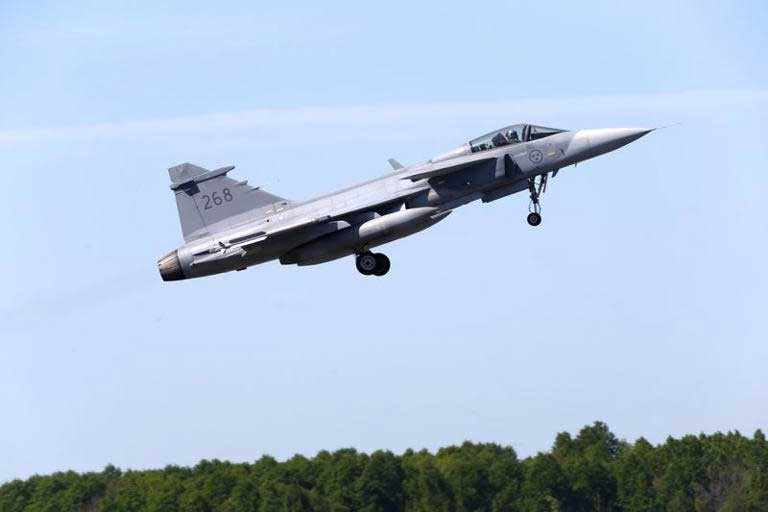
4 yr. ago
From India to China, Asia’s ‘rice bowl’ is under threat due to groundwater woes
Major rice producers need to shift to producing rice that is resilient to flooding and salinity, to cope with likely increase in frequency, intensity of floods and droughts
Each degree of global warming adds about 7 per cent moisture to the water cycle, leading to more extreme weather events, analysts have warned
Biman Mukherji - Published: 4:00pm, 18 Mar, 2023
Besides switching to more resilient farming practices, scientists are also advocating changing diets to prevent over-exploitation of land.
“We have to diversify our food basket to include millets and reduce our dependence on rice and wheat,” said Biraj Patnaik, a South Asia foods right activist and former adviser to India’s Supreme Court.
“We [India] produce only about 20 million metric tons of millet, which is a small fraction of our grains consumption. For India’s neighbours like Bangladesh and Pakistan, the consumption of millets is even lower.”
Agriculture scientists say that millet farming not only reduces water stress, it is also healthy as the grain is protein-rich and helps address malnutrition.
Globally, about US$700 billion in subsidies are fuelling excessive water consumption and other environmentally dangerous practices and these must be used to incentivise water conservation and access, according to the Global Commission for the Economics of Water.
Each degree of global warming added about 7 per cent moisture to the water cycle, leading to more extreme weather events, said Johan Rockström, director of the Potsdam Institute for Climate Impact Research and co-chair of the Commission.
“We are changing the entire global hydrological cycle,” he said.
Last year’s floods in Pakistan, which submerged a third of the country and devastated agriculture and livestock, has pushed the South Asian nation to the brink of a debt crisis as foreign exchange reserves have plummeted.
Seasonal floods in Malaysia during the annual monsoon season have killed at least four people and displaced more than 40,000 from their homes, leaving a trail of destruction and driving up prices of commodities.
On the other hand, rice farmers on the Indian subcontinent are bracing themselves for rainfall deficiency during the summer monsoon season. An unusually warm spring for the second year in a row has highlighted the kind of weather extremes that the region is facing.
Climate experts say Asia is more vulnerable than other continents due to its high population density and lower coping mechanisms available to most of the population.
Despite this, massive floods in Germany in 2021 show that even developed countries are often ill-prepared in tackling climate change.
Without action to transform the economics and governance of water, the world will fail on climate action and on the UN’s sustainable development goals, the Global Commission for the Economics of Water has warned.
The group said the world had failed to recognise that rivers, groundwater and atmospheric flows of water vapour cross international boundaries, and therefore such resources must be treated as a global common good.
Singapore’s Tharman Shanmugaratnam has called for farmers to be given incentives to adopt practices such as smart irrigation. Photo: Bloomberg
Major rice producers need to shift to producing rice that is resilient to flooding and salinity, to cope with likely increase in frequency, intensity of floods and droughts
Each degree of global warming adds about 7 per cent moisture to the water cycle, leading to more extreme weather events, analysts have warned
Biman Mukherji - Published: 4:00pm, 18 Mar, 2023
Besides switching to more resilient farming practices, scientists are also advocating changing diets to prevent over-exploitation of land.
“We have to diversify our food basket to include millets and reduce our dependence on rice and wheat,” said Biraj Patnaik, a South Asia foods right activist and former adviser to India’s Supreme Court.
“We [India] produce only about 20 million metric tons of millet, which is a small fraction of our grains consumption. For India’s neighbours like Bangladesh and Pakistan, the consumption of millets is even lower.”
Agriculture scientists say that millet farming not only reduces water stress, it is also healthy as the grain is protein-rich and helps address malnutrition.
Globally, about US$700 billion in subsidies are fuelling excessive water consumption and other environmentally dangerous practices and these must be used to incentivise water conservation and access, according to the Global Commission for the Economics of Water.
Each degree of global warming added about 7 per cent moisture to the water cycle, leading to more extreme weather events, said Johan Rockström, director of the Potsdam Institute for Climate Impact Research and co-chair of the Commission.
“We are changing the entire global hydrological cycle,” he said.
Last year’s floods in Pakistan, which submerged a third of the country and devastated agriculture and livestock, has pushed the South Asian nation to the brink of a debt crisis as foreign exchange reserves have plummeted.
Seasonal floods in Malaysia during the annual monsoon season have killed at least four people and displaced more than 40,000 from their homes, leaving a trail of destruction and driving up prices of commodities.
On the other hand, rice farmers on the Indian subcontinent are bracing themselves for rainfall deficiency during the summer monsoon season. An unusually warm spring for the second year in a row has highlighted the kind of weather extremes that the region is facing.
Climate experts say Asia is more vulnerable than other continents due to its high population density and lower coping mechanisms available to most of the population.
Despite this, massive floods in Germany in 2021 show that even developed countries are often ill-prepared in tackling climate change.
Without action to transform the economics and governance of water, the world will fail on climate action and on the UN’s sustainable development goals, the Global Commission for the Economics of Water has warned.
The group said the world had failed to recognise that rivers, groundwater and atmospheric flows of water vapour cross international boundaries, and therefore such resources must be treated as a global common good.
Singapore’s Tharman Shanmugaratnam has called for farmers to be given incentives to adopt practices such as smart irrigation. Photo: Bloomberg