

Explore more:
google.com/url?sa=j&url=https%3A%2F%2Fwww.coinsqueens.com%2Fblog...
Connect with our expert for more info:
Phone: +91 8778174637
WhatsApp: https://wa.me/+91877817463...
Email: salescoinsqueens.com
Telegram: https://telegram.me/Coinsq...
#betfairclonescript #BettingPlatform #OnlineBetting #BettingSoftware #sportsbetting #BettingPlatformDevelopment #CasinoBetting #coinsqueens #BettingSolution #onlinegaming #usa #uk #uae #india #singapore #canada #australia #germany #japan #saudiarabia .

Explore more:
https://www.coinsqueens.co...
Connect with our expert for more info:
Phone: +91 8778174637
WhatsApp: https://wa.me/+91877817463...
Email: salescoinsqueens.com
Telegram: https://telegram.me/Coinsq...
#cryptopaymentgateway #CryptoPayments #paymentgatewaydevelopment #BlockchainDevelopment #cryptodevelopment #web3development #digitalpayments #cryptocurrency #usa #uk #uae #india #singapore #canada #australia #germany #japan #saudiarabia .

Explore More: https://www.coinsqueens.co...
Connect with our expert for more info:
Phone: +91 8778174637
WhatsApp: https://wa.me/+91877817463...
Email: salescoinsqueens.com
Telegram: https://telegram.me/Coinsq...
#ondemandappdevelopment #ondemandapp #mobileappdevelopment #OnDemandServices #appdevelopmentcompany #customappdevelopment #ondemandbusiness #serviceappdevelopment #MobileApp #appdevelopment #coinsqueens #usa #uk #uae #india #singapore #canada #australia #germany #japan #saudiarabia


CoinsQueens delivers customizable trading software that can be customized to your business model, branding, and functional requirements. Special Offer Available, Grab It Now >> https://www.coinsqueens.co...
For any Queries? Talk to Our Experts:
Phone: +91 8778174637
WhatsApp:https://wa.me/+91877817463...
Email: salescoinsqueens.com
Telegram: https://telegram.me/Coinsq...
#MT5CloneScript #mt5platformdevelopment #mt5clone #metatrader5development #coinsqueens #CryptoBusiness #usa #uk #uae #india #singapore #canada #australia #germany #japan #saudiarabia


More info>> https://breedcoins.com/blo...
#web3gamedevelopmentservices #web3gaming #blockchaingamedevelopment #nftgamedevelopment #p2egaming #smartcontractdevelopment #gamedevelopmentcompany #usa #uk #canada #australia #india #uae #singapore #germany #france #japan

More info>> https://breedcoins.com/pax...
#paxfulclonescript #p2pcryptoexchange #cryptoexchangedevelopment #cryptotradingplatform #cryptocurrencyexchange #BlockchainDevelopment #web3development #usa #uk #canada #australia #india #uae #singapore #germany #france #japan

Visit Us>> https://breedcoins.com/pla...
#p2egamedevelopmentcompany #p2egamedevelopment #playtoearngaming #blockchaingamedevelopment #nftgaming #web3gaming #gamedevelopmentcompany #usa #uk #canada #australia #india #uae #singapore #germany #france #japan


Expanding globally isn’t easy for ******* anese law firms facing cost, compliance, and control challenges. This blog reveals smart, practical solutions to overcome these barriers and grow with confidence. Learn how to manage risks, stay compliant, and maintain control across borders. Ready to scale internationally? Read the full blog now and take your firm global!
https://www.interlegal.net...

Overcoming Barriers in Japanese Law Firms’ Global Expansion
Discover how Japanese law firms overcome cost, compliance & control barriers in global expansion. Learn proven strategies—read the full guide now!
https://www.interlegal.net/japanese-law-firms-global-expansion-barriers/

Japan Medical Tourism Market Size, Growth Report, 2033
The Japan Medical Tourism Market was valued at USD 4,923.1 Million in 2024 and is expected to grow to a strong CAGR of around 21.3% during 2025-2033.
https://univdatos.com/reports/japan-medical-tourism-market
Japan Beer Market Report, Size, Share, Trends & Segments 2033
Japan Beer market was valued at USD 24,700 million in 2024 and is expected to grow to a strong CAGR of around 3.5% during the forecast period (2025-2033F).
https://univdatos.com/reports/japan-beer-market
Japan Strategy Consulting Market Report, Size & Segments 2033
Japan Strategy Consulting market was valued at USD 1,950 million in 2024 and is expected to grow at a strong CAGR of around 5.8% during the forecast period (2025-2033F).
https://univdatos.com/reports/japan-strategy-consulting-market

Japan Car Insurance Market Report, Size, Trends & Segments 2033
Japan Car Insurance market was valued at USD 21,500 million in 2024 and is expected to grow to a strong CAGR of around 5.3% during the forecast period (2025-2033F).
https://univdatos.com/reports/japan-car-insurance-market
Japan Beer Market Report, Size, Share, Trends & Segments 2033
Japan Beer market was valued at USD 24,700 million in 2024 and is expected to grow to a strong CAGR of around 3.5% during the forecast period (2025-2033F).
https://univdatos.com/reports/japan-beer-market


Australia 'gullible' over US commitment: Bob Carr
Story by Dominic Giannini • 18-5-2023
Former foreign minister Bob Carr says Australia was gullible about the relationship with the United States after Joe Biden pulled out of a major trip down under.
The US president pulled out of the Quad leaders' meeting - which was due to be held in Sydney next week - to handle negotiations with Congress over the debt ceiling, which needs to be resolved by the end of the month to avoid a catastrophic default.
Prime Minister Anthony Albanese subsequently cancelled the meeting, which also included the Japanese and Indian leaders, on Wednesday after receiving a call from Mr Biden.
Bob Carr said Australians shouldn't believe the Quad "is as significant a forum as some suggest".
"We Australians have been enormously gullible and optimistic about our American partner," the former foreign minister and NSW premier told Sky News.
"We've got to start to factor into our view of the future in this world the prospect that America could be more unpredictable and unreliable.
"The fact the president can cancel the attendance and the meeting can apparently not proceed is a warning about the limits of America's attention span and one that Australia ought to take seriously."
The foreign minister's office said it didn't agree with the comments.
"President Biden is a great friend of Australia. We appreciate that friendship and the role the US plays in the region and in the world," a spokesman for the minister said.
The Indian prime minister will still travel to Australia for a bilateral meeting. The four leaders are planning to meet on the sidelines of the G7 in Japan this weekend.
Mr Albanese said it was disappointing Mr Biden couldn't visit but he was still invited to in the future. The president was set to address parliament on Tuesday.
"The Quad is an important body and we want to make sure that it occurs at leadership level and we'll be having that discussion over the weekend," the prime minister said.
Opposition foreign affairs spokesman Simon Birmingham said the shake-up was disappointing but understandable.
"I hope the United States can give real priority to rescheduling that visit and ensuring that that engagement with the Pacific Island leaders happens as soon as possible," he said.

US, Australian military aid for Ukraine on the table
Story by Dominic Giannini • 3h ago - 5-5-2023
Further assistance for Ukraine is on the cards ahead of the federal budget amid speculation Australia and the United States could announce a joint support package as soon as the end of the month.
The two nations are reportedly working together on an assistance package that could mirror Canberra's agreement with Paris to jointly supply ammunition to repel the Russian invasion.
The appetite for a joint military package, first reported by the Australian Financial Review and verified by AAP, comes ahead of President Joe Biden visiting Australia.
Treasurer Jim Chalmers said Australia would continue to support Ukraine.
"We are a big supporter of the Ukrainian efforts to repel the Russian invaders and that will be represented in the budget," he told reporters in Canberra on Friday.
"We salute the quite remarkable courage and commitment of the Ukrainian people."
The Quad summit brings together leaders from Australia, Japan, India and the US in Sydney in the coming weeks to focus on peace and stability in the Indo-Pacific.
Ukraine's ambassador to Australia Vasyl Myroshnychenko said he wouldn't speculate on any upcoming package but welcomed any assistance.
"It's too early to talk about it but it would be good if something like that came because that would help Ukraine a lot," he told AAP.
The NATO security summit in July, which Prime Minister Anthony Albanese will also attend, is another opportunity to unveil a joint aid package.
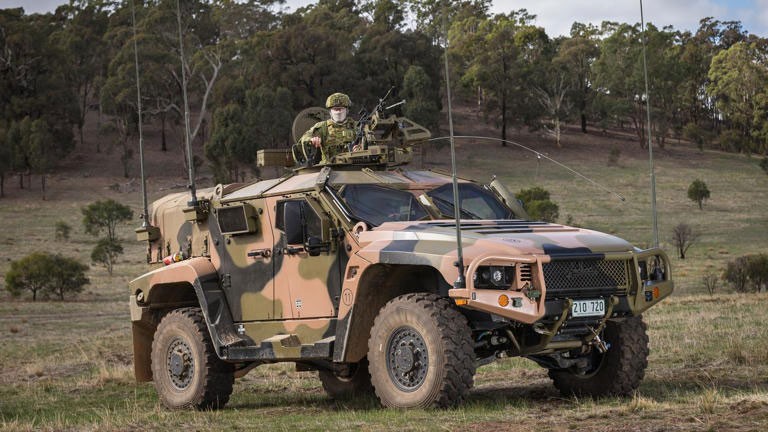
Kyiv has submitted a wish list of aid ahead of the federal budget on Tuesday, which includes Hawkei armoured vehicles, artillery and ammunition.
Hundreds of Ukrainian-Australians rallied around Australia on Saturday, calling for the government to provide Hawkeis to help defend their homeland.
Amid concerns about aid fatigue with the war entering its second year, Mr Myroshnychenko said it was important democratic nations continued to stand up to Russia and protect against rising authoritarianism.
"It is extremely important to protect democracy. We need to make sure we create the deterrence, and the deterrence we need is to make sure Ukraine wins," he said.
"We need to make sure we don't embolden other authoritarian leaders to do something similar in the region."
Ukrainian-Australians want Canberra to provide Hawkei armoured vehicles to defend their homeland.
© PR HANDOUT IMAGE PHOTO
China's aircraft carriers play 'theatrical' role but pose little threat yet
Story by By Greg Torode, Eduardo Baptista and Tim Kelly • 3h ago - 5-5-2023
By Greg Torode, Eduardo Baptista and Tim Kelly
HOPES AND SHORTCOMINGS
Chinese military and government researchers appear aware of the challenges, according to a Reuters review of over 100 recent articles published in dozens of publicly available Chinese defence journals.
The official PLA Daily in October published an interview with an aircraft carrier aviation unit where the deputy chief of staff, Dai Xing, acknowledged "many shortcomings in preparing for war", and a gap between sailors' training level and combat requirements.
A September editorial published in a magazine run by a PLA weapons manufacturer, titled "Four great advantages the PLA has in attacking Taiwan", did not mention the role of Chinese carriers. Instead, it said, China's land-based ballistic missiles would be enough to overwhelm potential intervention from U.S. carriers.
Two earlier editorials in the same publication, Tank and Armoured Vehicle, noted that China's carriers would remain in their infancy for the foreseeable future and that other surface ships would be more useful in a conflict in the East China Sea.
Other articles in similar publications outline pilot recruitment and training problems, vulnerabilities to submarine attack and command issues - which some foreign analysts say is a problem for a navy that still sails with political commissars with executive authority.
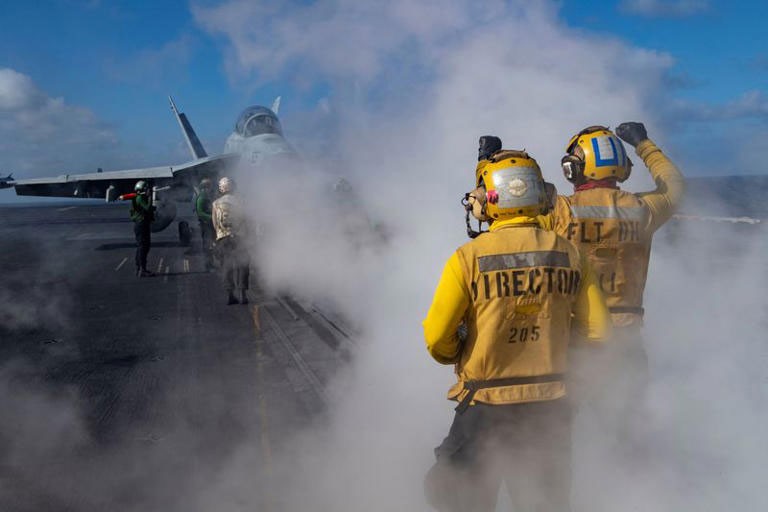
When at sea, U.S. carriers fly almost constantly, routinely operating fighter, electronic-warfare and surveillance aircraft to create a protective screen around the battlegroup.
Beyond the expense and danger of such operations, one key element is mastering devolved command systems, particularly in a crisis such as a fire or crash onboard when planes are airborne and the flight deck is disabled.
The U.S. has spent decades perfecting such systems, having expanded carrier operations after their importance was highlighted in the Allied victory over Japan in the Pacific in World War Two.
"The continuous operation of its carriers sits at the very core of what makes the U.S. military absolutely preeminent," said Singapore-based defence analyst Alexander Neill, an adjunct fellow with Hawaii's Pacific Forum think tank.
In the medium term, China is likely to start sending battlegroups into the Indian Ocean, where China's presence is minimal beyond routine submarine operations, the attaches and defence analysts said.
Operating far from the security of land-based airfields would test China's capability, but preparations are underway.
The pier at China's first major offshore military base in Djibouti was recently extended, and could now fit a carrier, the Pentagon report noted.
(Reporting by Greg Torode in Hong Kong, Eduardo Baptista in Beijing and Tim Kelly in Tokyo; additional reporting by Idrees Ali and Phil Stewart in Washington; editing by David Crawshaw and Gerry Doyle)
China's aircraft carriers play 'theatrical' role but pose little threat yet
Story by By Greg Torode, Eduardo Baptista and Tim Kelly • 3h ago - 5-5-2023
By Greg Torode, Eduardo Baptista and Tim Kelly
FROM SKI JUMPS TO CATAPULTS
As the Liaoning and Shandong gradually increase the tempo of their drills, China is preparing for sea trials of its next-generation carrier, the 80,000-tonne Fujian, state media reported last month. The Fujian is significantly larger, though conventionally powered, and will launch aircraft from electromagnetic catapults.
The ship, which the Pentagon report said could be operational by 2024, is expected to carry new variants of the J-15 jet fighter, replacing the existing model that foreign analysts consider underpowered.
"The Fujian, with its more modern capabilities, will be just another test bed for a good few years," said Collin Koh, a defence scholar at Singapore's S. Rajaratnam School of International Studies.
"It won't be until we see the next generation of carriers that the Chinese designs and the PLAN's intentions will really settle down."
The carrier program reflects the ruling Communist Party's aim of making the People's Liberation Army (PLA) a "world class" military by 2049, part of President Xi Jinping's vision of building "a great modern socialist country".
One indication of China's ambitions, the attaches said, will be if carriers built after the Fujian are nuclear-powered like U.S. ones, allowing global range.
A study published in December by the non-partisan U.S. Congressional Research Service noted that China would use its carriers to project power "particularly in scenarios that do not involve opposing U.S. forces" and "to impress or intimidate foreign observers".
Several countries operate aircraft carriers but the U.S. remains the most dominant, running 11 carrier battlegroups with global reach.
China, by contrast, could use its carriers primarily in the Asian theatre, working in tandem with submarines and anti-ship missiles to attempt to control its near seas.
The Shandong's appearance off Taiwan's east coast to stage mock strikes last month surprised some analysts, given the island's proximity to land-based airfields. But, in the short term at least, China's military would struggle to defend the carrier out in the western Pacific in a clash with U.S. and allied forces.
"China's objective with the deployment of the Shandong is clear, it is a symbol of its political anger" over U.S. engagement with Taiwan, said Yoji Koda, a retired admiral who commanded the Japanese fleet.
In a battle, he said, it "would be a very good target for U.S. and Japanese forces, and they would take it down at the very beginning."
A U.S. defence official, speaking on the condition of anonymity as they were not authorised to talk publicly, said while China had made progress with its carriers, it had yet to master operations in difficult conditions or how to protect the vessels.
One question was how the ships would be relevant in a conflict, the official said.
China's aircraft carriers play 'theatrical' role but pose little threat yet
Story by By Greg Torode, Eduardo Baptista and Tim Kelly • 3h ago - 5-5-2023
By Greg Torode, Eduardo Baptista and Tim Kelly
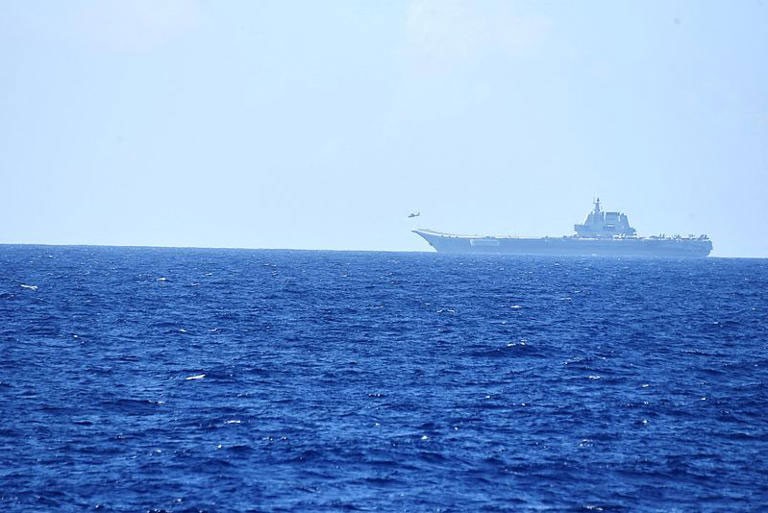
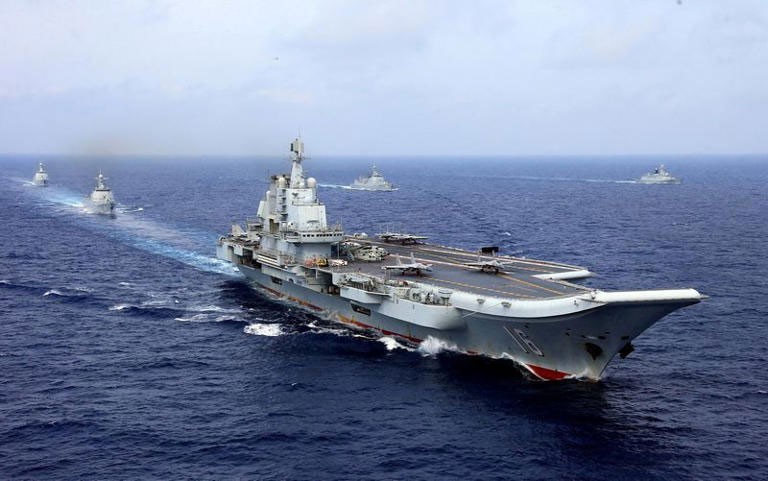
HONG KONG (Reuters) - When China sailed one of its two active aircraft carriers, the Shandong, east of Taiwan last month as part of military drills surrounding the island, it was showcasing a capability that it has yet to master and could take years to perfect.
As Beijing modernizes its military, its formidable missile forces and other naval vessels, such as cutting-edge cruisers, are posing a concern for the U.S. and its allies. But it could be more than a decade before China can mount a credible carrier threat far from its shores, according to four military attaches and six defence analysts familiar with regional naval deployments.
Instead, China's carriers are more of a propaganda showpiece, with doubts about their value in a possible conflict with the U.S. over Taiwan and about whether China could protect them on longer-range missions into the Pacific and Indian oceans, the attaches and analysts told Reuters.
China's Defence Ministry did not respond to questions about its carrier program, though dozens of articles in state-linked journals reviewed by Reuters reveal awareness among Chinese military analysts about shortcomings in the country's carrier capability.
While some regional press coverage, partially based on Chinese state media reports, portrayed recent drills around Taiwan as active patrols and a military challenge to the U.S. and its allies, the Chinese carriers are effectively still in training mode, eight of the experts said.
Landing of aircraft at night and in bad weather, for instance - crucial to regular offshore carrier operations - remain far from routine, several of the attaches and analysts said.
And in a conflict, China's carriers would be vulnerable to missile and submarine attacks, some of the experts said, noting the People's Liberation Army Navy (PLAN) has not perfected protective screening operations, particularly anti-submarine warfare.
"Unlike other parts of their military modernisation, there is something politically theatrical about their carrier deployments so far," said Trevor Hollingsbee, a former British naval intelligence analyst.
"Carrier operations are a very complicated game, and China's got to figure this out all by itself. It still has a long, long way to go."
At times, China's carrier pilots have relied on land-based airfields for takeoffs or landings, as well as for extra air cover and surveillance, the attaches told Reuters on the condition of anonymity as they were not authorised to speak publicly.
And though China's Liaoning and Shandong carriers have each sailed into the western Pacific in recent months, approaching U.S. bases on Guam, they remained within range of coastal Chinese airfields, according to Rira Momma, professor of security studies at Takushoku University's Institute of World Studies, who reviewed Japanese defence ministry tracking data.
Both the Liaoning - a refitted ex-Soviet vessel - and the Chinese-built Shandong have jump ramps for take offs, which limit the number and range of aircraft on board.
Anti-submarine helicopters operate from both carriers and China's Type 055 cruisers but the carriers have yet to deploy an early warning aircraft, relying so far on land-based planes, the 10 experts said.
Nato planning to open Japan office to deepen Asia-Pacific ties – report
Story by Daniel Hurst • 9:40 pm - 3-5-2023
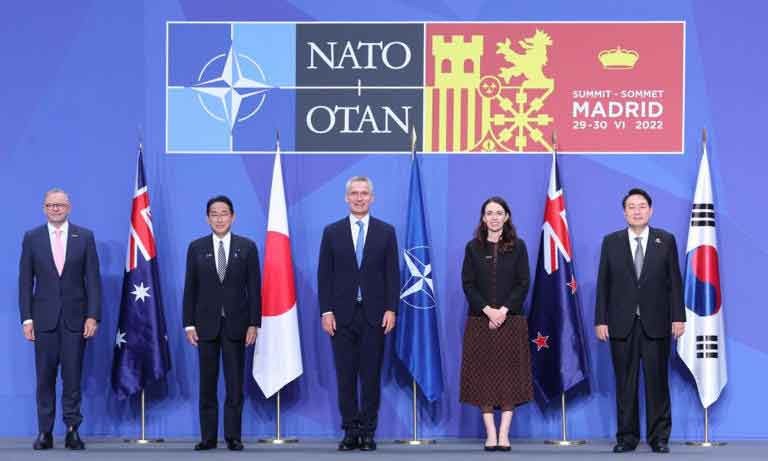
Nato is reportedly planning to open a liaison office in Japan to coordinate with close partners across the Indo-Pacific region including Australia, South Korea and New Zealand.
The plans are likely to attract criticism from the Chinese government, which has previously warned the western alliance against extending “its tentacles to the Asia-Pacific”.
Nikkei Asia reported on Wednesday that Nato and Japan plan to upgrade their cooperation on tackling cyber threats, disinformation and emerging and disruptive technologies.
Nato’s planned new liaison office in Tokyo – to open next year – will be the first of its kind in Asia and will allow the military alliance to conduct periodic consultations with Japan and key partners such as Australia, according to Nikkei Asia.
The publication said the plans were confirmed by Japanese and Nato officials.
A spokesperson for Nato, Oana Lungescu, declined to give details of the “ongoing deliberations” when contacted by the Guardian on Wednesday.
But Lungescu said liaison arrangements were regularly reviewed “to ensure that they best serve the needs of both Nato and our partners”.
“As the secretary general said in Tokyo in February, among Nato’s partners, none is closer or more capable than Japan”.
She added: “We share the same values, interests and concerns, including supporting Ukraine and addressing the security challenges posed by authoritarian regimes, and our partnership is getting stronger.”
In its “strategic concept”, unveiled last year, Nato argued that China posed “systemic challenges” to Euro-Atlantic security even though Russia remained “the most significant and direct threat to allies’ security”.
Nato vowed to “strengthen dialogue and cooperation with new and existing partners in the Indo-Pacific to tackle cross-regional challenges and shared security interests”.
Nato accused China of carrying out “malicious hybrid and cyber operations” and “remaining opaque about its strategy, intentions and military build-up”.
China responded to the Nato assessment by urging the alliance “stop provoking confrontation by drawing ideological lines”.
A Chinese foreign ministry spokesperson, Zhao Lijian, said last year that Nato had “extended its tentacles to the Asia-Pacific and sought to export the cold war mentality and replicate bloc confrontation”.
Australian prime minister, Anthony Albanese, attended the Nato summit in Madrid last year. The leaders of the Asia Pacific Partners (AP4) grouping – Australia, Japan, South Korea and New Zealand – met on the sidelines.
Albanese has accepted an invitation to travel to the next Nato summit in Vilnius, Lithuania, in July.
“Australia shares with Nato members a commitment to supporting democracy, peace, and security and upholding the rule of law,” a spokesperson for Albanese said last month.
The Danish ambassador to Japan, Peter Taksoe-Jensen, told Nikkei Asia concerns about China’s impact on trans-European security meant it was “important for Nato to keep up relations with our partners in this region”.
He said the proposed new Nato liaison office “would be a very visible, real way to strengthen the relations between Japan and Nato”.
Japan’s prime minister, Fumio Kishida, who will host the G7 summit in Hiroshima this month, has said he views the security environment within east As
Japan PM Kishida to visit South Korea for summit with Yoon - Kyodo
Story by Reuters • 2h ago - 29-4-2023
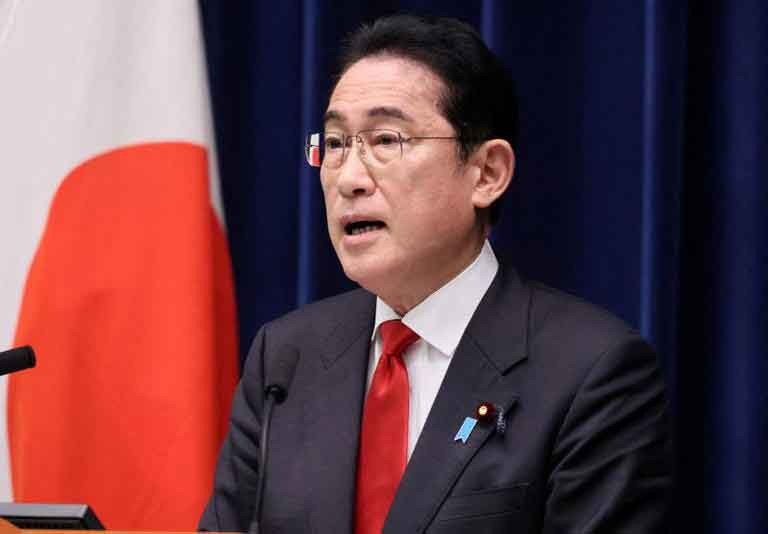
TOKYO (Reuters) - Japanese Prime Minister Fumio Kishida will visit South Korea early next month and hold a meeting with President Yoon Suk Yeol, around May 7-8, Kyodo reported, citing multiple unnamed Japanese and South Korean diplomatic sources.
The aim of the meeting will be to confirm the strengthening of cooperation over North Korea, ahead of the Group of 7 summit in Hiroshima later in the month, the news agency said.
A source with knowledge of the plans confirmed the meeting was expected ahead of the G7 summit.
Ties between Japan and South Korea, long strained by issues including war time compensation and trade, have been improving in recent months in the face of North Korea's frequent missile launches and China's more muscular role on the global stage.
(Reporting by Kevin Buckland in Tokyo and Trevor Hunnicutt in Washington; Editing by Lincoln Feast)
U.S. negotiator says Biden would be warmly welcomed in Pacific
Story by Reuters • 11h ago - 29-4-2023
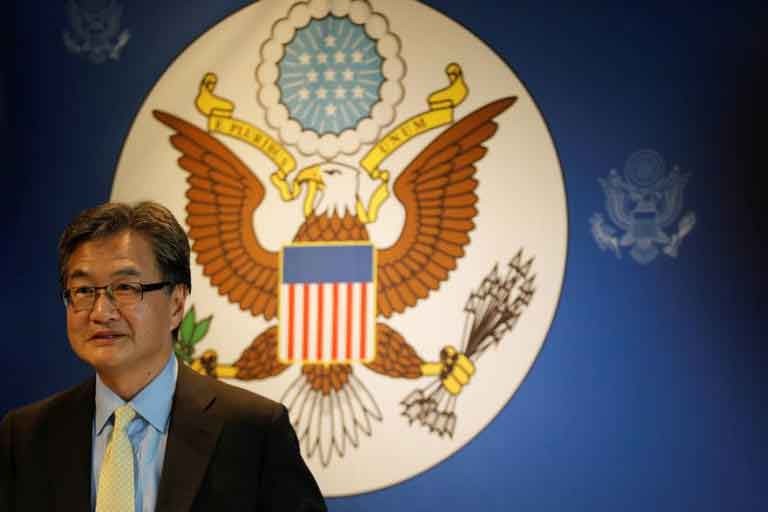
WASHINGTON (Reuters) - The United States needs to accelerate diplomatic "catch up" with the Pacific island region in the face of Chinese competition, a U.S. diplomat said on Friday, adding that he was sure President Joe Biden would be warmly welcomed there if he decided to visit.
Joseph Yun, a special presidential envoy who leads renegotiation of agreements with three Pacific island states, was asked at a U.S. think tank about what officials from Papua New Guinea say are plans by Biden to make a brief stop there on May 22.
"Obviously for the Pacific, I am sure they would welcome President Biden, if he were to go there," Yun told the Hudson Institute.
"I don't think that decision has been fully made," he said while adding: "It is a good thing whenever heads of state get engaged on new issues."
A spokesperson from the PNG prime minister's office told Reuters on Thursday that Biden will stop in the capital Port Moresby for three hours on the way from a G7 meeting in Japan to Australia to attend the a summit of the Quad countries - the United States, Japan, India and Australia.
A Pacific islands source told Reuters that Biden was also expected to meet with more than a dozen Pacific islands leaders, but the White House National Security Council has not responded to request for comment on the plans.
Yun said the level of Chinese coercion in the region that is crucial to U.S. national security, but that had been neglected by the United States, is concerning.
"So now we're playing ... a little bit of catch up, I would say, and but you know, we need to accelerate our catch up."
Yun has been leading talks to renew so-called Compact for Free Association (COFA) agreements with the Marshall Islands, Palau and the Federated States of Micronesia under which the United States retains responsibility for the islands' defense and gains exclusive access to huge strategic swaths of the Pacific. The deals are due expire this year and next.
Yun said the "topline" agreements in the negotiations with the nations would provide them with a total of about $6.5 billion over 20 years.
He said he was very optimistic the agreements would be finalized and that the U.S. Congress would approve them in a short time, but there is still some hard work ahead.
(Reporting by David Brunnstrom; writing by Jasper Ward; Editing by Alistair Bell)
FILE PHOTO: U.S. Special Representative for North Korea Policy Joseph Yun arrives at a meeting with the media in Bangkok, Thailand
© Thomson Reuters
Factbox-Countries rush to evacuate foreign citizens from Sudan
Story by Reuters • 1h ago - 28-4-2023
RUSSIA
Russia has not yet announced any evacuation of its embassy or its nationals from Khartoum. Kremlin spokesman Dmitry Peskov said the Russians in Sudan were in close contact with Moscow.
"Cooperation and consultations are going on round the clock, and various possibilities are being examined. For now, no decision has been taken."
JAPAN
All Japanese people who wished to leave have been evacuated, Prime Minister Fumio Kishida said.
Forty-five left on Monday night on a Japanese military flight, and eight others left with the help of France and other groups, he said.
SWITZERLAND
Switzerland has already shut its embassy and evacuated all Swiss staff and their families.
CHINA
China said most Chinese nationals have been safely evacuated in groups to neighbouring countries. The defence ministry deployed naval ships to pick up and evacuate citizens on Wednesday.
The foreign ministry said between Tuesday and Thursday, nearly 800 people have been transferred by sea and more than 300 have travelled to neighbouring countries of Sudan by land. There have been no casualty reports so far, the ministry said.
The Chinese consulate-general in Jeddah issued a notice on Wednesday advising citizens who planned to evacuate to Saudi Arabia to enter through the Jeddah Islamic Port.
INDIA
More than 1,200 Indians evacuated from Sudan had arrived in Jeddah in Saudi Arabia as of Thursday, and would soon be repatriated to India, the country's junior foreign minister V. Muraleedharan said.
INDONESIA
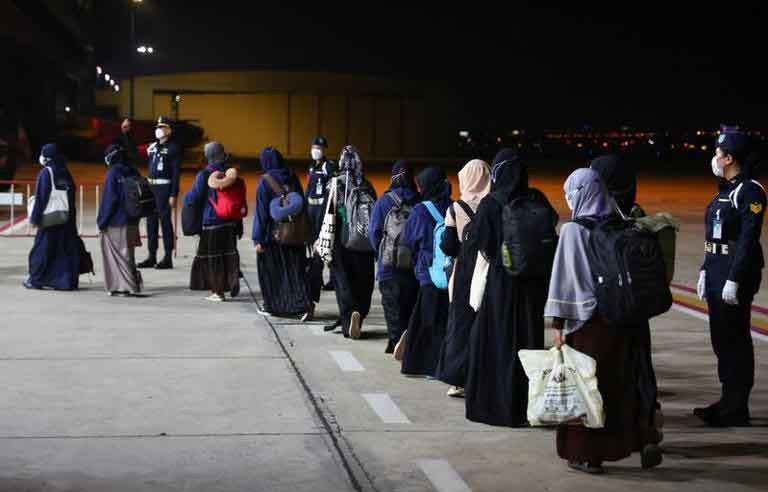
Out of 900 Indonesians who have been evacuated from Sudan, nearly 400 arrived back in Indonesia on Friday morning, the foreign ministry said.
CANADA
Canada conducted its first evacuation operation in Sudan on Thursday, airlifting over 100 hundred people, including Canadians and other nationals, on two flights from the war-torn North African country, senior government officials said.
Canada would deploy about 200 troops to coordinate evacuations from war-torn Sudan, Canadian Defence Minister Anita Anand said on Wednesday. About 180 Canadians had already been evacuated with the help of other countries.
There are about 1,800 Canadians in Sudan, out of which about 700 have requested assistance from the foreign ministry, according to the Canadian government.
UKRAINE
Ukraine said it had rescued 87 of its citizens - most of them pilots, aircraft technicians and their families - among a total of 138 civilians, who also included citizens of Georgia and Peru.
KENYA
Kenya's foreign affairs ministry said on Thursday the government had evacuated 342 people who had arrived in Jeddah in Saudi Arabia from Port Sudan.
SOUTH AFRICA
South Africa said it expected the last 12 of its nationals known to be in Sudan to have left on Tuesday.
(Compiled by Reuters editors)
Australia aims to start making guided missiles within two years
Story by Reuters • Yesterday 3:15 pm - 26-4-2023
SYDNEY (Reuters) - Australia said on Wednesday it would start domestic manufacture of guided missiles by 2025, two years sooner than expected, in a wide-ranging shakeup of defence arrangements to focus on long-range strike capability.
BREAKING NEWS: Search under way after Australian man goes overboard on cruise to Hawaii
Reuters
Reuters
Australia aims to start making guided missiles within two years
Story by Reuters • Yesterday 3:15 pm
SYDNEY (Reuters) - Australia said on Wednesday it would start domestic manufacture of guided missiles by 2025, two years sooner than expected, in a wide-ranging shakeup of defence arrangements to focus on long-range strike capability.
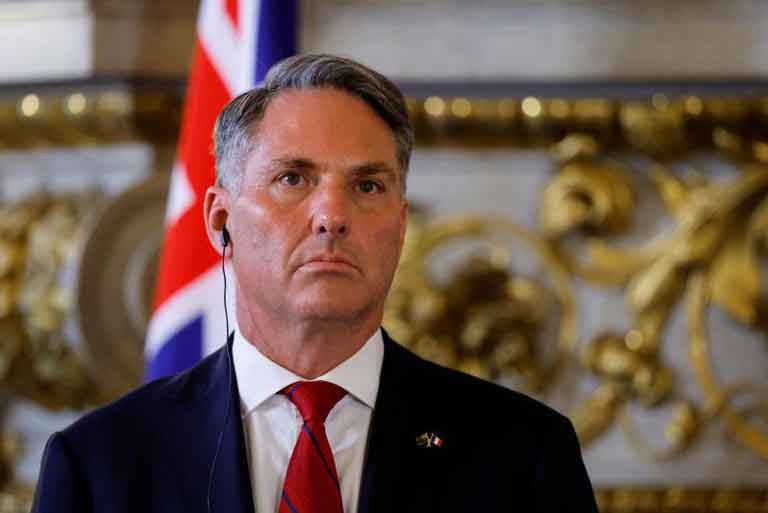
France and Australia's Foreign and Defence ministers meet in Paris
France and Australia's Foreign and Defence ministers meet in Paris
© Thomson Reuters
On Monday, the Labor government said it accepted the recommendations of a defence review that said China had launched the largest military buildup of any country since the end of World War Two without transparency, and major power competition had "potential for conflict" in the Indo Pacific.
The timetable for domestic manufacture of guided weapons, originally set for 2027, will be hastened to within two years by allocating A$2.5 billion to the project, Defence Minister Richard Marles said in media interviews.
That represents a more than doubling in funding, which is being diverted from cancelled defence projects.
"That does radically shift the timeframe forward in terms of a manufacturing capability," Marles said in a television interview with Nine on Wednesday.
A further A$1.6 billion will be spent on buying long‑range strike systems from overseas within two years, he said.
The government was already in talks with missile manufacturers Raytheon and Lockheed about establishing production in Australia, Marles added.
Discussions were also being held with Kongsberg, the Norwegian manufacturer of the naval strike missile Australia had already agreed to purchase, he said.
Pat Conroy, the minister for defence industry, said the review recommended acquiring Kongsberg's joint strike missile which would "allow us to look at manufacturing the Strike Missile family of missiles in Australia".
Australia will work more closely with its security ally, the United States, while boosting diplomacy in the region to deter conflict and step up defence ties with India, Japan, South East Asian nations and Pacific islands, the review said.
(Reporting by Kirsty Needham; Editing by Clarence Fernandez)
France and Australia's Foreign and Defence ministers meet in Paris
© Thomson Reuters
U.S. military prepares options for possible Sudan evacuation
Story by By Phil Stewart and Daphne Psaledakis • 3h ago - 22-4-2023
By Phil Stewart and Daphne Psaledakis
WASHINGTON/RAMSTEIN AIR BASE, Germany (Reuters) - The U.S. military is preparing options to evacuate the U.S. embassy in Sudan, the U.S. Defense Secretary said on Friday as the Biden Administration weighed whether to pull personnel out of the country's increasingly unstable capital.
"We've deployed some forces into theater to ensure that we provide as many options as possible if we are called on to do something. And we haven't been called on to do anything yet," U.S. Defense Secretary Lloyd Austin told a news conference at Ramstein Air Base in Germany. "No decision on anything has been made."
Forces commanded by two previously allied leaders of Sudan's ruling council began a violent power struggle last weekend. Hundreds have died so far and a nation reliant on food aid has been tipped into what the United Nations calls a humanitarian catastrophe.
John Kirby, the White House national security spokesperson, said President Joe Biden approved a plan this week to move U.S. forces nearby in case they are needed to help evacuate American diplomats.
"We are simply pre-positioning some additional capabilities nearby in case that they're needed," Kirby told reporters.
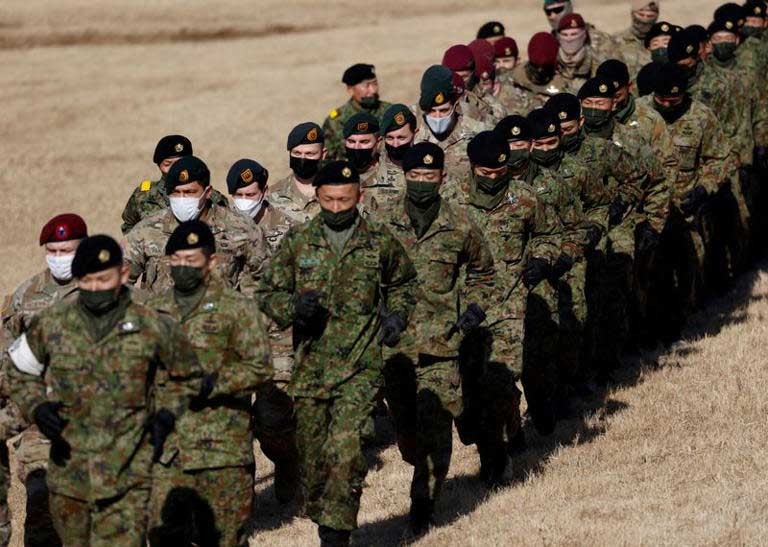
With the airport in Khartoum caught in the fighting and the skies unsafe, nations including the United States, Japan, South Korea, Germany and Spain have been unable to evacuate embassy staff.
Cameron Hudson, a U.S. Africa policy expert at the Center for Strategic and International Studies and former director for African affairs at the National Security Council, said the level of violence in Khartoum makes the situation for an evacuation unpredictable.
"The major challenge is there's a war going on across all corners of the city and the international airport in the middle of the city is not functional right now, so the challenge is moving people to a safe space to evacuate them," Hudson said.
Washington has said that private American citizens in Sudan should have no expectation of a U.S. government-coordinated evacuation from the country. State Department deputy spokesperson Vedant Patel said the United States was in touch with several hundred American citizens understood to be in Sudan.
Earlier on Friday, the State Department confirmed the death of one U.S. citizen in the country.
UN WORKS TO EXTRACT STAFF
Other countries and the United Nations are also looking at how they can evacuate citizens and employees.
The U.N. has been trying to extract staff from "very dangerous" zones in Sudan to move them to safer locations, the top U.N. aid official in Sudan, Abdou Dieng, said on Thursday. Dieng said he had been moved to a safer area on Wednesday.
The U.N. has about 4,000 staff in Sudan, of which 800 are international staff. A U.N. source, speaking on condition of anonymity, said there were a further 6,000 U.N. staff family members and associated personnel in Sudan.
Switzerland said on Friday it was examining ways to evacuate nationals from Sudan, and Sweden said it will evacuate embassy staff and families as soon as possible.
Spanish military aircraft are on standby and ready to evacuate some 60 Spanish nationals and others from Khartoum, and South Korea sent a military aircraft to stand by at a U.S. military base in Djibouti to evacuate its nationals when pos

Analysis-Australia prepares more assertive military stance to deter conflict
Story by By Kirsty Needham • Yesterday 7:04 pm - 21-4-2023
By Kirsty Needham
SYDNEY (Reuters) - Australia will outline its defence plans next week, and its leaders are previewing a more assertive posture - in which it can strike farther, faster - while working with mid-size allies to reduce tensions as the United States and China square off.
The Labor government of Anthony Albanese is expected to lay out those proposals in response to a wide-ranging and secret defence review of Australia's investment in modern military systems and logistics, and how they would fare in a sudden conflict.
The review examined how Australia could better integrate with its AUKUS partners the United States and Britain, as well as other allies, the government has said. The AUKUS countries last month announced Australia would spend A$368 billion on nuclear-powered submarines, and will jointly develop hypersonic weapons to catch up to China.
British and U.S. nuclear submarines will also start rotations through a Western Australian naval base in advance of the joint production of the AUKUS nuclear submarine in the next decade.
Foreign Minister Penny Wong and Chief of the Defence Force Angus Campbell have said in recent days that Australian forces need to be capable of responding to potential adversaries whose weapons are faster, can strike farther and are more precise than in the past.
Changing that equation is crucial to the future of Australia's military, they said.
In an address to the National Press Club on Monday, Wong said the region should not be reduced to a binary competition between the United States and China; Australia wanted to work with other middle-sized countries, including in Southeast Asia, to deter aggression, she said.
"America is central to balancing a multipolar region... We cannot just leave it to the U.S.," she said.
Since 2017, after Australia's top trading partner, China, began militarising islands in the South China Sea along vital trade routes, and the Trump presidency called into question the United States commitment to U.S. international engagement, Australia's foreign policy has focused on building a mesh of middle-sized democracies to balance China's rise.
It revived the Quad of Japan, India and the United States, which will in August hold its Malabar naval exercise off the Western Australia coast for the first time. Australia's largest joint land military exercise will be held in July involving 30,000 troops from 11 nations, with Philippines, Singapore and Thailand observing.
Campbell said Australia's defence forces would enhance how they could operate alongside partners, but has ruled out foreign bases on its soil and will always retain control of its forces. The military will focus not just on territorial defence but national interests, including trade routes and submarine cables that connect the island to international telecommunications.
Wong said Australia must avert war, and would not speculate on Taiwan, other than to say a conflict would be "catastrophic for all".
The most important new assumption in the review is that Australia could come under attack with no warning from Chinese missiles and that Chinese ships will operate far from their home shores, said Michael Green, chief executive of the U.S. Studies Centre at the University of Sydney.
(Reporting by Kirsty Needham. Editing by Gerry
Japan will keep calling for China to act responsibly, Kishida says
Story by By Yukiko Toyoda • Yesterday 8:23 pm
By Yukiko Toyoda
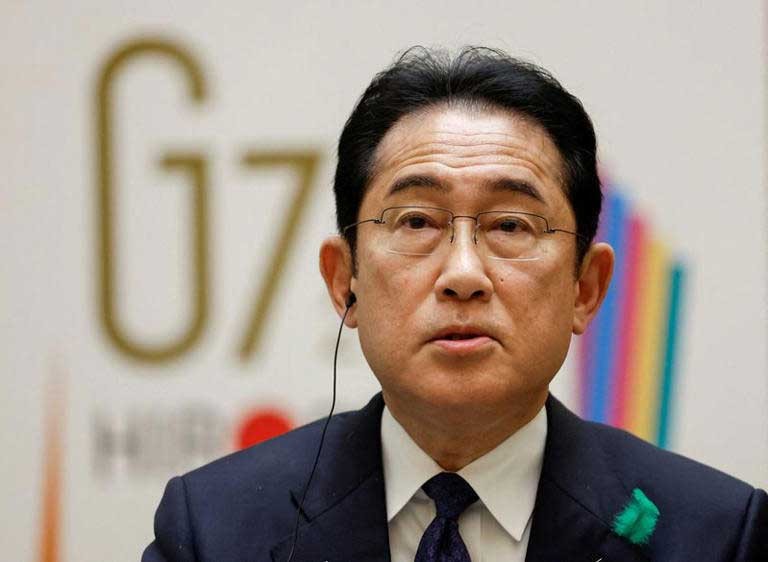
TOKYO (Reuters) -Japan will keep calling for China to act responsibly on the world stage, Prime Minister Fumio Kishida said on Thursday, a sign of Tokyo's deepening concern about stability in the Taiwan Strait following Beijing's recent military drills.
The comments from Kishida, after China conducted drills in the waters off Taiwan earlier this month, highlight Tokyo's growing alarm about the possibility of an attack on nearby Taiwan.
Japan would "continue to call on China to take the responsibility it should be taking as a major country on the world stage," Kishida said during a roundtable interview with members of the foreign media.
"Peace and stability in the Taiwan Strait is not just important for Japan, but the international community and the world more broadly as well," he said.
"We have been consistent with our position on Taiwan, that any issues should be resolved peacefully through dialogue. In any case... we will comply with our constitution, international laws, and our domestic laws including the relevant defence laws."
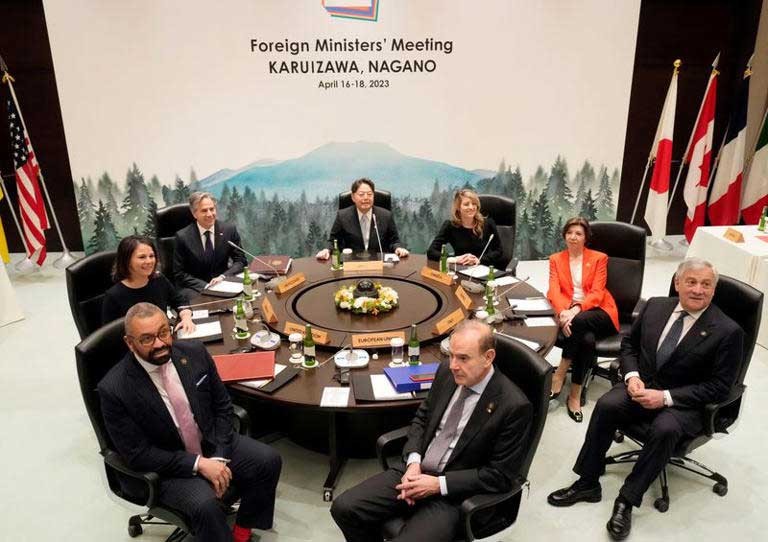
Foreign ministers from the Group of Seven (G7) nations met in Japan this week and urged Beijing to "abstain from threats, coercion intimidation and the use of force".
Beijing, which views Taiwan as Chinese territory and has not renounced the use of force to take the democratically governed island, has rebuffed the G7 comments as gross interference in its internal affairs.
Taiwan President Tsai Ing-wen says only the island's people can decide their future.
COMPLICATED POSITION
Kishida also stressed the importance of stability between China and the United States, illustrating Japan's sometimes complicated position as both Washington's closest ally in Asia and a major Chinese trading partner. Japan has joined the United States in putting export restrictions on chip-making tools but in doing so avoided mentioning China so as not to antagonise its neighbour.
Kishida also said Japan was calling on China to allow for the return of a Japanese executive detained there. Chinese authorities detained the executive from pharmaceutical company Astellas Pharma Inc in late March.
Likewise, he said he hoped Russia would "correct" its actions over the detention of Wall Street Journal reporter Evan Gershkovich.
Kishida, who was targeted with an explosive device while campaigning over the weekend, said it was important to revisit security ahead of the G7 leaders summit in Hiroshima next month.
He said he hoped to see deeper discussions on same-sex marriage in Japan's parliament, although he stopped short of throwing his weight behind the issue, saying situations in individual countries also needed to be considered. ($1 = 134.5600 yen)
(Reporting by Yukiko Toyoda; Additional reporting by Sakura Murakami, Kentaro Sugiyama, Yoshifumi Takemoto and Nobuhiro Kubo; Writing by David Dolan; Editing by Alexander Smith, Simon Cameron-Moore and Alex Richardson)
G7 will stand up to 'any coercion' from China - senior US official
Story by By Humeyra Pamuk and Sakura Murakami • Yesterday 10:24 pm - 17-4-2023
By Humeyra Pamuk and Sakura Murakami
KARUIZAWA, Japan (Reuters) - The Group of Seven nations see eye to eye on the need to stand up to any Chinese "coercion" or efforts to exert control in the Taiwan Strait, a senior U.S. State Department official said on Monday, amid increased tensions around Taiwan.
Concerns about what the G7 wealthy nations see as China's increasingly aggressive stance on Taiwan and more broadly in the Indo-Pacific region have been in sharp focus during talks among G7 foreign ministers in the Japanese resort town of Karuizawa.
"The message is the same across the G7: that we want to work with China in those areas where China is prepared to work with us," a senior U.S. State Department official told reporters on a call.
"We are certainly going to stand up against any coercion, any market manipulation, any efforts to change the status quo in the Taiwan Strait," the official added.
The G7 ministers are keen to demonstrate a unified front, especially after recent comments by French President Emmanuel Macron which were perceived in some Western capitals as too weak towards China and sparked a backlash.
After visiting China this month, Macron cautioned against being drawn into a crisis over Taiwan driven by an "American rhythm and a Chinese overreaction".
As the only Asian member of the G7, Japan has been deeply concerned about any possible action by Beijing against nearby Taiwan.
Beijing views Taiwan as Chinese territory and has not renounced the use of force to take the democratically governed island. Taiwan President Tsai Ing-wen says only the island's people can decide their future.
"The impact the peace and stability of the Taiwan Strait has on our country is a given, but it is a crucial factor in the wider safety and security of the international community as well," Japanese Foreign Minister Yoshimasa Hayashi said after a bilateral meeting with U.S. Secretary of State Antony Blinken.
Hayashi also told reporters that French Foreign Minister Catherine Colonna said France has "deep feelings" about respecting the status quo and maintaining peace and stability in the Taiwan Strait.
'OWN RULES'
Japan said the Chinese aircraft carrier Shandong had conducted air operations with jet fighters and helicopters between April 10-16. China's state media has said its navy carried out combat training around Taiwan last week.
Russia too has also been keen to show force in the Pacific, and recently launched naval exercises by its Pacific Fleet, drawing criticism from Tokyo.
China is increasingly trying to replace international rules with "its own rules", German Foreign Minister Annalena Baerbock said on Monday on the sidelines of the G7 meeting.
"Many of our partners in the region feel more and more that China increasingly wants to exchange the existing common binding international rules with its own rules," said Baerbock, who last week met her Chinese counterpart in Beijing last week.
The G7 comprises the United States, Japan, Germany, Britain, France, Italy and Canada.
(Reporting by Humeyra Pamuk and Sakura Murakami; Additional reporting by Friederike Heine in Berlin; Writing by David Dolan; Editing by Gareth Jones and Philippa Fletcher)
The thing Paul Keating ‘just doesn’t get’ about China is how the world has ‘changed’
Story by Sky News Australia • 5h ago - 18-4-2023
The thing Paul Keating “just doesn’t get” is “how much the world has changed” in regard to China’s relationship with many countries as the former prime minister continues his feud with Penny Wong, says former Labor Senator Stephen Conroy.
Mr Conroy’s comments come after Keating criticised the United States’ concerns about China’s influence in the Indo-Pacific region.
“China’s relationship with Australia was trashed by the last government,” he told Sky News Australia.
“Australia had trade significantly restricted by China – let’s be very clear, Australia did nothing of substance to deserve the behaviour of China.
“But what Paul just doesn’t want to understand is, Asia and the Indo-Pacific is bigger than just China. If Paul was correct then that means Japan is wrong, South Korea’s wrong, Indonesia’s wrong, the Philippines is wrong, India is wrong – all of these countries have disputes with China because of their belligerence and their aggressive behaviour.”
The thing Paul Keating ‘just doesn’t get’ about China is how the world has ‘changed’
© Provided by Sky News Australia