


16 days ago
Build a flexible online betting platform with Betfair Clone Software, featuring multiple betting markets, real-time odds, secure payments, and user management. CoinsQueens provides customizable solutions with useful admin and reporting tools for smooth platform management. The software can be adapted to different business requirements, with development options starting around $999.
Explore more:
google.com/url?sa=j&url=https%3A%2F%2Fwww.coinsqueens.com%2Fblog...
Connect with our expert for more info:
Phone: +91 8778174637
WhatsApp: https://wa.me/+91877817463...
Email: salescoinsqueens.com
Telegram: https://telegram.me/Coinsq...
#betfairclonescript #BettingPlatform #OnlineBetting #BettingSoftware #sportsbetting #BettingPlatformDevelopment #CasinoBetting #coinsqueens #BettingSolution #onlinegaming #usa #uk #uae #india #singapore #canada #australia #germany #japan #saudiarabia .
Explore more:
google.com/url?sa=j&url=https%3A%2F%2Fwww.coinsqueens.com%2Fblog...
Connect with our expert for more info:
Phone: +91 8778174637
WhatsApp: https://wa.me/+91877817463...
Email: salescoinsqueens.com
Telegram: https://telegram.me/Coinsq...
#betfairclonescript #BettingPlatform #OnlineBetting #BettingSoftware #sportsbetting #BettingPlatformDevelopment #CasinoBetting #coinsqueens #BettingSolution #onlinegaming #usa #uk #uae #india #singapore #canada #australia #germany #japan #saudiarabia .

16 days ago
Businesses can accept crypto payments with secure processing, multi-currency support, and wallet integration. It also enables smooth transaction tracking and convenient digital payment management. Crypto Payment Gateway Development offers flexible solutions tailored to different business needs. Customized gateway solutions are available from $999, based on the required features.
Explore more:
https://www.coinsqueens.co...
Connect with our expert for more info:
Phone: +91 8778174637
WhatsApp: https://wa.me/+91877817463...
Email: salescoinsqueens.com
Telegram: https://telegram.me/Coinsq...
#cryptopaymentgateway #CryptoPayments #paymentgatewaydevelopment #BlockchainDevelopment #cryptodevelopment #web3development #digitalpayments #cryptocurrency #usa #uk #uae #india #singapore #canada #australia #germany #japan #saudiarabia .
Explore more:
https://www.coinsqueens.co...
Connect with our expert for more info:
Phone: +91 8778174637
WhatsApp: https://wa.me/+91877817463...
Email: salescoinsqueens.com
Telegram: https://telegram.me/Coinsq...
#cryptopaymentgateway #CryptoPayments #paymentgatewaydevelopment #BlockchainDevelopment #cryptodevelopment #web3development #digitalpayments #cryptocurrency #usa #uk #uae #india #singapore #canada #australia #germany #japan #saudiarabia .

16 days ago
An On Demand App Development Company helps businesses build mobile platforms for services, bookings, payments, and user management. These apps can be customized with essential features to suit different business requirements. CoinsQueens offers on-demand app development solutions starting from $999, with flexible features designed around business goal.
Explore More: https://www.coinsqueens.co...
Connect with our expert for more info:
Phone: +91 8778174637
WhatsApp: https://wa.me/+91877817463...
Email: salescoinsqueens.com
Telegram: https://telegram.me/Coinsq...
#ondemandappdevelopment #ondemandapp #mobileappdevelopment #OnDemandServices #appdevelopmentcompany #customappdevelopment #ondemandbusiness #serviceappdevelopment #MobileApp #appdevelopment #coinsqueens #usa #uk #uae #india #singapore #canada #australia #germany #japan #saudiarabia
Explore More: https://www.coinsqueens.co...
Connect with our expert for more info:
Phone: +91 8778174637
WhatsApp: https://wa.me/+91877817463...
Email: salescoinsqueens.com
Telegram: https://telegram.me/Coinsq...
#ondemandappdevelopment #ondemandapp #mobileappdevelopment #OnDemandServices #appdevelopmentcompany #customappdevelopment #ondemandbusiness #serviceappdevelopment #MobileApp #appdevelopment #coinsqueens #usa #uk #uae #india #singapore #canada #australia #germany #japan #saudiarabia


1 month ago
Want to build a feature-rich trading platform? Our MT5 Clone Script provides the foundation to launch a professional trading solution with customizable dashboards, real-time pricing, multiple **** et classes, smooth order execution, and responsive interfaces.
CoinsQueens delivers customizable trading software that can be customized to your business model, branding, and functional requirements. Special Offer Available, Grab It Now >> https://www.coinsqueens.co...
For any Queries? Talk to Our Experts:
Phone: +91 8778174637
WhatsApp:https://wa.me/+91877817463...
Email: salescoinsqueens.com
Telegram: https://telegram.me/Coinsq...
#MT5CloneScript #mt5platformdevelopment #mt5clone #metatrader5development #coinsqueens #CryptoBusiness #usa #uk #uae #india #singapore #canada #australia #germany #japan #saudiarabia
CoinsQueens delivers customizable trading software that can be customized to your business model, branding, and functional requirements. Special Offer Available, Grab It Now >> https://www.coinsqueens.co...
For any Queries? Talk to Our Experts:
Phone: +91 8778174637
WhatsApp:https://wa.me/+91877817463...
Email: salescoinsqueens.com
Telegram: https://telegram.me/Coinsq...
#MT5CloneScript #mt5platformdevelopment #mt5clone #metatrader5development #coinsqueens #CryptoBusiness #usa #uk #uae #india #singapore #canada #australia #germany #japan #saudiarabia


1 month ago
Build engaging blockchain-powered gaming platforms with Web3 Game Development Services, featuring NFT integration, token-based economies, smart contracts, digital ****** et ownership, multiplayer gameplay, and player-focused gaming experiences.
More info>> https://breedcoins.com/blo...
#web3gamedevelopmentservices #web3gaming #blockchaingamedevelopment #nftgamedevelopment #p2egaming #smartcontractdevelopment #gamedevelopmentcompany #usa #uk #canada #australia #india #uae #singapore #germany #france #japan
More info>> https://breedcoins.com/blo...
#web3gamedevelopmentservices #web3gaming #blockchaingamedevelopment #nftgamedevelopment #p2egaming #smartcontractdevelopment #gamedevelopmentcompany #usa #uk #canada #australia #india #uae #singapore #germany #france #japan

1 month ago
Launch a peer-to-peer crypto trading platform with a Paxful Clone Script, featuring user-to-user trading, multiple payment options, escrow-based transactions, wallet integration, trade management, and customizable exchange functionality.
More info>> https://breedcoins.com/pax...
#paxfulclonescript #p2pcryptoexchange #cryptoexchangedevelopment #cryptotradingplatform #cryptocurrencyexchange #BlockchainDevelopment #web3development #usa #uk #canada #australia #india #uae #singapore #germany #france #japan
More info>> https://breedcoins.com/pax...
#paxfulclonescript #p2pcryptoexchange #cryptoexchangedevelopment #cryptotradingplatform #cryptocurrencyexchange #BlockchainDevelopment #web3development #usa #uk #canada #australia #india #uae #singapore #germany #france #japan

2 months ago
Develop engaging blockchain gaming platforms with a P2E Game Development Company, featuring NFT ******* ets, token-based rewards, smart contracts, player ownership, multiplayer gameplay, and interactive game economies for modern businesses.
Visit Us>> https://breedcoins.com/pla...
#p2egamedevelopmentcompany #p2egamedevelopment #playtoearngaming #blockchaingamedevelopment #nftgaming #web3gaming #gamedevelopmentcompany #usa #uk #canada #australia #india #uae #singapore #germany #france #japan
Visit Us>> https://breedcoins.com/pla...
#p2egamedevelopmentcompany #p2egamedevelopment #playtoearngaming #blockchaingamedevelopment #nftgaming #web3gaming #gamedevelopmentcompany #usa #uk #canada #australia #india #uae #singapore #germany #france #japan


8 months ago
Nadi Astrologer in Singapore
https://srisivanadiastrolo...
Connect with a trusted Nadi Astrologer in Singapore through Sri Siva Nadi Astrology Online for detailed readings and remedy guidance.
https://srisivanadiastrolo...
Connect with a trusted Nadi Astrologer in Singapore through Sri Siva Nadi Astrology Online for detailed readings and remedy guidance.

10 months ago
Where Sophistication Meets Personal Connection
From intimate dinners to private moments of relaxation, this article highlights how curated companionship services offer more than presence, delivering comfort, confidence, and tailored experiences for today’s discerning clientele.
Read more, visit us: https://singaporeelite.liv...
#PremiumCompanionship #SingaporeLifestyle #EliteExperience #DiscreetLuxury #RefinedConnections
From intimate dinners to private moments of relaxation, this article highlights how curated companionship services offer more than presence, delivering comfort, confidence, and tailored experiences for today’s discerning clientele.
Read more, visit us: https://singaporeelite.liv...
#PremiumCompanionship #SingaporeLifestyle #EliteExperience #DiscreetLuxury #RefinedConnections

Premium Escort Services in Singapore: A Refined Experience for the Modern Lifestyle: singaporeelite — LiveJournal
Singapore is a city known for its elegance, diversity, and fast-paced lifestyle. From luxury shopping districts to world-class dining and vibrant nightlife, the city attracts professionals, travelers, and entrepreneurs from around the globe. In such a dynamic environment, it’s no surprise that…
https://singaporeelite.livejournal.com/390.html
10 months ago

App Developers Singapore | Mobile App Development Company
India App Developer - An Award-winning mobile app development company in Singapore. For hire Android, iOS app developers, Click Now.
https://indiaappdeveloper.com/app-development-company-singapore/
3 yr. ago
Reuters
China's aircraft carriers play 'theatrical' role but pose little threat yet
Story by By Greg Torode, Eduardo Baptista and Tim Kelly • 3h ago - 5-5-2023
By Greg Torode, Eduardo Baptista and Tim Kelly
HOPES AND SHORTCOMINGS
Chinese military and government researchers appear aware of the challenges, according to a Reuters review of over 100 recent articles published in dozens of publicly available Chinese defence journals.
The official PLA Daily in October published an interview with an aircraft carrier aviation unit where the deputy chief of staff, Dai Xing, acknowledged "many shortcomings in preparing for war", and a gap between sailors' training level and combat requirements.
A September editorial published in a magazine run by a PLA weapons manufacturer, titled "Four great advantages the PLA has in attacking Taiwan", did not mention the role of Chinese carriers. Instead, it said, China's land-based ballistic missiles would be enough to overwhelm potential intervention from U.S. carriers.
Two earlier editorials in the same publication, Tank and Armoured Vehicle, noted that China's carriers would remain in their infancy for the foreseeable future and that other surface ships would be more useful in a conflict in the East China Sea.
Other articles in similar publications outline pilot recruitment and training problems, vulnerabilities to submarine attack and command issues - which some foreign analysts say is a problem for a navy that still sails with political commissars with executive authority.
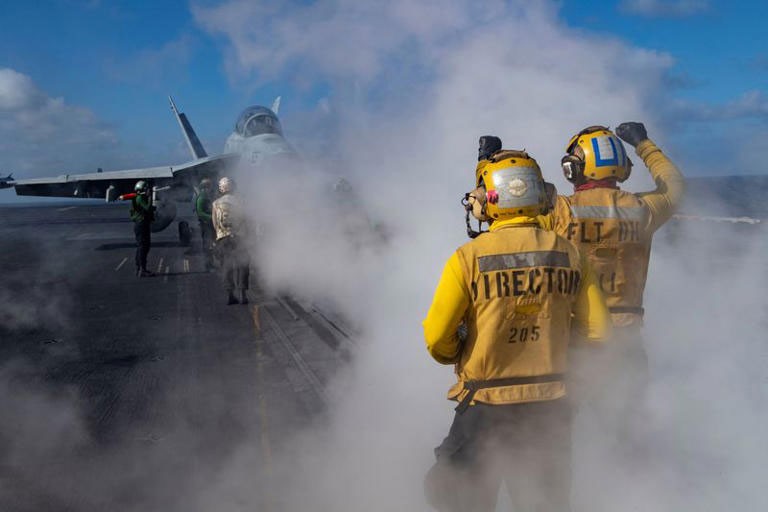
When at sea, U.S. carriers fly almost constantly, routinely operating fighter, electronic-warfare and surveillance aircraft to create a protective screen around the battlegroup.
Beyond the expense and danger of such operations, one key element is mastering devolved command systems, particularly in a crisis such as a fire or crash onboard when planes are airborne and the flight deck is disabled.
The U.S. has spent decades perfecting such systems, having expanded carrier operations after their importance was highlighted in the Allied victory over Japan in the Pacific in World War Two.
"The continuous operation of its carriers sits at the very core of what makes the U.S. military absolutely preeminent," said Singapore-based defence analyst Alexander Neill, an adjunct fellow with Hawaii's Pacific Forum think tank.
In the medium term, China is likely to start sending battlegroups into the Indian Ocean, where China's presence is minimal beyond routine submarine operations, the attaches and defence analysts said.
Operating far from the security of land-based airfields would test China's capability, but preparations are underway.
The pier at China's first major offshore military base in Djibouti was recently extended, and could now fit a carrier, the Pentagon report noted.
(Reporting by Greg Torode in Hong Kong, Eduardo Baptista in Beijing and Tim Kelly in Tokyo; additional reporting by Idrees Ali and Phil Stewart in Washington; editing by David Crawshaw and Gerry Doyle)
China's aircraft carriers play 'theatrical' role but pose little threat yet
Story by By Greg Torode, Eduardo Baptista and Tim Kelly • 3h ago - 5-5-2023
By Greg Torode, Eduardo Baptista and Tim Kelly
HOPES AND SHORTCOMINGS
Chinese military and government researchers appear aware of the challenges, according to a Reuters review of over 100 recent articles published in dozens of publicly available Chinese defence journals.
The official PLA Daily in October published an interview with an aircraft carrier aviation unit where the deputy chief of staff, Dai Xing, acknowledged "many shortcomings in preparing for war", and a gap between sailors' training level and combat requirements.
A September editorial published in a magazine run by a PLA weapons manufacturer, titled "Four great advantages the PLA has in attacking Taiwan", did not mention the role of Chinese carriers. Instead, it said, China's land-based ballistic missiles would be enough to overwhelm potential intervention from U.S. carriers.
Two earlier editorials in the same publication, Tank and Armoured Vehicle, noted that China's carriers would remain in their infancy for the foreseeable future and that other surface ships would be more useful in a conflict in the East China Sea.
Other articles in similar publications outline pilot recruitment and training problems, vulnerabilities to submarine attack and command issues - which some foreign analysts say is a problem for a navy that still sails with political commissars with executive authority.
When at sea, U.S. carriers fly almost constantly, routinely operating fighter, electronic-warfare and surveillance aircraft to create a protective screen around the battlegroup.
Beyond the expense and danger of such operations, one key element is mastering devolved command systems, particularly in a crisis such as a fire or crash onboard when planes are airborne and the flight deck is disabled.
The U.S. has spent decades perfecting such systems, having expanded carrier operations after their importance was highlighted in the Allied victory over Japan in the Pacific in World War Two.
"The continuous operation of its carriers sits at the very core of what makes the U.S. military absolutely preeminent," said Singapore-based defence analyst Alexander Neill, an adjunct fellow with Hawaii's Pacific Forum think tank.
In the medium term, China is likely to start sending battlegroups into the Indian Ocean, where China's presence is minimal beyond routine submarine operations, the attaches and defence analysts said.
Operating far from the security of land-based airfields would test China's capability, but preparations are underway.
The pier at China's first major offshore military base in Djibouti was recently extended, and could now fit a carrier, the Pentagon report noted.
(Reporting by Greg Torode in Hong Kong, Eduardo Baptista in Beijing and Tim Kelly in Tokyo; additional reporting by Idrees Ali and Phil Stewart in Washington; editing by David Crawshaw and Gerry Doyle)
3 yr. ago
Reuters
China's aircraft carriers play 'theatrical' role but pose little threat yet
Story by By Greg Torode, Eduardo Baptista and Tim Kelly • 3h ago - 5-5-2023
By Greg Torode, Eduardo Baptista and Tim Kelly
FROM SKI JUMPS TO CATAPULTS
As the Liaoning and Shandong gradually increase the tempo of their drills, China is preparing for sea trials of its next-generation carrier, the 80,000-tonne Fujian, state media reported last month. The Fujian is significantly larger, though conventionally powered, and will launch aircraft from electromagnetic catapults.
The ship, which the Pentagon report said could be operational by 2024, is expected to carry new variants of the J-15 jet fighter, replacing the existing model that foreign analysts consider underpowered.
"The Fujian, with its more modern capabilities, will be just another test bed for a good few years," said Collin Koh, a defence scholar at Singapore's S. Rajaratnam School of International Studies.
"It won't be until we see the next generation of carriers that the Chinese designs and the PLAN's intentions will really settle down."
The carrier program reflects the ruling Communist Party's aim of making the People's Liberation Army (PLA) a "world class" military by 2049, part of President Xi Jinping's vision of building "a great modern socialist country".
One indication of China's ambitions, the attaches said, will be if carriers built after the Fujian are nuclear-powered like U.S. ones, allowing global range.
A study published in December by the non-partisan U.S. Congressional Research Service noted that China would use its carriers to project power "particularly in scenarios that do not involve opposing U.S. forces" and "to impress or intimidate foreign observers".
Several countries operate aircraft carriers but the U.S. remains the most dominant, running 11 carrier battlegroups with global reach.
China, by contrast, could use its carriers primarily in the Asian theatre, working in tandem with submarines and anti-ship missiles to attempt to control its near seas.
The Shandong's appearance off Taiwan's east coast to stage mock strikes last month surprised some analysts, given the island's proximity to land-based airfields. But, in the short term at least, China's military would struggle to defend the carrier out in the western Pacific in a clash with U.S. and allied forces.
"China's objective with the deployment of the Shandong is clear, it is a symbol of its political anger" over U.S. engagement with Taiwan, said Yoji Koda, a retired admiral who commanded the Japanese fleet.
In a battle, he said, it "would be a very good target for U.S. and Japanese forces, and they would take it down at the very beginning."
A U.S. defence official, speaking on the condition of anonymity as they were not authorised to talk publicly, said while China had made progress with its carriers, it had yet to master operations in difficult conditions or how to protect the vessels.
One question was how the ships would be relevant in a conflict, the official said.
China's aircraft carriers play 'theatrical' role but pose little threat yet
Story by By Greg Torode, Eduardo Baptista and Tim Kelly • 3h ago - 5-5-2023
By Greg Torode, Eduardo Baptista and Tim Kelly
FROM SKI JUMPS TO CATAPULTS
As the Liaoning and Shandong gradually increase the tempo of their drills, China is preparing for sea trials of its next-generation carrier, the 80,000-tonne Fujian, state media reported last month. The Fujian is significantly larger, though conventionally powered, and will launch aircraft from electromagnetic catapults.
The ship, which the Pentagon report said could be operational by 2024, is expected to carry new variants of the J-15 jet fighter, replacing the existing model that foreign analysts consider underpowered.
"The Fujian, with its more modern capabilities, will be just another test bed for a good few years," said Collin Koh, a defence scholar at Singapore's S. Rajaratnam School of International Studies.
"It won't be until we see the next generation of carriers that the Chinese designs and the PLAN's intentions will really settle down."
The carrier program reflects the ruling Communist Party's aim of making the People's Liberation Army (PLA) a "world class" military by 2049, part of President Xi Jinping's vision of building "a great modern socialist country".
One indication of China's ambitions, the attaches said, will be if carriers built after the Fujian are nuclear-powered like U.S. ones, allowing global range.
A study published in December by the non-partisan U.S. Congressional Research Service noted that China would use its carriers to project power "particularly in scenarios that do not involve opposing U.S. forces" and "to impress or intimidate foreign observers".
Several countries operate aircraft carriers but the U.S. remains the most dominant, running 11 carrier battlegroups with global reach.
China, by contrast, could use its carriers primarily in the Asian theatre, working in tandem with submarines and anti-ship missiles to attempt to control its near seas.
The Shandong's appearance off Taiwan's east coast to stage mock strikes last month surprised some analysts, given the island's proximity to land-based airfields. But, in the short term at least, China's military would struggle to defend the carrier out in the western Pacific in a clash with U.S. and allied forces.
"China's objective with the deployment of the Shandong is clear, it is a symbol of its political anger" over U.S. engagement with Taiwan, said Yoji Koda, a retired admiral who commanded the Japanese fleet.
In a battle, he said, it "would be a very good target for U.S. and Japanese forces, and they would take it down at the very beginning."
A U.S. defence official, speaking on the condition of anonymity as they were not authorised to talk publicly, said while China had made progress with its carriers, it had yet to master operations in difficult conditions or how to protect the vessels.
One question was how the ships would be relevant in a conflict, the official said.
3 yr. ago
The Daily Digest
Millionaire migration: Where and why rich people are moving out?
Story by Zeleb.es • 2h ago
Moving up, moving out
According to a study by Henley Global Citizens Report, an estimated 88,000 millionaires moved to a new country in 2022.
120,000 millionaires seeking new home bases
Not only that, but the number could be as high as 120,000 millionaires moving out of their countries in 2023.
Reasons to find a new home
Unsurprisingly, many of these millionaires come from conflict zones or currently facing a backlash from the West, such as Russia, Ukraine, and China.
Russia is the biggest loser
The website Migration Policy cites data from the British Minister of Defence, arguing that Russia was the biggest loser of 2022 with a loss of 15,000 millionaires.
Moving to greener, wealthier pastures
However, other countries in the top 10 list of migrating millionaires might be surprising such as India, Brazil, Mexico, and the United Kingdom.
Exit from Brexit
The South China Morning Post highlights that, in the UK’s case, the millionaire outflow began with Brexit and has not stopped.
Some islands off the coast of France
Before that, the British Isles were one of the favorite destinations for millionaires seeking a new home.
From California to New York Island
Bloomberg, on the other hand, claims that the inflow of millionaires to the United States has winded down 80% since pre-pandemic numbers.
Taking a bite out of the big apple
The United States, despite declining numbers of highly affluent immigrants, still gets the number 5 spot with an estimate of 1,500 millionaires.
Going to the promised land
Israel follows the United States, being the new home of 2,500 millionaires.
A little beach house in Singapore
About 2,800 millionaires decided to move to Singapore in 2022.
Moving to Oz
Australia gets the silver, with 3,500 millionaires moving to the island continent. The Guardian claims that a good part of these come from China, India, and the United Kingdom.
Humble abode in Dubai
The United Arab Emirates gets the top of the list with 4,000 new millionaire residents. Forbes claims that a good number of these wealthy migrants are of Russian origin.
Millionaire migration: Where and why rich people are moving out?
Story by Zeleb.es • 2h ago
Moving up, moving out
According to a study by Henley Global Citizens Report, an estimated 88,000 millionaires moved to a new country in 2022.
120,000 millionaires seeking new home bases
Not only that, but the number could be as high as 120,000 millionaires moving out of their countries in 2023.
Reasons to find a new home
Unsurprisingly, many of these millionaires come from conflict zones or currently facing a backlash from the West, such as Russia, Ukraine, and China.
Russia is the biggest loser
The website Migration Policy cites data from the British Minister of Defence, arguing that Russia was the biggest loser of 2022 with a loss of 15,000 millionaires.
Moving to greener, wealthier pastures
However, other countries in the top 10 list of migrating millionaires might be surprising such as India, Brazil, Mexico, and the United Kingdom.
Exit from Brexit
The South China Morning Post highlights that, in the UK’s case, the millionaire outflow began with Brexit and has not stopped.
Some islands off the coast of France
Before that, the British Isles were one of the favorite destinations for millionaires seeking a new home.
From California to New York Island
Bloomberg, on the other hand, claims that the inflow of millionaires to the United States has winded down 80% since pre-pandemic numbers.
Taking a bite out of the big apple
The United States, despite declining numbers of highly affluent immigrants, still gets the number 5 spot with an estimate of 1,500 millionaires.
Going to the promised land
Israel follows the United States, being the new home of 2,500 millionaires.
A little beach house in Singapore
About 2,800 millionaires decided to move to Singapore in 2022.
Moving to Oz
Australia gets the silver, with 3,500 millionaires moving to the island continent. The Guardian claims that a good part of these come from China, India, and the United Kingdom.
Humble abode in Dubai
The United Arab Emirates gets the top of the list with 4,000 new millionaire residents. Forbes claims that a good number of these wealthy migrants are of Russian origin.

3 yr. ago
The Guardian
Singapore backs Aukus and says Australia could play ‘bigger role’ in regional security
Story by Daniel Hurst Foreign affairs and defence correspondent • Yesterday 7:20 pm - 1-5-2023
Wong said while they may use a different form of words, both countries agreed on the need for guardrails to manage tensions between the US and China to lower the chance of miscalculation or escalation.
The deputy prime minister and defence minister, Richard Marles, said Australia and Singapore wanted to play their parts in creating “pathways for peace” at a time of “great strategic complexity and significant strategic threat”.
Marles also said the Albanese government regarded Singapore’s energy security “as profoundly important in terms of Australia’s national interest”.
“We made very clear to our Singaporean counterparts that Australia will continue to be a completely reliable partner in terms of the provision of energy into the Singaporean market and that includes the provision of gas,” Marles said.
Last week the Chinese foreign ministry responded to the defence review by urging countries not to “hype up the so-called China threat narrative”.
But the issue is not expected to disrupt further efforts to “stabilise” the diplomatic relationship between Australia and China, its biggest trading partner.
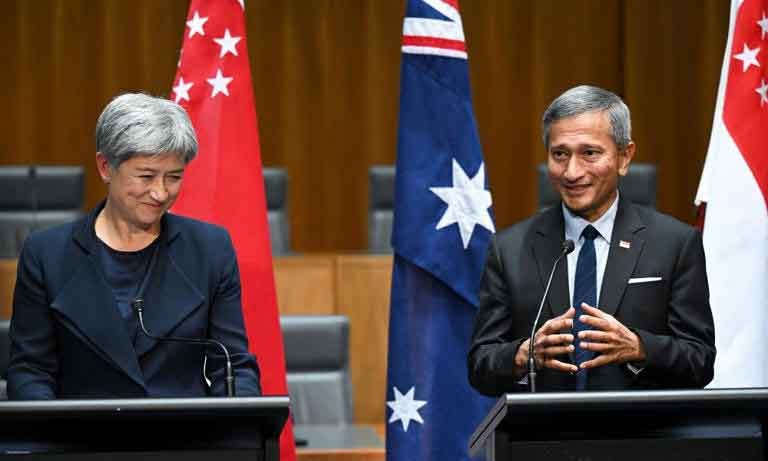
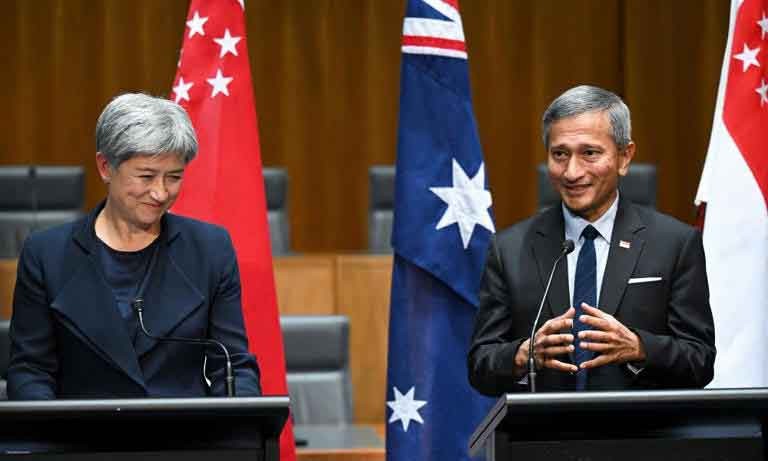
Photograph: Lukas Coch/EPA
© Provided by The Guardian
Singapore backs Aukus and says Australia could play ‘bigger role’ in regional security
Story by Daniel Hurst Foreign affairs and defence correspondent • Yesterday 7:20 pm - 1-5-2023
Wong said while they may use a different form of words, both countries agreed on the need for guardrails to manage tensions between the US and China to lower the chance of miscalculation or escalation.
The deputy prime minister and defence minister, Richard Marles, said Australia and Singapore wanted to play their parts in creating “pathways for peace” at a time of “great strategic complexity and significant strategic threat”.
Marles also said the Albanese government regarded Singapore’s energy security “as profoundly important in terms of Australia’s national interest”.
“We made very clear to our Singaporean counterparts that Australia will continue to be a completely reliable partner in terms of the provision of energy into the Singaporean market and that includes the provision of gas,” Marles said.
Last week the Chinese foreign ministry responded to the defence review by urging countries not to “hype up the so-called China threat narrative”.
But the issue is not expected to disrupt further efforts to “stabilise” the diplomatic relationship between Australia and China, its biggest trading partner.
Photograph: Lukas Coch/EPA
© Provided by The Guardian
3 yr. ago
The Guardian
Singapore backs Aukus and says Australia could play ‘bigger role’ in regional security
Story by Daniel Hurst Foreign affairs and defence correspondent • Yesterday 7:20 pm - 1-5-2023
Singapore has strongly backed the Aukus defence pact, with ministers saying they trust Australia to play a bigger role in regional security and don’t want south-east Asia to become “an arena for proxy wars”.
After talks with Australian counterparts in Canberra on Monday, Singaporean ministers reaffirmed Australia’s nuclear-powered submarines would be welcome to visit once in service.
Singapore, in turn, received assurances from the Albanese government that Australia would remain a reliable supplier of gas.
Aukus has received a mixed response from members of the Association of Southeast Asian Nations, with Indonesia and Malaysia the most vocal in expressing concerns that the deal could add to a regional arms race.
Related: These are the 10 points of tension Australia wants to reconcile with its defence strategic review | John Blaxland
But Singapore is relatively comfortable with Australia’s multi-decade plans to acquire a fleet of eight nuclear-powered submarines with help from the US and the UK.
Singapore’s minister for foreign affairs, Vivian Balakrishnan, said he had “absolutely no reason to doubt Australia’s commitment” to fulfilling its obligations under the Nuclear Non-Proliferation Treaty.
“When we say that we believe Australia is a constructive partner, it’s absolutely sincere,” he said.
“So even on Aukus … insofar as it contributes constructively to regional security we’re in support of it. We are comfortable with all the three partners within Aukus because with each of them we’ve had long-term relationships and that’s why I think we’re able to work together.”
Balakrishnan said Singapore wanted to ensure free access to the contested South China Sea as a right under the UN Convention on the Law of the Sea “and not by permission or grace of any power”.
He said if relations between the US and China returned to “an even keel … that would give all of us much relief and a sense of stability”. South-east Asia must not become “an arena for proxy wars”, Balakrishnan added.
Monday’s meeting brought together Australia and Singapore’s foreign affairs, defence and trade ministers. It was held a week after the defence strategic review argued the Australian defence force must project military power further from its shores.
Singapore’s defence minister, Ng Eng Hen, told reporters after the meeting that he believed Australia could “play a bigger role in our region”.
He said Australia was “not just an Indo-Pacifc country, but an Asian country”.
“We would welcome Australia’s ships and planes to our bases and ultimately when your submarines are ready we would welcome them to call on our ports.”
The Australian foreign affairs minister, Penny Wong, said both countries’ interests were “very aligned” on the importance of the multilateral system and rules.
Singapore backs Aukus and says Australia could play ‘bigger role’ in regional security
Story by Daniel Hurst Foreign affairs and defence correspondent • Yesterday 7:20 pm - 1-5-2023
Singapore has strongly backed the Aukus defence pact, with ministers saying they trust Australia to play a bigger role in regional security and don’t want south-east Asia to become “an arena for proxy wars”.
After talks with Australian counterparts in Canberra on Monday, Singaporean ministers reaffirmed Australia’s nuclear-powered submarines would be welcome to visit once in service.
Singapore, in turn, received assurances from the Albanese government that Australia would remain a reliable supplier of gas.
Aukus has received a mixed response from members of the Association of Southeast Asian Nations, with Indonesia and Malaysia the most vocal in expressing concerns that the deal could add to a regional arms race.
Related: These are the 10 points of tension Australia wants to reconcile with its defence strategic review | John Blaxland
But Singapore is relatively comfortable with Australia’s multi-decade plans to acquire a fleet of eight nuclear-powered submarines with help from the US and the UK.
Singapore’s minister for foreign affairs, Vivian Balakrishnan, said he had “absolutely no reason to doubt Australia’s commitment” to fulfilling its obligations under the Nuclear Non-Proliferation Treaty.
“When we say that we believe Australia is a constructive partner, it’s absolutely sincere,” he said.
“So even on Aukus … insofar as it contributes constructively to regional security we’re in support of it. We are comfortable with all the three partners within Aukus because with each of them we’ve had long-term relationships and that’s why I think we’re able to work together.”
Balakrishnan said Singapore wanted to ensure free access to the contested South China Sea as a right under the UN Convention on the Law of the Sea “and not by permission or grace of any power”.
He said if relations between the US and China returned to “an even keel … that would give all of us much relief and a sense of stability”. South-east Asia must not become “an arena for proxy wars”, Balakrishnan added.
Monday’s meeting brought together Australia and Singapore’s foreign affairs, defence and trade ministers. It was held a week after the defence strategic review argued the Australian defence force must project military power further from its shores.
Singapore’s defence minister, Ng Eng Hen, told reporters after the meeting that he believed Australia could “play a bigger role in our region”.
He said Australia was “not just an Indo-Pacifc country, but an Asian country”.
“We would welcome Australia’s ships and planes to our bases and ultimately when your submarines are ready we would welcome them to call on our ports.”
The Australian foreign affairs minister, Penny Wong, said both countries’ interests were “very aligned” on the importance of the multilateral system and rules.
3 yr. ago
Sky News Australia
Singapore is ‘one of our key allies’ in the Asia-Pacific for trade and defence
Story by Sky News Australia • 1h ago - 1-5-2023
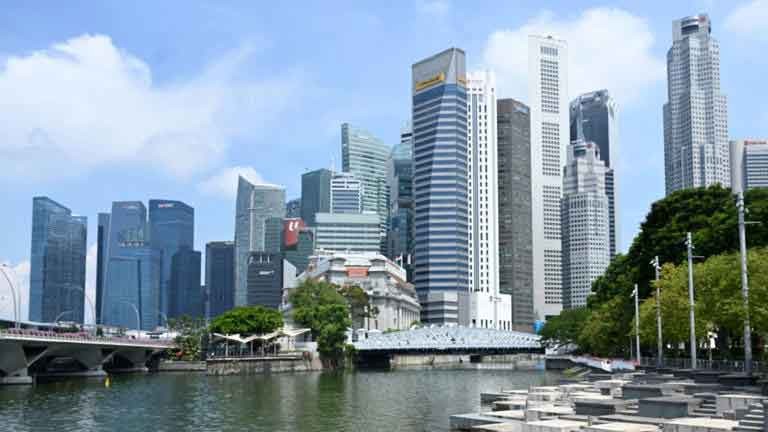
Singapore is one of Australia’s “key allies” in the Asia-Pacific in terms of trade and defence, says Trade Minister Don Farrell.
“This year we celebrate 20 years of a free trade agreement with Singapore,” he told Sky News Australia.
“We’ve recently signed some new agreements with them – both in terms of the green economy and the digital economy.”
Singapore is ‘one of our key allies’ in the Asia-Pacific for trade and defence
© Provided by Sky News Australia
Singapore is ‘one of our key allies’ in the Asia-Pacific for trade and defence
Story by Sky News Australia • 1h ago - 1-5-2023
Singapore is one of Australia’s “key allies” in the Asia-Pacific in terms of trade and defence, says Trade Minister Don Farrell.
“This year we celebrate 20 years of a free trade agreement with Singapore,” he told Sky News Australia.
“We’ve recently signed some new agreements with them – both in terms of the green economy and the digital economy.”
Singapore is ‘one of our key allies’ in the Asia-Pacific for trade and defence
© Provided by Sky News Australia
3 yr. ago
AAP
Calls for Australia to help smooth tensions with China
Story by Dominic Giannini and Callum Godde • 53m ago - 1-5-2023
Senior Australian ministers will meet with their Singapore counterparts as the Asian nation's foreign minister warns of the potential for catastrophic conflict.
Singapore's Foreign Minister Vivian Balakrishnan has warned that the United States and China created a "dysfunctional relationship", saying Asian nations did not want to be drawn into choosing sides.
"Countries in Southeast Asia feel this impact of dysfunctional relations between the two biggest superpowers," he said during a keynote address on Monday.
Mr Balakrishnan says Australia has a role to play in cooling tensions in the region by building "strategic trust".
"Trust is not something you can conjure. It takes time, it takes history. You need to have mutual respect," he said.
"Australia can play a role in stabilising our region. Australia has many unique strengths."
Mr Balakrishnan said the US and China were struggling to make progress and the economic benefits in the region were being overshadowed by security concerns.
He said Taiwan was the greatest flashpoint for conflict, with it being "the reddest of red lines" for China.
Deputy Prime Minister and Defence Minister Richard Marles, Foreign Affairs Minister Penny Wong and Trade and Tourism Minister Don Farrell will host their counterparts on Monday in Canberra for a bilateral meeting.
This year coincides with the 20th anniversary of Australia and the tiny Asian country striking a free trade agreement.
In a joint statement, the Australian ministers said the biennial committee meetings were an important platform to discuss co-operation across defence and security, strategic, trade and investment interests, the energy transition and food security.
"Australia and Singapore have a deep and abiding defence relationship. We are proud to count Singapore as one of our closest partners," Mr Marles said in a statement.
"I look forward to discussing ways we can continue to build on our great friendship, as part of our shared contribution to the collective security and prosperity of the region."
Australia's defence pact with the US and United Kingdom to supply it nuclear-powered submarines prompted China, Malaysia and Indonesia to voice concerns when signed by the previous coalition government in 2021.
Singapore Prime Minister Lee Hsien Loong later welcomed Australia's assurance that the AUKUS deal was aimed at promoting a "stable and secure" Asia-Pacific.
A declassified review last week prompted the government to commit to "reshape" the armed forces to prepare Australia for any conflicts over the next three decades.
China's rapid military build-up, the decline of the US as a unipolar power in the Indo-Pacific, nuclear war, climate change, workforce issues and increasing cyber attacks were all identified as security threats.
The Singaporean prime minister also warned about the consequences of a decoupling between the US and China's economic relationship when he was in Canberra last year.
He expressed his concerns that nations being at loggerheads over national security could trigger further consequences that would result in less economic co-operation, less trust and less stability.
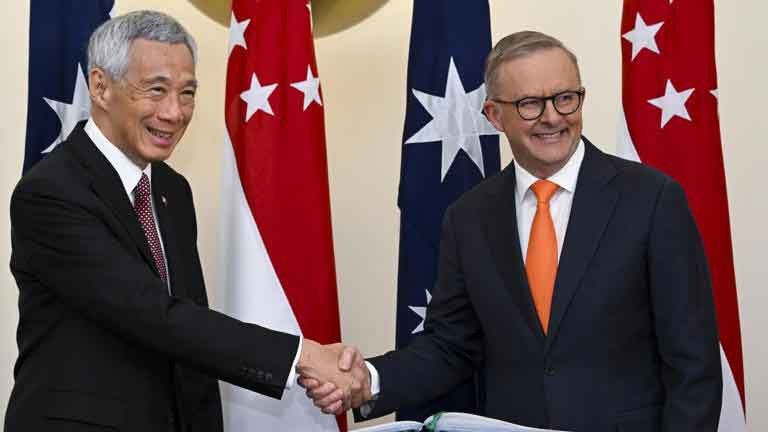
Singapore Prime Minister Lee Hsien Loong wants to see a stable and secure Asia-Pacific region.
© Lukas Coch/AAP PHOTOS
Calls for Australia to help smooth tensions with China
Story by Dominic Giannini and Callum Godde • 53m ago - 1-5-2023
Senior Australian ministers will meet with their Singapore counterparts as the Asian nation's foreign minister warns of the potential for catastrophic conflict.
Singapore's Foreign Minister Vivian Balakrishnan has warned that the United States and China created a "dysfunctional relationship", saying Asian nations did not want to be drawn into choosing sides.
"Countries in Southeast Asia feel this impact of dysfunctional relations between the two biggest superpowers," he said during a keynote address on Monday.
Mr Balakrishnan says Australia has a role to play in cooling tensions in the region by building "strategic trust".
"Trust is not something you can conjure. It takes time, it takes history. You need to have mutual respect," he said.
"Australia can play a role in stabilising our region. Australia has many unique strengths."
Mr Balakrishnan said the US and China were struggling to make progress and the economic benefits in the region were being overshadowed by security concerns.
He said Taiwan was the greatest flashpoint for conflict, with it being "the reddest of red lines" for China.
Deputy Prime Minister and Defence Minister Richard Marles, Foreign Affairs Minister Penny Wong and Trade and Tourism Minister Don Farrell will host their counterparts on Monday in Canberra for a bilateral meeting.
This year coincides with the 20th anniversary of Australia and the tiny Asian country striking a free trade agreement.
In a joint statement, the Australian ministers said the biennial committee meetings were an important platform to discuss co-operation across defence and security, strategic, trade and investment interests, the energy transition and food security.
"Australia and Singapore have a deep and abiding defence relationship. We are proud to count Singapore as one of our closest partners," Mr Marles said in a statement.
"I look forward to discussing ways we can continue to build on our great friendship, as part of our shared contribution to the collective security and prosperity of the region."
Australia's defence pact with the US and United Kingdom to supply it nuclear-powered submarines prompted China, Malaysia and Indonesia to voice concerns when signed by the previous coalition government in 2021.
Singapore Prime Minister Lee Hsien Loong later welcomed Australia's assurance that the AUKUS deal was aimed at promoting a "stable and secure" Asia-Pacific.
A declassified review last week prompted the government to commit to "reshape" the armed forces to prepare Australia for any conflicts over the next three decades.
China's rapid military build-up, the decline of the US as a unipolar power in the Indo-Pacific, nuclear war, climate change, workforce issues and increasing cyber attacks were all identified as security threats.
The Singaporean prime minister also warned about the consequences of a decoupling between the US and China's economic relationship when he was in Canberra last year.
He expressed his concerns that nations being at loggerheads over national security could trigger further consequences that would result in less economic co-operation, less trust and less stability.
Singapore Prime Minister Lee Hsien Loong wants to see a stable and secure Asia-Pacific region.
© Lukas Coch/AAP PHOTOS
4 yr. ago
Reuters
Analysis-Australia prepares more assertive military stance to deter conflict
Story by By Kirsty Needham • Yesterday 7:04 pm - 21-4-2023
By Kirsty Needham
SYDNEY (Reuters) - Australia will outline its defence plans next week, and its leaders are previewing a more assertive posture - in which it can strike farther, faster - while working with mid-size allies to reduce tensions as the United States and China square off.
The Labor government of Anthony Albanese is expected to lay out those proposals in response to a wide-ranging and secret defence review of Australia's investment in modern military systems and logistics, and how they would fare in a sudden conflict.
The review examined how Australia could better integrate with its AUKUS partners the United States and Britain, as well as other allies, the government has said. The AUKUS countries last month announced Australia would spend A$368 billion on nuclear-powered submarines, and will jointly develop hypersonic weapons to catch up to China.
British and U.S. nuclear submarines will also start rotations through a Western Australian naval base in advance of the joint production of the AUKUS nuclear submarine in the next decade.
Foreign Minister Penny Wong and Chief of the Defence Force Angus Campbell have said in recent days that Australian forces need to be capable of responding to potential adversaries whose weapons are faster, can strike farther and are more precise than in the past.
Changing that equation is crucial to the future of Australia's military, they said.
In an address to the National Press Club on Monday, Wong said the region should not be reduced to a binary competition between the United States and China; Australia wanted to work with other middle-sized countries, including in Southeast Asia, to deter aggression, she said.
"America is central to balancing a multipolar region... We cannot just leave it to the U.S.," she said.
Since 2017, after Australia's top trading partner, China, began militarising islands in the South China Sea along vital trade routes, and the Trump presidency called into question the United States commitment to U.S. international engagement, Australia's foreign policy has focused on building a mesh of middle-sized democracies to balance China's rise.
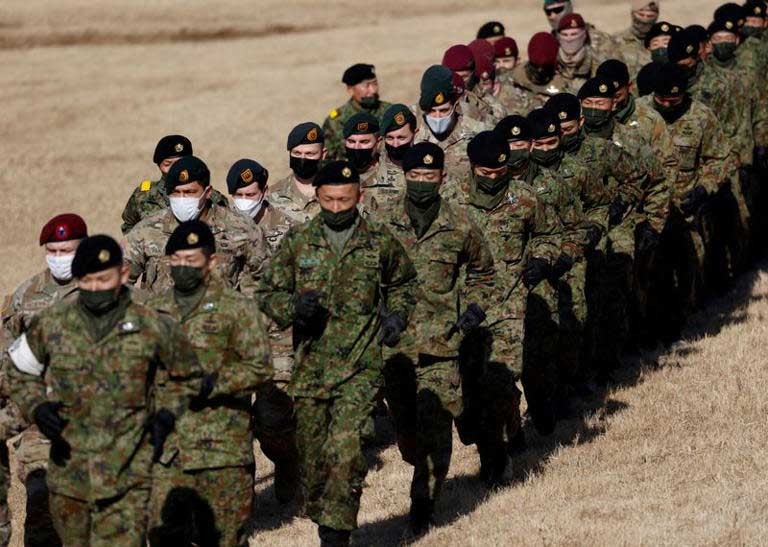
It revived the Quad of Japan, India and the United States, which will in August hold its Malabar naval exercise off the Western Australia coast for the first time. Australia's largest joint land military exercise will be held in July involving 30,000 troops from 11 nations, with Philippines, Singapore and Thailand observing.
Campbell said Australia's defence forces would enhance how they could operate alongside partners, but has ruled out foreign bases on its soil and will always retain control of its forces. The military will focus not just on territorial defence but national interests, including trade routes and submarine cables that connect the island to international telecommunications.
Wong said Australia must avert war, and would not speculate on Taiwan, other than to say a conflict would be "catastrophic for all".
The most important new assumption in the review is that Australia could come under attack with no warning from Chinese missiles and that Chinese ships will operate far from their home shores, said Michael Green, chief executive of the U.S. Studies Centre at the University of Sydney.
(Reporting by Kirsty Needham. Editing by Gerry
Analysis-Australia prepares more assertive military stance to deter conflict
Story by By Kirsty Needham • Yesterday 7:04 pm - 21-4-2023
By Kirsty Needham
SYDNEY (Reuters) - Australia will outline its defence plans next week, and its leaders are previewing a more assertive posture - in which it can strike farther, faster - while working with mid-size allies to reduce tensions as the United States and China square off.
The Labor government of Anthony Albanese is expected to lay out those proposals in response to a wide-ranging and secret defence review of Australia's investment in modern military systems and logistics, and how they would fare in a sudden conflict.
The review examined how Australia could better integrate with its AUKUS partners the United States and Britain, as well as other allies, the government has said. The AUKUS countries last month announced Australia would spend A$368 billion on nuclear-powered submarines, and will jointly develop hypersonic weapons to catch up to China.
British and U.S. nuclear submarines will also start rotations through a Western Australian naval base in advance of the joint production of the AUKUS nuclear submarine in the next decade.
Foreign Minister Penny Wong and Chief of the Defence Force Angus Campbell have said in recent days that Australian forces need to be capable of responding to potential adversaries whose weapons are faster, can strike farther and are more precise than in the past.
Changing that equation is crucial to the future of Australia's military, they said.
In an address to the National Press Club on Monday, Wong said the region should not be reduced to a binary competition between the United States and China; Australia wanted to work with other middle-sized countries, including in Southeast Asia, to deter aggression, she said.
"America is central to balancing a multipolar region... We cannot just leave it to the U.S.," she said.
Since 2017, after Australia's top trading partner, China, began militarising islands in the South China Sea along vital trade routes, and the Trump presidency called into question the United States commitment to U.S. international engagement, Australia's foreign policy has focused on building a mesh of middle-sized democracies to balance China's rise.
It revived the Quad of Japan, India and the United States, which will in August hold its Malabar naval exercise off the Western Australia coast for the first time. Australia's largest joint land military exercise will be held in July involving 30,000 troops from 11 nations, with Philippines, Singapore and Thailand observing.
Campbell said Australia's defence forces would enhance how they could operate alongside partners, but has ruled out foreign bases on its soil and will always retain control of its forces. The military will focus not just on territorial defence but national interests, including trade routes and submarine cables that connect the island to international telecommunications.
Wong said Australia must avert war, and would not speculate on Taiwan, other than to say a conflict would be "catastrophic for all".
The most important new assumption in the review is that Australia could come under attack with no warning from Chinese missiles and that Chinese ships will operate far from their home shores, said Michael Green, chief executive of the U.S. Studies Centre at the University of Sydney.
(Reporting by Kirsty Needham. Editing by Gerry
4 yr. ago
Reuters
Chinese households turn to jewellery and gold in flight to safety
Story by By Winni Zhou and Tom Westbrook • Yesterday 5:32 pm - 18-4-2023
SHANGHAI/SINGAPORE (Reuters) - Violet Zhu, a Shanghai-based electronic components exporter, has been attending jewellery auctions and chatting on social media forums on the subject this year, looking to invest in rubies and diamonds.
"I don't have the brain for stock investments, and I am waiting to redeem mutual fund products once they break even. But in the meantime, I have been continuously buying gems," says Zhu.
Zhu says she is searching for oddly-shaped rubies of higher grades, hoping the value of those little gems will surge with time. She is not alone.
Jewellery and precious metals consumption in China soared 37.4% in March from a year earlier underpinning a 13.6% jump for the quarter and topping the list of items that stoked a surge in first-quarter retail sales, official data showed on Tuesday.
China's economy grew at a faster-than-expected pace in the first quarter, with retail sales rising 10.6%, beating forecasts for a 7.4% increase by a large margin.
The interest in precious metals is a worrying indicator that China's efforts to revive its economy via domestic spending, after years of strict COVID curbs, may not be working.
"High-end consumption gives us a bit of a surprise but overall the weak recovery story remains intact," said Marco Sun, chief financial analyst at MUFG Bank (China).
The appeal of jewellery and gold has risen after the biggest global banking crisis in more than a decade, as the failure of Silicon Valley Bank and the forced sale of lender Credit Suisse rocked investor confidence.
"Consumer interest in precious metals (comes) as a potential safe haven and inflation hedge, as many consumers do not expect low inflation in China to continue," said Ben Cavender, managing director at China Market Research Group.
Shying from risk, Chinese families are saving more. Households savings grew by 9.9 trillion yuan in the January-March period, after rising a record 17.8 trillion yuan in 2022. In 2021, they grew by 9.9 trillion yuan.
"Economic fundamentals, risk aversion and the recovery of domestic consumption all drive the investment demand for jewellery and precious metals," said Pang Xichun, research director at Nanjing RiskHunt Investment Management Co.
(Reporting by Winni Zhou, Jason Xue and Tom Westbrook; Editing by Vidya Ranganathan and Sonali Paul)
A salesperson poses with Heritage Gold jewellery at jeweller Chow Tai Fook’s retail store in Shanghai
© Thomson Reuters
Chinese households turn to jewellery and gold in flight to safety
Story by By Winni Zhou and Tom Westbrook • Yesterday 5:32 pm - 18-4-2023
SHANGHAI/SINGAPORE (Reuters) - Violet Zhu, a Shanghai-based electronic components exporter, has been attending jewellery auctions and chatting on social media forums on the subject this year, looking to invest in rubies and diamonds.
"I don't have the brain for stock investments, and I am waiting to redeem mutual fund products once they break even. But in the meantime, I have been continuously buying gems," says Zhu.
Zhu says she is searching for oddly-shaped rubies of higher grades, hoping the value of those little gems will surge with time. She is not alone.
Jewellery and precious metals consumption in China soared 37.4% in March from a year earlier underpinning a 13.6% jump for the quarter and topping the list of items that stoked a surge in first-quarter retail sales, official data showed on Tuesday.
China's economy grew at a faster-than-expected pace in the first quarter, with retail sales rising 10.6%, beating forecasts for a 7.4% increase by a large margin.
The interest in precious metals is a worrying indicator that China's efforts to revive its economy via domestic spending, after years of strict COVID curbs, may not be working.
"High-end consumption gives us a bit of a surprise but overall the weak recovery story remains intact," said Marco Sun, chief financial analyst at MUFG Bank (China).
The appeal of jewellery and gold has risen after the biggest global banking crisis in more than a decade, as the failure of Silicon Valley Bank and the forced sale of lender Credit Suisse rocked investor confidence.
"Consumer interest in precious metals (comes) as a potential safe haven and inflation hedge, as many consumers do not expect low inflation in China to continue," said Ben Cavender, managing director at China Market Research Group.
Shying from risk, Chinese families are saving more. Households savings grew by 9.9 trillion yuan in the January-March period, after rising a record 17.8 trillion yuan in 2022. In 2021, they grew by 9.9 trillion yuan.
"Economic fundamentals, risk aversion and the recovery of domestic consumption all drive the investment demand for jewellery and precious metals," said Pang Xichun, research director at Nanjing RiskHunt Investment Management Co.
(Reporting by Winni Zhou, Jason Xue and Tom Westbrook; Editing by Vidya Ranganathan and Sonali Paul)
A salesperson poses with Heritage Gold jewellery at jeweller Chow Tai Fook’s retail store in Shanghai
© Thomson Reuters

4 yr. ago
From India to China, Asia’s ‘rice bowl’ is under threat due to groundwater woes
Major rice producers need to shift to producing rice that is resilient to flooding and salinity, to cope with likely increase in frequency, intensity of floods and droughts
Each degree of global warming adds about 7 per cent moisture to the water cycle, leading to more extreme weather events, analysts have warned
Biman Mukherji - Published: 4:00pm, 18 Mar, 2023
Besides switching to more resilient farming practices, scientists are also advocating changing diets to prevent over-exploitation of land.
“We have to diversify our food basket to include millets and reduce our dependence on rice and wheat,” said Biraj Patnaik, a South Asia foods right activist and former adviser to India’s Supreme Court.
“We [India] produce only about 20 million metric tons of millet, which is a small fraction of our grains consumption. For India’s neighbours like Bangladesh and Pakistan, the consumption of millets is even lower.”
Agriculture scientists say that millet farming not only reduces water stress, it is also healthy as the grain is protein-rich and helps address malnutrition.
Globally, about US$700 billion in subsidies are fuelling excessive water consumption and other environmentally dangerous practices and these must be used to incentivise water conservation and access, according to the Global Commission for the Economics of Water.
Each degree of global warming added about 7 per cent moisture to the water cycle, leading to more extreme weather events, said Johan Rockström, director of the Potsdam Institute for Climate Impact Research and co-chair of the Commission.
“We are changing the entire global hydrological cycle,” he said.
Last year’s floods in Pakistan, which submerged a third of the country and devastated agriculture and livestock, has pushed the South Asian nation to the brink of a debt crisis as foreign exchange reserves have plummeted.
Seasonal floods in Malaysia during the annual monsoon season have killed at least four people and displaced more than 40,000 from their homes, leaving a trail of destruction and driving up prices of commodities.
On the other hand, rice farmers on the Indian subcontinent are bracing themselves for rainfall deficiency during the summer monsoon season. An unusually warm spring for the second year in a row has highlighted the kind of weather extremes that the region is facing.
Climate experts say Asia is more vulnerable than other continents due to its high population density and lower coping mechanisms available to most of the population.
Despite this, massive floods in Germany in 2021 show that even developed countries are often ill-prepared in tackling climate change.
Without action to transform the economics and governance of water, the world will fail on climate action and on the UN’s sustainable development goals, the Global Commission for the Economics of Water has warned.
The group said the world had failed to recognise that rivers, groundwater and atmospheric flows of water vapour cross international boundaries, and therefore such resources must be treated as a global common good.
Singapore’s Tharman Shanmugaratnam has called for farmers to be given incentives to adopt practices such as smart irrigation. Photo: Bloomberg
Major rice producers need to shift to producing rice that is resilient to flooding and salinity, to cope with likely increase in frequency, intensity of floods and droughts
Each degree of global warming adds about 7 per cent moisture to the water cycle, leading to more extreme weather events, analysts have warned
Biman Mukherji - Published: 4:00pm, 18 Mar, 2023
Besides switching to more resilient farming practices, scientists are also advocating changing diets to prevent over-exploitation of land.
“We have to diversify our food basket to include millets and reduce our dependence on rice and wheat,” said Biraj Patnaik, a South Asia foods right activist and former adviser to India’s Supreme Court.
“We [India] produce only about 20 million metric tons of millet, which is a small fraction of our grains consumption. For India’s neighbours like Bangladesh and Pakistan, the consumption of millets is even lower.”
Agriculture scientists say that millet farming not only reduces water stress, it is also healthy as the grain is protein-rich and helps address malnutrition.
Globally, about US$700 billion in subsidies are fuelling excessive water consumption and other environmentally dangerous practices and these must be used to incentivise water conservation and access, according to the Global Commission for the Economics of Water.
Each degree of global warming added about 7 per cent moisture to the water cycle, leading to more extreme weather events, said Johan Rockström, director of the Potsdam Institute for Climate Impact Research and co-chair of the Commission.
“We are changing the entire global hydrological cycle,” he said.
Last year’s floods in Pakistan, which submerged a third of the country and devastated agriculture and livestock, has pushed the South Asian nation to the brink of a debt crisis as foreign exchange reserves have plummeted.
Seasonal floods in Malaysia during the annual monsoon season have killed at least four people and displaced more than 40,000 from their homes, leaving a trail of destruction and driving up prices of commodities.
On the other hand, rice farmers on the Indian subcontinent are bracing themselves for rainfall deficiency during the summer monsoon season. An unusually warm spring for the second year in a row has highlighted the kind of weather extremes that the region is facing.
Climate experts say Asia is more vulnerable than other continents due to its high population density and lower coping mechanisms available to most of the population.
Despite this, massive floods in Germany in 2021 show that even developed countries are often ill-prepared in tackling climate change.
Without action to transform the economics and governance of water, the world will fail on climate action and on the UN’s sustainable development goals, the Global Commission for the Economics of Water has warned.
The group said the world had failed to recognise that rivers, groundwater and atmospheric flows of water vapour cross international boundaries, and therefore such resources must be treated as a global common good.
Singapore’s Tharman Shanmugaratnam has called for farmers to be given incentives to adopt practices such as smart irrigation. Photo: Bloomberg

4 yr. ago
From India to China, Asia’s ‘rice bowl’ is under threat due to groundwater woes
Major rice producers need to shift to producing rice that is resilient to flooding and salinity, to cope with likely increase in frequency, intensity of floods and droughts
Each degree of global warming adds about 7 per cent moisture to the water cycle, leading to more extreme weather events, analysts have warned
Biman Mukherji - Published: 4:00pm, 18 Mar, 2023
The world’s rice bowl could be in danger if more resilient farming practices are not adopted, experts have warned, as overexploitation of groundwater coupled with climate change has put age-old cultivation methods across Asia at risk.
Climate experts say the stress will be different across parts of the region even as floods and droughts are expected with greater frequency and intensity. That means bad news for India, Thailand and Vietnam – the top three rice exporters – and the rest of the world.
Mega deltas like Vietnam, Bangladesh and Myanmar – which are major rice producers – will face more saline water intrusion and flooding and hence will need to shift to producing rice that is resilient to flooding and salinity. More flooding is also expected on the Indo-Gangetic plains due to the increase in the glacier melting of the Himalayas.
“This isn’t the end of rice farming in Asia, but centuries-old cultivation practices have reached their limits,” said Tharman Shanmugaratnam, co-chair of the Global Commission on the Economics of Water, and Singapore’s senior minister and coordinating minister for social policies.
“Whole regions have been over-extracting groundwater, while others face growing saltwater intrusions,” he told This Week in Asia. “The good news is that solutions exist.”
Farmers in northern India use subsidised electricity to pump out water from ground for rice cultivation, which has caused water tables to plunge over years.
Tharman said farmers must be given incentives to adopt practices such as smart irrigation – which minimises water usage by scientifically measuring it – and producing flood-and drought-tolerant rice.
Growing less water-intensive crops could be another option, he added. “And from Shandong to Goa, scientists are doing promising experiments with salt-tolerant rice.”
Technical modelling shows that countries such as China and members of the Association of Southeast Asian Nations (Asean) will probably switch from being net food exporters to net food importers in 2050 due to water scarcity
A farmer walks along an embankment in a rice field in Can Tho in southern Vietnam in February 2023. Photo: AFP
Major rice producers need to shift to producing rice that is resilient to flooding and salinity, to cope with likely increase in frequency, intensity of floods and droughts
Each degree of global warming adds about 7 per cent moisture to the water cycle, leading to more extreme weather events, analysts have warned
Biman Mukherji - Published: 4:00pm, 18 Mar, 2023
The world’s rice bowl could be in danger if more resilient farming practices are not adopted, experts have warned, as overexploitation of groundwater coupled with climate change has put age-old cultivation methods across Asia at risk.
Climate experts say the stress will be different across parts of the region even as floods and droughts are expected with greater frequency and intensity. That means bad news for India, Thailand and Vietnam – the top three rice exporters – and the rest of the world.
Mega deltas like Vietnam, Bangladesh and Myanmar – which are major rice producers – will face more saline water intrusion and flooding and hence will need to shift to producing rice that is resilient to flooding and salinity. More flooding is also expected on the Indo-Gangetic plains due to the increase in the glacier melting of the Himalayas.
“This isn’t the end of rice farming in Asia, but centuries-old cultivation practices have reached their limits,” said Tharman Shanmugaratnam, co-chair of the Global Commission on the Economics of Water, and Singapore’s senior minister and coordinating minister for social policies.
“Whole regions have been over-extracting groundwater, while others face growing saltwater intrusions,” he told This Week in Asia. “The good news is that solutions exist.”
Farmers in northern India use subsidised electricity to pump out water from ground for rice cultivation, which has caused water tables to plunge over years.
Tharman said farmers must be given incentives to adopt practices such as smart irrigation – which minimises water usage by scientifically measuring it – and producing flood-and drought-tolerant rice.
Growing less water-intensive crops could be another option, he added. “And from Shandong to Goa, scientists are doing promising experiments with salt-tolerant rice.”
Technical modelling shows that countries such as China and members of the Association of Southeast Asian Nations (Asean) will probably switch from being net food exporters to net food importers in 2050 due to water scarcity
A farmer walks along an embankment in a rice field in Can Tho in southern Vietnam in February 2023. Photo: AFP